


Strategic Alignment and Geopolitical Partnership
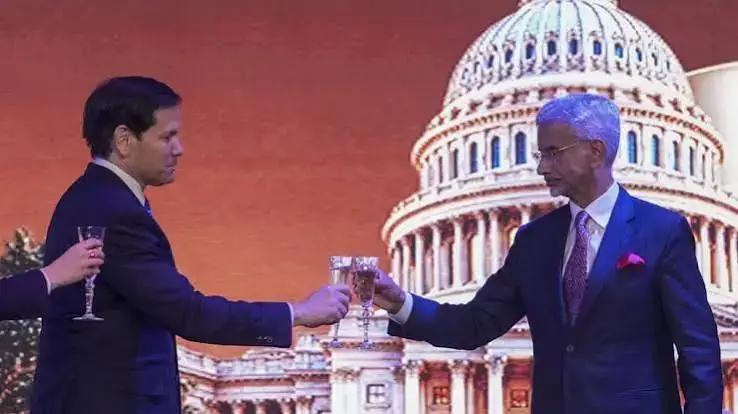
During a two-day official visit to India, US Secretary of State Marco Rubio met with External Affairs Minister S Jaishankar in Mumbai on Tuesday to review the breadth of India-US ties. The meeting, held at the invitation of Jaishankar, marked Rubio's second trip to New Delhi following a previous visit in May. According to the Ministry of External Affairs (MEA), the visit reflects sustained momentum in high-level exchanges and underscores the importance of advancing the India-US COMPACT for the 21st century.
Rubio characterized the strategic alignment between India and the United States as "extraordinary," emphasizing that both nations have an opportunity to shape the course of the 21st century through partnership. He stated there is an "extraordinary alignment" between India and the US on core issues that define national interests, despite potential disagreements on other matters. Rubio described India as a "powerful, influential and advanced" country and a "strong geopolitical partner" for the US, noting shared values such as democratic principles and rule of law.
At the US Freedom 250 Reception hosted by Ambassador Sergio Gor, Rubio observed that while Washington and New Delhi may not see eye to eye on every matter, their shared fundamental interests can influence geopolitics, economics, trade, and commerce for decades. He cited the need for a "free and open" Indo-Pacific where no nation claims dominance over international shipping as a key area of alignment during his visit.
Trade Negotiations and Economic Tensions
A central focus of the discussions between Rubio and Jaishankar was the India–US Bilateral Trade Agreement (BTA). The MEA stated that both sides welcomed progress in negotiations on the agreement and reaffirmed their commitment to its early conclusion. Rubio told Network18 that the trade deal is "incredibly close" and expects it to materialize in weeks, not months. He stated that India and the US are "very, very close" to signing a bilateral trade deal, with only a few points remaining to be ironed out.
However, relations between India and the US have faced challenges recently regarding trade ties, New Delhi’s purchase of Russian oil, and immigration issues. US President Donald Trump believes US exports to India face higher duties than Indian exports into the US, leading to tariff moves by his administration. While Rubio noted he is not directly engaged in negotiations handled by the trade representative, his comments signal a high-level political push to resolve these economic frictions.
Energy Security and Defense Cooperation
Beyond trade, discussions between Rubio and Jaishankar covered defense, technology, and energy security. The scope of Rubio's itinerary extends beyond Mumbai; he will proceed to Jamnagar in Gujarat for talks on enhanced energy cooperation, as communicated by the US State Department. This leg of the visit highlights the deepening integration of economic and security interests between the two nations, particularly in sectors critical to regional stability.
Looking Ahead
The outcome of these high-level engagements will likely set the tone for future diplomatic interactions. With the trade deal nearing completion and energy cooperation on the agenda, both governments appear focused on consolidating their partnership amidst a complex global landscape. The emphasis on shared democratic values and a free Indo-Pacific suggests that the US views India not just as an economic partner, but as a pivotal geopolitical ally in defining the strategic order of the coming decades.