

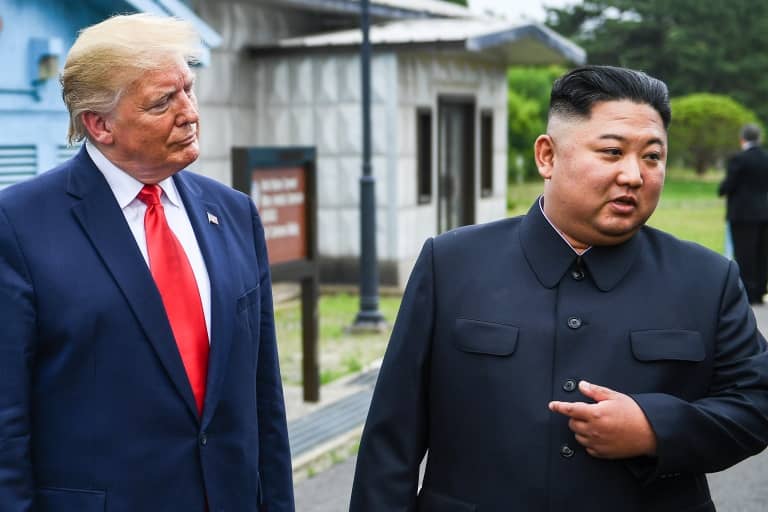

Speculation Grows Ahead of Shenzhen Summit
As world leaders prepare to gather in Shenzhen for the November APEC summit, speculation is mounting over a possible meeting between Donald Trump and Kim Jong Un. Experts say the prospect remains remote.
Donald Trump has made repeated overtures for a meeting with Kim Jong Un, which have been met with silence from Pyongyang. Trump stated last week that he "may" meet with Kim during his Asian tour next month and called it "exciting." He later said on Monday, "I don’t know… I’m not sure that anybody’s asking for a meeting," while noting his relationship with Kim is "very good." Despite these mixed signals, the White House has not confirmed any scheduled engagement.
Seoul’s ambassador to Washington, Kang Kyung-wha, said last week that no concrete progress had been made toward a meeting between Kim and Trump. Her comments underscore the diplomatic stalemate, as neither side has offered tangible steps to facilitate such an encounter during the upcoming summit.
Analysts Question Feasibility of Diplomatic Breakthrough
Analysts suggest Trump is seeking a foreign policy win as the Iran war continues. However, analysts say Kim Jong Un may have less to gain from another high-profile encounter with Trump. The strategic calculus for Pyongyang has shifted significantly in recent years.
Lim Eul-chul, a professor at Kyungnam University’s Institute for Far Eastern Studies, told AFP he sees "almost no possibility of a meeting," stating that maintaining the status quo is Kim Jong Un's best option. This view is supported by North Korea’s improving economic indicators; its economy grew more than three percent in 2025, according to South Korea’s central bank, citing expanded economic cooperation with Russia as a major driver.
Hong Min, a senior researcher at the Korea Institute for National Unification, told AFP that the division of blocs (US and Japan vs. North Korea, China, and Russia) is creating significant opportunities for North Korea. Pyongyang has deepened ties with Russia and China, complicating Trump’s bid for a potential announcement of talks ahead of the midterms. This geopolitical realignment reduces Seoul's leverage and diminishes the urgency for Pyongyang to engage with Washington.
Historical Context and Current Stances
Trump met Kim three times during his first term, once declaring they were "in love," but no tangible progress was made on denuclearization deals. The lack of substantive outcomes from those previous summits has led to skepticism regarding any new agreements.
South Korea’s President Lee Jae Myung suggested in September that Washington seek a nuclear freeze rather than immediate elimination in return for sanctions relief. Critics argue Lee’s approach risks tacitly accepting North Korea as a nuclear-armed state while allowing Pyongyang to gain sanctions relief without giving up its arsenal. This policy debate highlights the growing divide within the alliance on how to handle the northern neighbor.
Kim Yo Jong called those hoping for North Korean denuclearization "idiots" in September, stating the country’s nuclear-armed status was "absolute." Her remarks reflect Pyongyang's hardened stance, which contrasts sharply with the diplomatic overtures being floated by the Trump administration. With no concrete progress reported and strong rhetorical resistance from North Korea, the likelihood of a summit meeting remains low.