

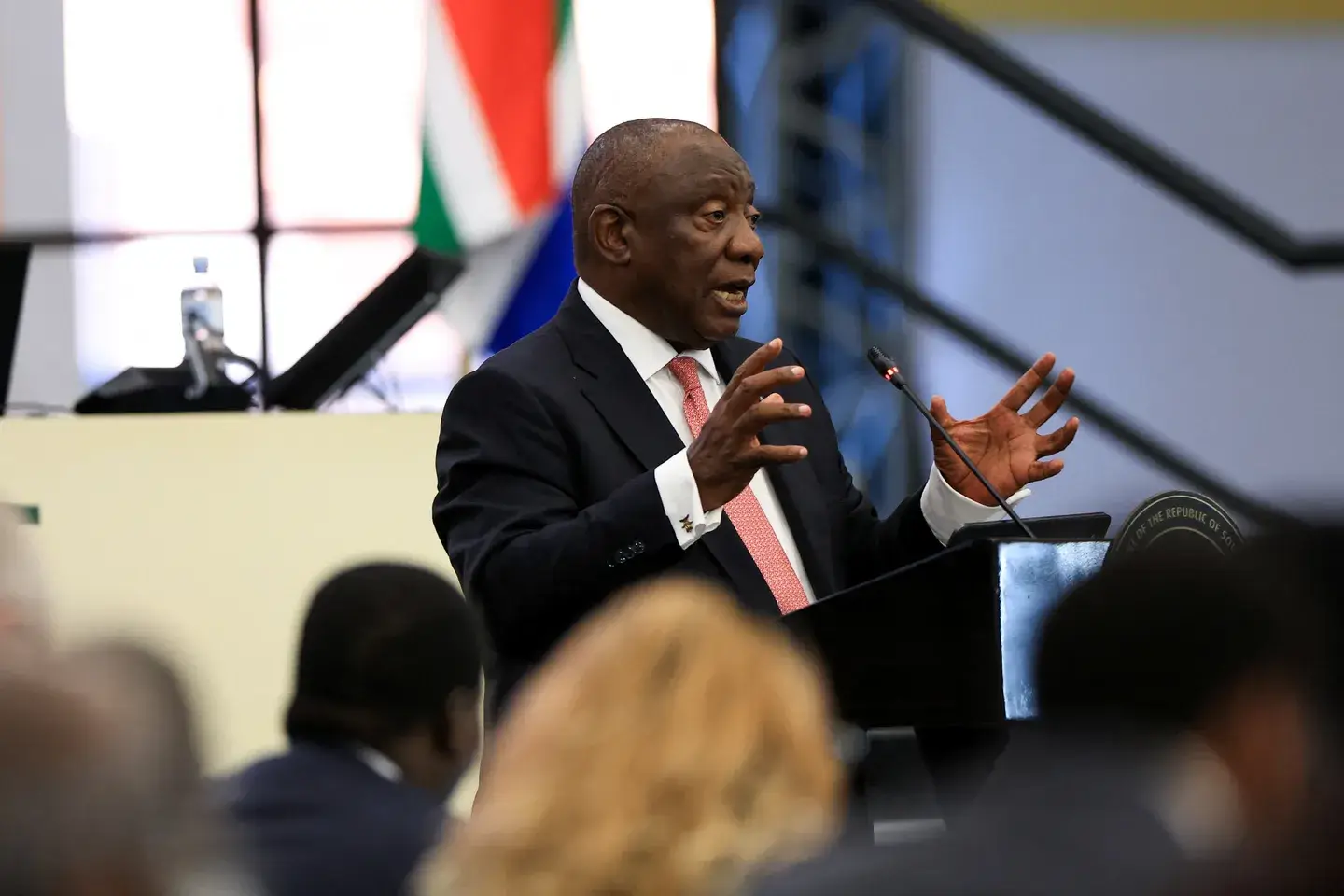

President Ramaphosa Calls for Renewed Bilateral Dialogue
South African President Cyril Ramaphosa stated that the Democratic Party’s victory in the US midterm elections heralded a "new era in world relations" and could help thaw strained ties between Pretoria and Washington. Speaking to reporters on Wednesday after casting his vote in local government elections, Ramaphosa expressed hope for a "coming together of minds" to find a proper path forward on geopolitical, trade, and investment matters.
"I do think that this group is going to introduce a new era in world relations," Ramaphosa said. He emphasized the need for renewed bilateral dialogue to resolve differences that have previously impacted diplomatic and economic relations between the two nations. The President’s comments signal a strategic pivot toward re-engagement with Washington, aiming to stabilize a relationship that has faced significant headwinds under previous administrations.
Diplomatic Response Emphasizes Mutual Respect
South African Foreign Minister Ronald Lamola described the Democratic win as a victory for democracy, accountability, and the international rule of law. Lamola stated that future relations should be governed by predictability and mutual respect, signaling a desire to stabilize ties after a period of significant diplomatic friction. The Foreign Minister’s remarks underscore Pretoria’s preference for consistent, rules-based engagement over the erratic policy shifts observed in recent years.
Historical Friction Over Trade and Geopolitics
The call for a new era follows a period of heightened tension between the United States and South Africa. The two countries have previously clashed over issues involving race, trade, and diplomacy. These disagreements influenced Washington's decision to remove South Africa from the African Growth and Opportunity Act (AGOA), a trade deal that offers eligible sub-Saharan African countries duty-free US market access for certain products.
Under the AGOA provisions, South Africa and Rwanda are set to be dropped from the agreement starting January 1. The removal has raised concerns among economic observers that it could cost thousands of jobs in the region. This potential loss of preferential trade status represents a tangible economic consequence of the diplomatic rift, affecting not only national revenue but also the livelihoods of workers dependent on export-oriented industries.
Disputed Claims and Diplomatic Incidents
Diplomatic relations were further strained by disputes over racial policies and asylum claims. Washington had previously offered asylum to white Afrikaners based on discredited claims of a "genocide" against them in South Africa. Last year, US President Donald Trump berated Ramaphosa in the Oval Office over these claims regarding the persecution of white farmers.
South African officials have strongly rejected these characterizations. Foreign Minister Lamola has previously described Washington's preferential treatment of white Afrikaners as "apartheid 2.0," highlighting the deep ideological divide that has complicated bilateral cooperation. These incidents have served as flashpoints, illustrating how domestic racial narratives in South Africa can rapidly escalate into international diplomatic crises when amplified by foreign political figures.
Economic Ties and US Presence in South Africa
Despite political disagreements, economic links between the two nations remain substantial. South Africa is the United States' largest trading partner on the African continent. More than 500 US businesses operate in the country, and approximately 30,000 US citizens are based there.
Ramaphosa indicated that the recent political shift in Washington provides an opportunity to address these economic relationships more constructively. The South African government hopes that the new dynamic will allow for a resolution of the trade and investment barriers that have emerged in recent years. With such a significant footprint of American capital and personnel, the stability of US-South Africa relations is viewed as critical not just for diplomatic protocol, but for the broader economic health of the region.