

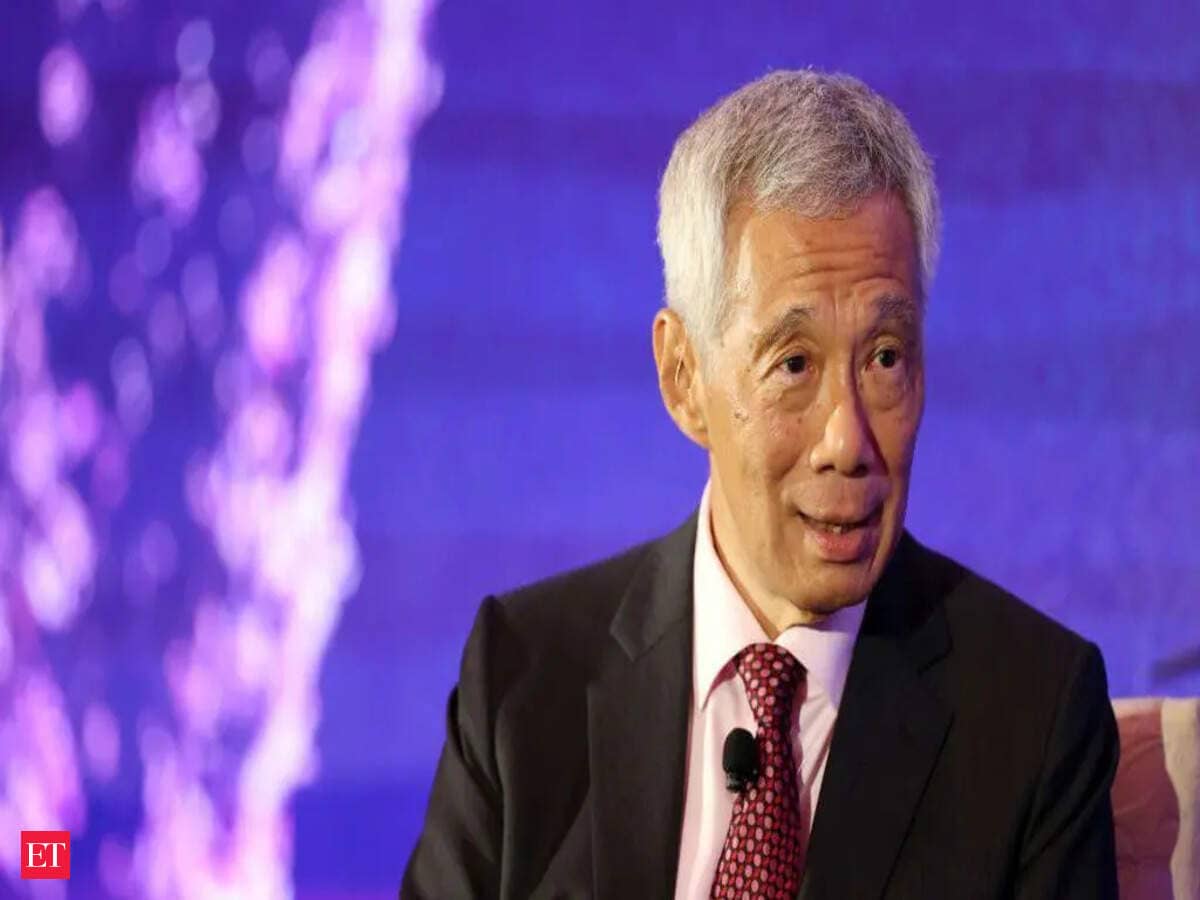

Former Singaporean Prime Minister Lee Hsien Loong recently articulated a principle of international relations, stating, "We cooperate with China because of shared interests, not because of shared blood." This statement, delivered in the context of Singapore's foreign policy approach, underscores a perspective on modern diplomacy that prioritizes pragmatic considerations over ethnic or cultural affiliations.
Pragmatism in International Relations
The statement by Mr. Lee Hsien Loong reflects a core tenet of pragmatic foreign policy, a principle deeply embedded in Singapore's approach to international relations since its independence. This view posits that national decisions regarding international engagement and cooperation are primarily guided by practical benefits and strategic advantages, rather than being swayed by emotional attachments, historical grievances, or ethnic affinities. This approach suggests that nations rigorously assess potential partnerships based on tangible outcomes, such as economic growth, access to markets, regional stability, or security enhancements, rather than relying on historical ties or shared heritage alone.
For Singapore, a small island nation highly dependent on international trade, connectivity, and stability, a pragmatic foreign policy has been a long-standing necessity for its survival and prosperity. Its diplomatic strategy has consistently emphasized maintaining a wide network of relationships with diverse partners and avoiding exclusive alignments, thereby safeguarding its autonomy and ensuring its continued relevance in a complex and often volatile global landscape.
Interest-Based Diplomacy
Modern diplomacy is increasingly characterized by an emphasis on national self-interest as the primary driver for engagement. This includes a broad spectrum of considerations, from economic survival and the pursuit of new trade opportunities to technological advancement, resource security, and national defense. The concept of "shared interests" implies that countries engage with one another when their respective national objectives align, creating a mutually beneficial framework for cooperation that serves both parties' strategic goals.
In the specific context of Singapore and China, areas of shared interest can encompass significant economic collaboration, such as extensive trade agreements, substantial investment flows, and joint development projects. Beyond economics, shared interests may also extend to regional stability, maritime security, and multilateral cooperation on global issues like climate change or pandemic preparedness. These convergent objectives form the robust basis for engagement, allowing both nations to pursue their strategic goals while navigating potential differences in other policy areas.
Strategic Alignment Over Identity
Mr. Lee's remark directly addresses the distinction between ethnic or cultural ties and strategic alignment in foreign policy. While a significant portion of Singapore's population is of Chinese descent, the nation's foreign policy is formulated strictly on the basis of its sovereign national interests, separate from any ethnic or cultural identity. This principle asserts that a nation's foreign policy decisions are not, and should not be, dictated by the ethnic composition of its population or by a sense of "shared blood" with another nation, regardless of historical or cultural connections.
This approach highlights a key aspect of contemporary international relations: the formation of alliances and cooperative frameworks is often driven by a convergence of strategic goals and practical necessities. Countries may find common ground on specific issues, such as global trade liberalization, counter-terrorism efforts, or sustainable development, irrespective of their cultural or historical backgrounds. This focus on objective alignment allows for diverse and flexible partnerships to form, transcending traditional identity-based groupings and fostering a more adaptable international system.
Navigating Global Power Dynamics
For smaller states, particularly those situated in strategically important regions, the principle of "shared interests, not shared blood" provides a crucial framework for navigating complex global power dynamics. By basing foreign policy on concrete interests, a nation can maintain flexibility, avoid being drawn into exclusive blocs, or becoming entangled in ideological confrontations between major powers. This strategic agility allows for engagement with multiple major powers, fostering a delicate balance that contributes significantly to national security, economic resilience, and diplomatic influence.
Singapore's engagement with both China and Western powers, including the United States and European Union, exemplifies this strategy. By cooperating with different partners on issues of mutual benefit—such as trade, investment, security dialogues, and technological exchange—Singapore aims to enhance its own position and contribute to regional stability without committing exclusively to one side over another. This deliberate balancing act is a constant effort to maximize national advantage and preserve autonomy in an increasingly multipolar and competitive world order.
Singapore's Foreign Policy Logic
The statement by Mr. Lee Hsien Loong encapsulates Singapore's consistent and long-standing foreign policy logic, which has been honed over decades. Since its independence in 1965, Singapore has emphasized the paramount importance of a rules-based international order, multilateralism, and the relentless pursuit of its national interests. This approach has enabled Singapore to forge strong diplomatic and economic ties globally, ensuring its relevance and security despite its small geographical size and limited natural resources.
Singapore's foreign policy doctrine stresses the importance of being a reliable and credible partner, upholding international law, and actively contributing to regional peace and prosperity, particularly through its role in ASEAN. The emphasis on "shared interests" aligns precisely with this doctrine, signaling that Singapore's engagements are based on clear, rational calculations of mutual benefit and strategic necessity, rather than sentiment, ethnic kinship, or ideological alignment. This clarity in its foreign policy communication helps to manage expectations and ensure consistency in its international dealings.
Broader Geopolitical Implications
The perspective articulated by Mr. Lee Hsien Loong offers significant insights into the fundamental drivers of modern geopolitics. It suggests that a deep understanding of contemporary international relations requires recognizing that national actions are primarily rational and interest-driven, even when presented through other lenses. This framework helps to explain why seemingly disparate nations might cooperate robustly on certain issues, or why nations with historical or cultural ties might diverge sharply on others, particularly when their core interests conflict.
In an era marked by increasing geopolitical competition, rapid technological change, and shifting alliances, the principle of interest-based cooperation provides a crucial lens through which to analyze state behavior. It highlights the often transactional nature of much of international diplomacy, where partnerships are formed and maintained as long as they effectively serve the strategic, economic, and security objectives of the involved parties. This pragmatic outlook, which prioritizes tangible outcomes over abstract ties, is a defining characteristic of contemporary global interactions and a key to understanding the evolving international order.