

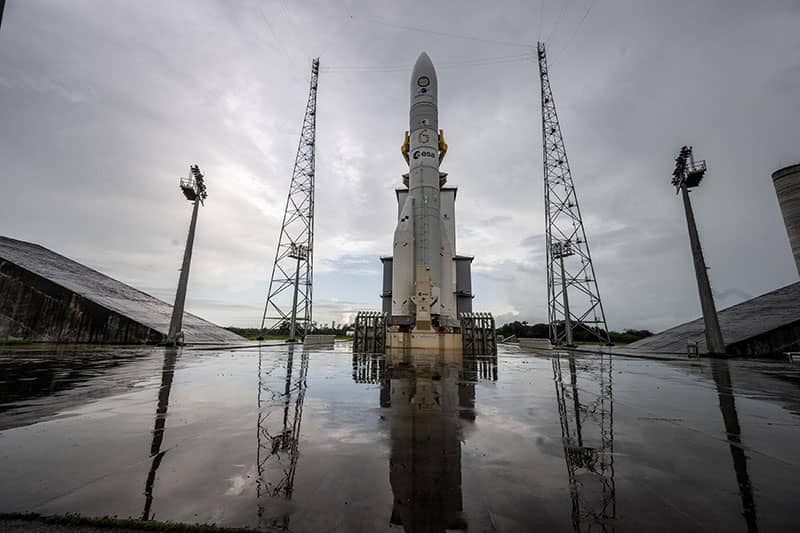

Allegations of Foreign Space Infrastructure
The Communist Party of Sri Lanka has issued warnings that Israel and other foreign powers are planning to establish "spaceports" on Sri Lanka’s East Coast. The party further claimed that the National People's Power (NPP) government is actively getting involved in United States space domain activities.
These assertions were reported by The Island on October 29, 2026. The warnings have sparked debate regarding the intersection of Sri Lanka’s declared foreign policy of neutrality and potential international defense or aerospace collaborations.
Arguments for Strict Neutrality
In response to the prospect of foreign space infrastructure, writer Neville Ladduwahetty outlined the legal and diplomatic boundaries that should govern such discussions. He stated that Sri Lanka’s foreign policy of neutrality requires that neutral space must comprise national territory, territorial waters, and national airspace.
Ladduwahetty emphasized that these domains are "not negotiable." He argued that any discussions relating to prospective 'spaceports' are taboo because they compromise the principles of neutrality. These principles were reiterated by President Anura Kumara Dissanayake and Foreign Minister Vijitha Herath, according to Ladduwahetty's analysis.
Precedent in Middle East Conflict
The argument for strict adherence to neutral space is supported by recent diplomatic actions during the ongoing Middle East conflict. The Sri Lankan government previously declined a request from the United States for permission to land two aircraft on Sri Lankan soil.
This decision was made on grounds of neutrality, establishing a precedent that national airspace and territory are not to be utilized for foreign military or strategic operations. Ladduwahetty cited this event as evidence that the government has historically adhered to a policy where its territory, including territorial waters and air space, remains closed to foreign strategic use.
Political Friction Over Strategic Assets
The Communist Party’s warnings highlight a growing political friction regarding how Sri Lanka manages its sovereign assets in relation to global powers. By asserting that the NPP government is involved in US space domain activities, the party is challenging the administration's adherence to its stated neutral stance.
This claim suggests that the current administration may be moving away from the strict interpretation of neutrality that previous officials, such as President Dissanayake and Foreign Minister Herath, have publicly supported. The accusation implies that strategic partnerships could be undermining the country’s independent foreign policy framework.
Implications for National Sovereignty
If the allegations regarding spaceport planning are accurate, they would represent a significant shift in Sri Lanka’s approach to international relations. Neville Ladduwahetty’s position that neutral space must include national territory and airspace serves as a counter-argument to any government efforts to lease or share such infrastructure with foreign entities.
The reference to the declined aircraft landing request during the Middle East conflict underscores the sensitivity of allowing foreign military or strategic assets on Sri Lankan soil. The Communist Party’s stance is that allowing spaceports would violate the same principles that led to the rejection of the US aircraft request, thereby compromising the nation's sovereignty and neutral status.