


The Geopolitical Backdrop of Ruritanian Suspense
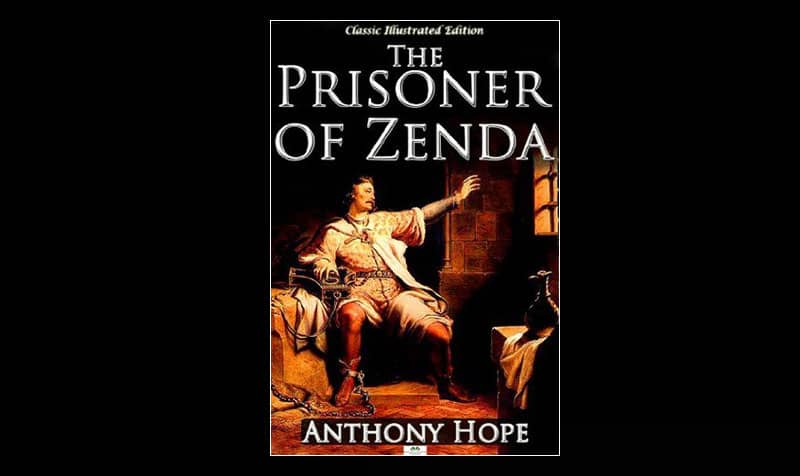
Professor Rajiva Wijesinha has identified "The Prisoner of Zenda" as a primary example of suspense-driven narrative within his ongoing literary series. In an article published by The Island, Wijesinha distinguished between mystery stories and those relying solely on suspense, noting that while mysteries inevitably involve suspense, the reverse is not true.
Wijesinha stated that after spending half a year examining mystery stories, he shifted focus to narratives where "suspense grips one" without the presence of a traditional mystery. He cited Anthony Hope’s 1894 novel as a work that heralded a cult of what has been termed Ruritanian novels.
According to Wijesinha, these novels were set in regions that appeared "tempestuous" and remote to English readers at the time. The setting was predominantly the Balkans, an area where Austria and Russia fought for influence after the retreat of the Turks. This geopolitical struggle involved Austria being backed by a newly united Germany under Prussia, while Russia moved into an alliance with France and through that, England.
Lineage and the Kingdom of Intrigue
The novel’s setting in the kingdom of Ruritania reflects the real-world intrigue for European dominance that characterized the Balkans by 1894. Wijesinha described the plot as compelling, noting it involves a young Englishman named Rudolf Rassendyl.
Rassendyl travels to Ruritania due to a family legend connecting his lineage to the Ruritanian royal family. This connection stems from an affair between a former king and a lady of the Rassendyl family.
Screen Adaptations and Casting Histories
The compelling nature of Hope’s plot led to multiple film adaptations, Wijesinha reported. The first adaptation occurred in 1937, featuring Ronald Colman as the hero Rudolf Rassendyl and Douglas Fairbanks as the villain Rupert of Hentzau.
Wijesinha noted that Madeleine Carroll previously took the role of the heroine in earlier iterations, while Raymond Massey and David Niven supported Colman in the 1937 film.
A subsequent adaptation was released in 1952. In this version, Stewart Granger played the hero and James Mason played Rupert, with Deborah Kerr as the heroine. Louis Calhern provided support in the 1952 cast.
Wijesinha highlighted a specific casting detail regarding Calhern, noting that he had previously played Julius Caesar in a film starring James Mason, John Gielgud, and Marlon Brando.
Fading Literary Fame
Regarding Anthony Hope’s standing among his peers, Wijesinha observed that Hope was barely known by his contemporaries at Oxford. The professor explained that Hope had passed out of fashion a decade after the Second World War.