

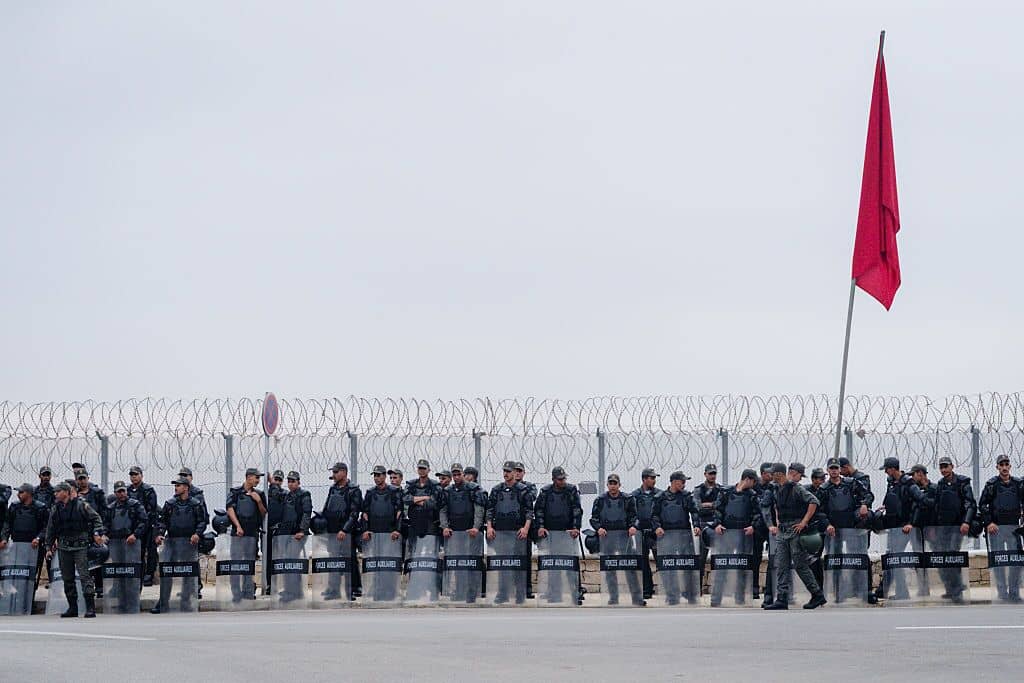

New Migrant Crossing Attempt Blocked in Ceuta
Hundreds of migrants have again attempted to cross from Morocco into the Spanish territory of Ceuta. This latest incident has drawn attention to the ongoing tensions along the border between the two nations. The attempt occurred recently, with individuals trying to traverse the boundary line that separates Moroccan soil from the Spanish enclave.
Ceuta's Strategic Position as a Migration Flashpoint
Ceuta, along with Melilla, represents one of Europe's only land borders with Africa. Its status as a Spanish autonomous city on the North African coast makes it a critical, and often volatile, point for migration into the European Union. The geographical reality of Ceuta, physically connected to Morocco but politically part of Spain, inherently creates a complex and often tense border dynamic. The recurring nature of these crossing attempts underscores the persistent pressures faced by those seeking to enter European territory, often driven by economic hardship, political instability, or conflict in their home countries.
Moroccan Officials Intervene to Prevent Entry
According to reports, Moroccan officials successfully fended off this recent crossing attempt. The intervention by local authorities prevented the large group from entering the Spanish territory. This action stands in contrast to previous events in the region, where similar crossings have resulted in different outcomes, sometimes with migrants successfully reaching Spanish soil. The swift and effective response by Moroccan forces in blocking this latest attempt suggests a specific operational strategy was deployed, highlighting their capacity to enforce border integrity when desired.
The prevention of this latest entry has sparked renewed discussion regarding border security and migration flows in the area. Observers note that the ability of Moroccan forces to block the attempt suggests a specific operational response to the situation on the ground. However, the immediate political implications of this blockage remain unconfirmed by official statements from either Madrid or Rabat, leaving questions about the underlying diplomatic agreements or shifts in border management policies.
Questions Surrounding the July 30 Crossing
The recent blockade has raised new questions about a previous crossing that occurred on July 30. That earlier event involved a large-scale movement of people into Ceuta, which differs significantly from the blocked attempt described in current reports. The details of what happened during the July 30 incident have not been fully clarified in available records, leading to a persistent information gap.
Unanswered Questions on the Earlier Influx
The July 30 crossing saw a substantial number of individuals successfully enter Ceuta, a scenario that sharply contrasts with the recent, thwarted attempt. This disparity in outcomes fuels speculation about the circumstances surrounding the earlier event. Was there a different level of Moroccan enforcement? Were the tactics of the migrants distinct? The lack of official transparency from either Spanish or Moroccan authorities regarding the specifics of the July 30 incident leaves these critical questions unanswered, contributing to an atmosphere of uncertainty.
The Information Vacuum and Speculation
Reports indicate that the full details of what happened in Ceuta on July 30 remain unclear. Sources suggest that the truth may never be fully known regarding the specific circumstances, decisions, and outcomes of that earlier date. This lack of clarity has led to speculation about the nature of the border controls and the interactions between migrants and security forces during that period. Without comprehensive official accounts, observers are left to piece together events from fragmented reports, making it difficult to ascertain the precise sequence of actions taken by all parties involved.
The contrast between the July 30 event and the recent blocked attempt highlights the volatility of the situation in Ceuta. While the July 30 crossing is documented as having occurred, the precise sequence of events leading to it and the subsequent responses are not fully detailed in current sources. This gap in information contributes to the ongoing uncertainty surrounding border incidents in the region, making it challenging to draw definitive conclusions about border management effectiveness or the diplomatic relationship between Spain and Morocco on migration issues.
Uncertainty Regarding Border Security Dynamics
The inability to determine the complete facts about the July 30 crossing underscores the challenges of reporting on events in disputed or heavily controlled border zones. The suggestion that the truth may never be fully known points to potential restrictions on media access or the release of official records, which can often be the case in sensitive geopolitical areas where national security and diplomatic relations are at play.
Transparency Challenges in Border Zones
In regions like Ceuta, where international borders meet complex migration flows, transparency can be elusive. The sensitive nature of border security, coupled with the often-politicized discourse surrounding migration, can lead to a tightly controlled information environment. This makes it difficult for journalists, human rights organizations, and the public to gain a complete understanding of events, fostering an environment where speculation can thrive in the absence of verifiable facts. The lack of official investigations or publicly released findings into the July 30 incident further compounds this issue, leaving a void in the public record.
Persistent Migration Pressures and Diplomatic Standoff
Moroccan officials have been active in managing the border, as evidenced by their decisive role in fending off the recent group of hundreds of migrants. Their actions demonstrate a clear capacity to enforce border integrity in real-time. However, no official explanation has been provided regarding why the July 30 crossing was permitted or how it unfolded compared to subsequent attempts. This discrepancy raises questions about the consistency of border enforcement and whether external factors, such as diplomatic relations between Spain and Morocco, might influence the operational responses.
The situation in Ceuta continues to be a point of interest for international observers, who monitor the human rights implications and the broader geopolitical dynamics. The recurring nature of migration attempts from Morocco into Spanish territory indicates persistent pressures on the border, driven by a complex interplay of push and pull factors. The recent prevention of a crossing by Moroccan officials offers a temporary resolution to that specific incident, but it does not address the broader questions raised by the earlier July 30 event, nor does it provide clarity on the long-term strategies for managing this critical frontier.
As of now, no further details have been released regarding investigations into the July 30 crossing or any diplomatic discussions between Spain and Morocco concerning border management. The focus remains on the immediate security situation and the ongoing movement of people across the Mediterranean frontier, leaving the full truth of past events shrouded in ambiguity.