


Presidential Charge On Electoral Oversight
President Bola Tinubu has charged civil society organisations (CSOs) to play a leading role in ensuring credible and peaceful elections in the 2027 general elections.
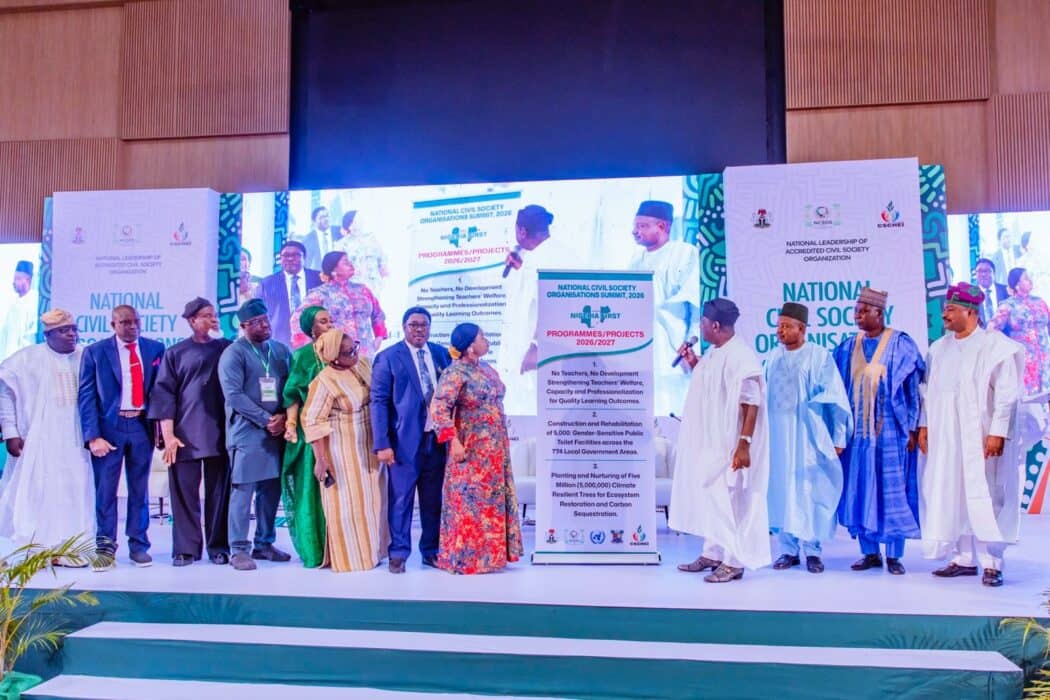
Tinubu delivered this charge on Friday at the National Civil Society Organisations Summit 2026, held at the Bola Ahmed Tinubu International Conference Centre in Abuja. The President was represented at the summit by the Secretary to the Government of the Federation, George Akume.
According to the president’s remarks, civil society had historically played a significant role in Nigeria’s democratic development and should continue to contribute to strengthening the electoral process.
Tinubu urged CSOs to educate voters, monitor polls, and advocate for electoral reforms before, during, and after the 2027 elections. He stated that together with law enforcement agencies, the judiciary, the media, and engaged citizens, CSOs can ensure credible elections.
Emphasizing national unity, Tinubu said Nigeria’s strength lies in its united people and their vigilance. He urged civil society to remain a stabilising force and contribute to national cohesion.
Call For Ethical Standards And Civic Space Protection
Tinubu called on the civil society community to collectively develop a code of conduct for its members. He cited past experiences where some players took actions without sufficient consideration for ethics or public interest as the basis for this recommendation.
The president stressed that his administration operates an open-door policy with transparency and accountability as core values. He reaffirmed the government’s commitment to protecting civic space and freedoms of expression, association, assembly, and the press.
Tinubu urged CSOs to uphold high standards of integrity, professionalism, and mutual accountability. He stated that their legitimacy should be matched by credibility and advocacy driven by patriotism.
Summit Outcomes And Strategic Pillars
Ambassador Kunle Yusuff, Director-General of the Centre for Science, Health and Environment Integrity (CSCHEI) and National Convener of the summit, said the event was convened at a critical moment when divisive narratives were being propagated for political gain.
Yusuff stated that the summit’s deliberations were structured around four strategic pillars: civic education, electoral integrity and peaceful elections; sustainable development, food security and climate finance; security, peace, democratic governance and the rule of law; and information integrity, strategic communication and digital governance.
Declaring that civil society is not anti-government but pro-Nigeria, Yusuff noted the sector’s role in bridging the gap between government policies and citizens. He explained that the summit would produce three proposed outcomes: the Abuja Declaration on Nigeria First, the National CSOs Monitoring Framework, and a Sustainable Partnership Compact involving civil society, government, and the private sector.
Yusuff clarified that the monitoring framework would track budgets, electoral promises, and climate funds transparently, while the partnership compact would seek closer cooperation among stakeholders. He called on all stakeholders to contribute positively to ensure INEC conducts credible, peaceful, free, and fair polls in 2027.