

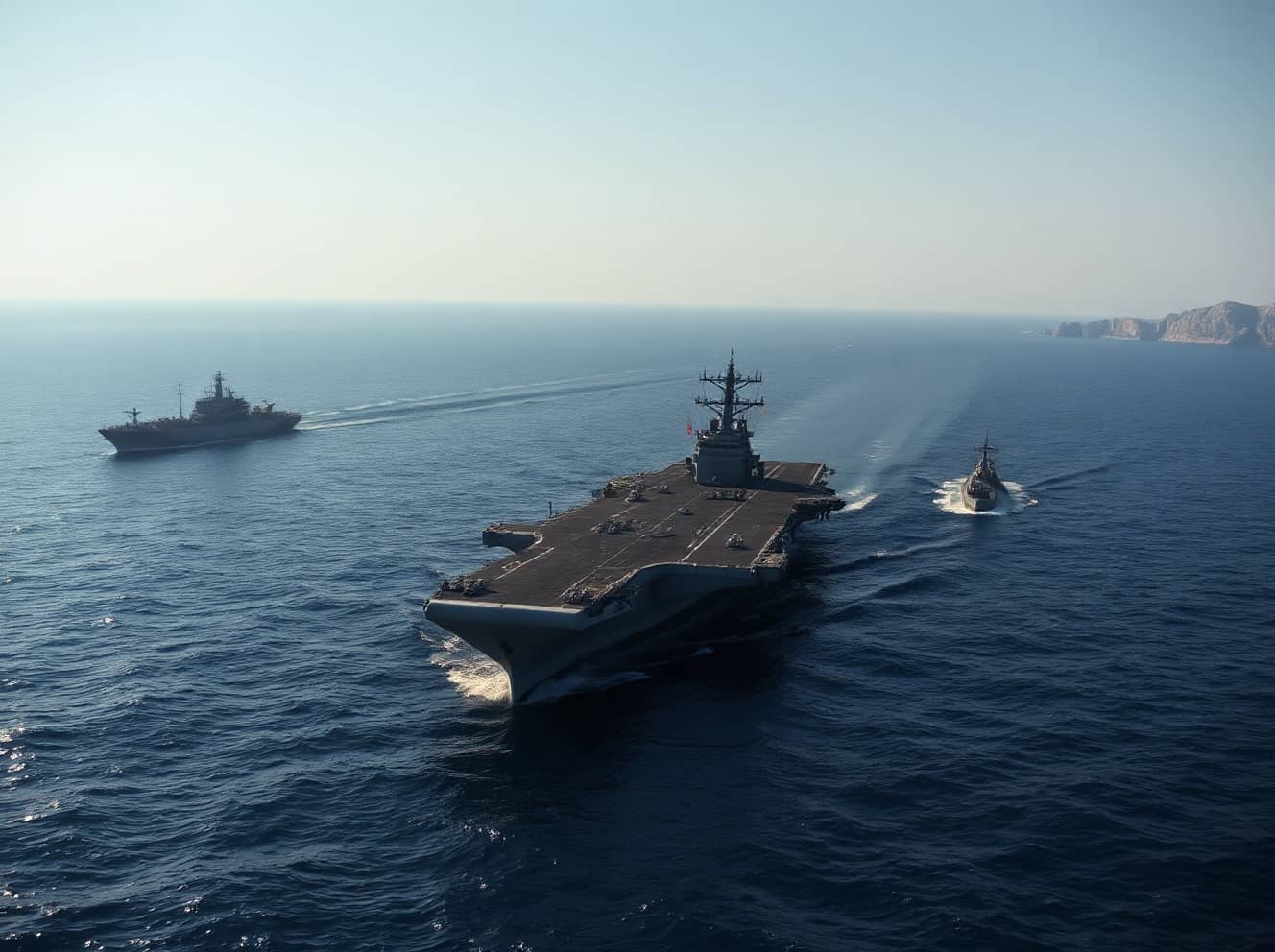

Assertion of Military Control Over Critical Waterway
President Donald Trump declared during a press briefing that the United States has "total control" over the Strait of Hormuz. The announcement was made on August 12, 2026, according to a report published by BitcoinWorld. The statement marks a significant shift in the public posture of the U.S. government regarding its military presence in the Middle East.
The Strait of Hormuz serves as the primary maritime link between the Persian Gulf and the Gulf of Oman. It is widely recognized as the world's most important oil passageway. The declaration by President Trump signals an escalation in the U.S. military posture in the region. This move carries immediate implications for global energy markets and diplomatic relations with Iran.
The BitcoinWorld report, authored by Jayshree, notes that the announcement has escalated tensions within the Gulf region. The publication of the article occurred on August 12, 2026, highlighting the immediacy of the geopolitical developments.
Strategic and Economic Significance
The Strait of Hormuz is a critical maritime chokepoint. It connects the Persian Gulf with the Gulf of Oman, facilitating the transit of global energy supplies. The strategic importance of this narrow waterway cannot be overstated in the context of international trade.
Approximately 20% of the global oil supply transits through this region. According to the U.S. Energy Information Administration, an estimated 21 million barrels of oil per day flowed through the strait. This volume underscores the vulnerability of global energy markets to disruptions in this specific geographic area.
The assertion of "total control" by the United States suggests a tightening of military oversight over these vital shipping lanes. Such a claim directly impacts the security of oil exports from Gulf Cooperation Council (GCC) countries. It also raises questions about freedom of navigation and international maritime law.
Implications for Regional Diplomacy and Markets
The announcement has immediate implications for diplomatic relations with Iran. Iran has long contested U.S. military activities in the Persian Gulf and has threatened to disrupt shipping if confronted. The declaration of control by President Trump is likely to be viewed as a direct challenge by Iranian officials.
Global energy markets are sensitive to any changes in the security of oil transit routes. The statement by President Trump introduces a new variable into the geopolitical landscape of the Middle East. Investors and policymakers are monitoring the situation closely for potential disruptions to supply chains.
The BitcoinWorld report indicates that the announcement has contributed to heightened tensions in the Gulf. Regional actors may respond to the increased U.S. military presence with their own strategic adjustments. The balance of power in the region is shifting, according to the reporting.
Market Reactions and Broader Context
The report from BitcoinWorld also touched on broader financial market movements occurring alongside the geopolitical news. U.S. Spot Ethereum ETFs saw a $7.4 million inflow, breaking a two-day outflow streak at the time of publication.
Gold prices retreated from June highs as oil-driven Federal Reserve rate-hike bets underpinned the U.S. dollar. The British pound against the U.S. dollar (GBP/USD) held below 1.3500 as the dollar firmed, with UK GDP data in focus.
Additionally, reports indicated that Securitize had released its Second Quarter 2026 results. Ripple and Stellar faced pressure as cautious sentiment built among investors. These financial developments occurred concurrently with the geopolitical announcement, reflecting the interconnected nature of global markets.
Regional Tensions and Future Outlook
The escalation in U.S. military posture is a central theme of the current situation. The claim of "total control" by President Trump is a bold diplomatic and military statement. It remains to be seen how other nations will respond to this assertion.
The Strait of Hormuz remains a focal point of international security. Its role in global energy supply ensures that any conflict or tension in the area has worldwide repercussions. The actions of the United States in this region will likely influence diplomatic negotiations and military strategies for years to come.
As tensions rise, the focus remains on the stability of oil supplies and the safety of maritime traffic. The announcement by President Trump has placed the Strait of Hormuz at the center of global attention once again.