

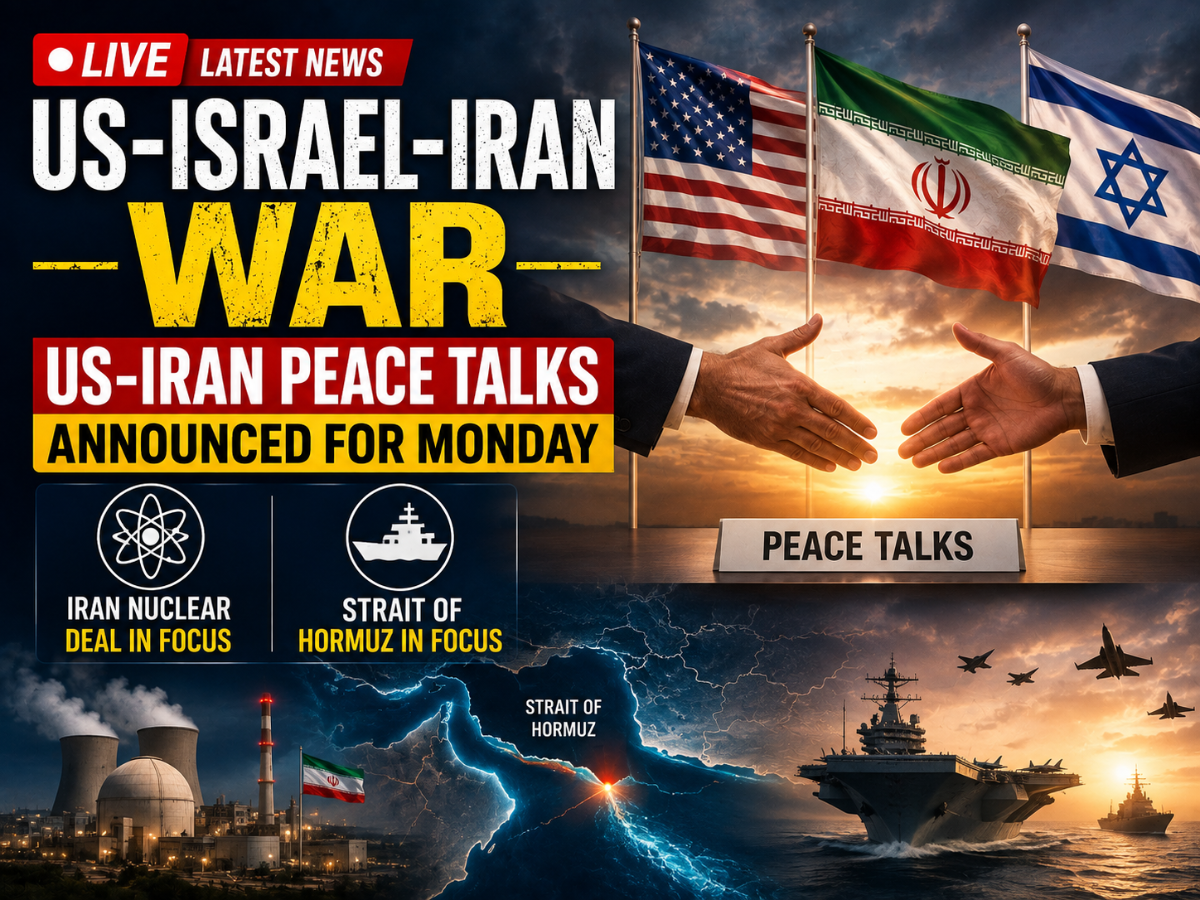

Peace Talks Scheduled Following Call Off of Strikes
US President Donald Trump announced that formal peace talks between Washington and Tehran are set to commence on Monday. This diplomatic shift follows a specific decision by the US administration to call off previously planned military strikes against Iran.
The discussions, which will take place after the pause in hostilities, are expected to focus primarily on three central issues: the future of the Iran nuclear deal, security concerns regarding the Strait of Hormuz, and broader regional stability. Trump stated that these negotiations represent a crucial diplomatic phase for the US-Israel-Iran conflict.
Speaking to reporters aboard Air Force One on Sunday, President Trump indicated that the United States was holding off on new strikes against Iran specifically to leave room for a deal that could reopen the Strait of Hormuz. The administration frames this pause as a response to requests from Iran and other Middle Eastern countries who have asked for more time to finalize an agreement.
Trump wrote late Saturday regarding his position, noting that he had received communications suggesting these nations wanted time to complete a deal that would bring about the "Immediate, Complete and Total" reopening of Hormuz. Traders interpreted this signal as indicating that the probability of a near-term supply-route shock in the region has fallen.
However, experts have warned that despite the diplomatic overtures, a prolonged conflict could still disrupt global oil supplies and weigh on the world economy if tensions escalate again or fail to resolve through these new channels. The announcement comes as analysts monitor whether this pause signifies a permanent de-escalation or merely a tactical delay in ongoing hostilities.
Market Reaction: Oil Prices Fall, Gulf Stocks Rise
The news of the paused strike triggered an immediate reaction in global energy markets. By 0802 GMT on Monday morning, Brent crude prices had fallen more than $4 per barrel as traders adjusted their valuations based on the new information.
Specific price data shows that by 0802 GMT, Brent crude was down $4.65, representing a decline of 5.29 percent to settle at $83.28 a barrel. In parallel trading sessions, US West Texas Intermediate fell $5.20, which equates to a drop of 6.14 percent, settling at $79.47 per barrel.
Market analysts noted that this decline reversed some of the rally observed in the previous month. That earlier surge had been driven by renewed fighting and attacks on tankers near Oman, which made shippers wary of loading cargo within the Gulf region.
In contrast to the drop in oil prices, equity markets in the Persian Gulf experienced gains early Monday morning as investors weighed the headlines regarding the Strait of Hormuz. Dubai's main stock index rose 1 percent following reports that US President Donald Trump had paused a potential strike on Iran.
Specific performance data from regional exchanges includes:
- Dubai's main index gained 1 percent as traders weighed headlines and the drop in Brent crude.
- Lender Emirates NBD saw its shares gain 1.9 percent during early trading sessions.
- In Abu Dhabi, stock indices added 0.2 percent to their value.
- Qatar's market also increased by 0.2 percent over the same period.
Telcom firm Ooredoo saw its shares rise 1.2 percent in Qatar during this window of optimism. Conversely, Saudi Arabia slipped 0.2 percent after a sharp drop in Saudi Awwal Bank shares contributed to regional variance. The divergence suggests that while the pause on strikes eased fears of wider conflict around the Strait of Hormuz, local banking sector specifics continue to drive individual stock movements.
XS.com MENA analyst Rania Gule commented on the sustainability of this market movement, stating that a durable rally still needs clear foreign buying and stronger trading volumes. She noted that while oil prices relaxed with Brent at $83.28, traders are dialing back near-term supply fears even as shipping risks linger.
Shipping Risks Persist in Strategic Waterways
Despite the positive signals from Washington regarding a potential deal to reopen Hormuz, operational realities on the ground remain tense. The UK Maritime Trade Operations reported that traffic through the Strait of Hormuz had slowed significantly following reports of vessel attacks.
The security situation involves specific incidents occurring over the weekend. Reports indicate three more tanker attacks since Saturday occurred in the region. Additionally, two Saudi oil tankers were observed transiting the Bab el-Mandeb Strait during this period.
Analysts emphasize that one optimistic post from a political figure does not remove operational risk for shipping companies navigating these chokepoints. The Bab el-Mandeb remains a critical transit route where ships continue to pass despite ongoing headlines regarding attacks on vessels in adjacent waters.
OPEC+ agreed to increase output by approximately 188,000 barrels per day starting from September as the organization continues unwinding voluntary production cuts. However, Reuters noted that this year's monthly hikes have not always shown up as extra supply reaching the market immediately.
The actual impact on market supply has been variable according to recent observations. Traders are watching closely whether the reopening of Hormuz will translate into immediate changes in global logistics or if continued tanker attacks will force rerouting through alternative, potentially longer and more expensive paths around Africa's southern tip.