


Trump Challenges Media Assessment of Political Influence
President Donald Trump has ignited a fresh controversy with the United States media, specifically directing his criticism towards NBC News journalist Kristen Welker. The core of this new dispute revolves around Welker’s characterization of his political endorsement record, which she reportedly described as yielding “mixed results.” This assessment, according to Trump, constitutes a significant misrepresentation of his political influence and success. In a decisive move, Trump announced his intention to formally report Welker to the Federal Communications Commission (FCC), alleging that her reporting inaccurately portrayed his political history and achievements.
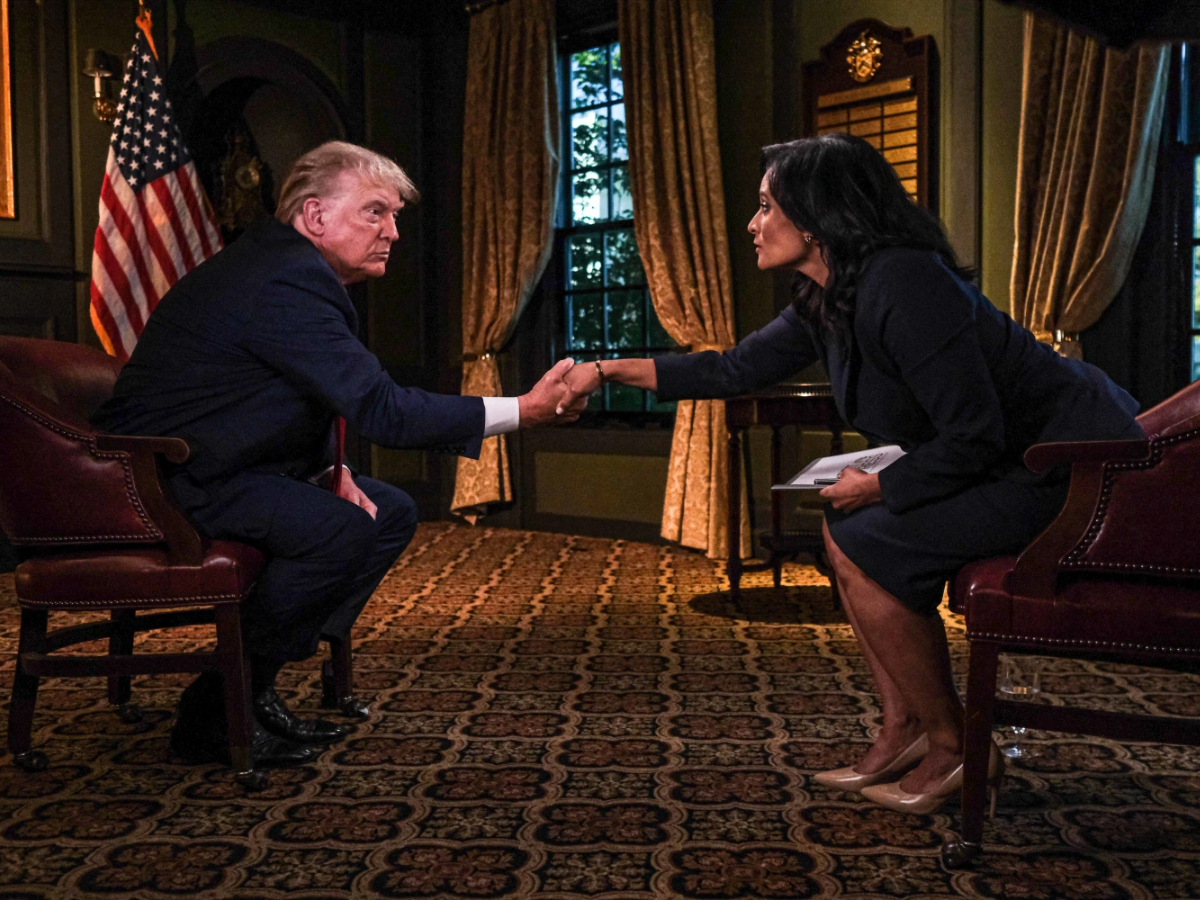
The former president's pointed criticism was disseminated through a post on his Truth Social platform. In his remarks, Trump vociferously questioned the professional judgment and journalistic integrity of Welker. He specifically argued that it was fundamentally inappropriate for a journalist to make such evaluative statements about his political record while employed by a major broadcaster that operates using public airwaves. This argument implies a higher standard of impartiality and accuracy for entities granted access to public spectrum. The Truth Social post was accompanied by an image and formed part of a more extensive message where Trump broadly denounced the media as “fake press,” a familiar refrain that underscores his enduring focus on shaping media narratives and challenging perceived biases as he gears up for future political engagements.
Dispute Over Endorsement Accuracy Ahead of 2026 Midterms
The controversy arises at a critical juncture, as Trump actively seeks to defend and bolster his claimed record of successful endorsements in the lead-up to the 2026 midterm elections. The former president has framed Welker’s reporting not merely as a difference in political analysis or opinion, but as a direct factual inaccuracy that, in his view, warrants stringent regulatory intervention. By invoking the FCC, Trump is attempting to leverage federal communication regulations as a tool against a major news network, signaling an escalation in his long-running confrontations with mainstream media outlets.
According to reports from The Sunday Guardian, the dispute was triggered after Welker described Trump’s endorsement results using the specific phrase, “mixed results.” This particular characterization stands in direct opposition to Trump’s own carefully cultivated narrative regarding his significant and often decisive influence on Republican candidates. Trump’s subsequent actions, including the threat of an FCC complaint, indicate a strategic approach to challenge media narratives that do not align with his self-reported political achievements and the perception of his continued dominance within the Republican party.
The Federal Communications Commission's Regulatory Scope
Trump’s decision to involve the FCC marks a significant escalation in his long-running clash with the U.S. media. The Federal Communications Commission is an independent agency of the United States government that regulates interstate and international communications by radio, television, wire, satellite, and cable. Its mandate includes ensuring that broadcasters operate in the public interest, a broad standard that can encompass various aspects of programming and conduct. By accusing Welker of presenting his political record inaccurately, Trump is effectively alleging a breach of these public interest standards, particularly given his emphasis on NBC News utilizing “public airwaves.”
The former president questioned how Welker could maintain her position while making such assertions, implying that her reporting violated the standards expected of broadcasters operating on the public spectrum. This move transforms a journalistic disagreement into a potential regulatory compliance issue, underscoring Trump’s view that media coverage is not solely an informational matter but also subject to federal oversight when it involves licensed broadcasters.
Trump's Consistent Media Scrutiny
This incident is not an isolated event but rather fits into a broader pattern of Trump’s interactions with the media. Throughout his political career, he has consistently challenged the veracity of news reports, often labeling critical coverage as “fake news” or the work of the “fake press.” By targeting a specific journalist, Kristen Welker, rather than issuing a general critique of the network, Trump has focused attention on individual accountability in political reporting. This strategy also serves to rally his base, who often share his skepticism of mainstream media, around the issue of perceived media bias and inaccuracy.
Political Stakes of Endorsement Claims
The timing of this dispute is particularly significant given the approaching 2026 midterm elections. Trump is actively engaged in defending and promoting his endorsement record, which he consistently claims has been overwhelmingly successful for Republican candidates across the country. Welker’s assessment of “mixed results” stands in direct opposition to this crucial political claim, creating a factual disagreement that has now moved beyond mere political debate into the realm of a formal regulatory complaint.
Trump’s actions on Truth Social serve a dual purpose: to rally his loyal base around the issue of media bias and perceived unfairness, while simultaneously applying pressure on NBC News through the threat of a potential federal investigation. The former president’s persistent focus on broadcasters’ use of public airwaves underscores his argument that these entities have a fundamental duty to provide accurate and unbiased political reporting, particularly when it pertains to a former president who remains a dominant figure in national politics and a potential future presidential candidate.
The dispute remains primarily focused on the specific wording used by Welker and Trump’s interpretation of those words as factually inaccurate and biased. As of the available reports regarding this specific incident, no official response from NBC News or Kristen Welker has been included. The situation continues to develop as Trump pursues his stated goal of reporting Welker to federal authorities, further intensifying the ongoing tension between a prominent political figure and the institutions of the press.