

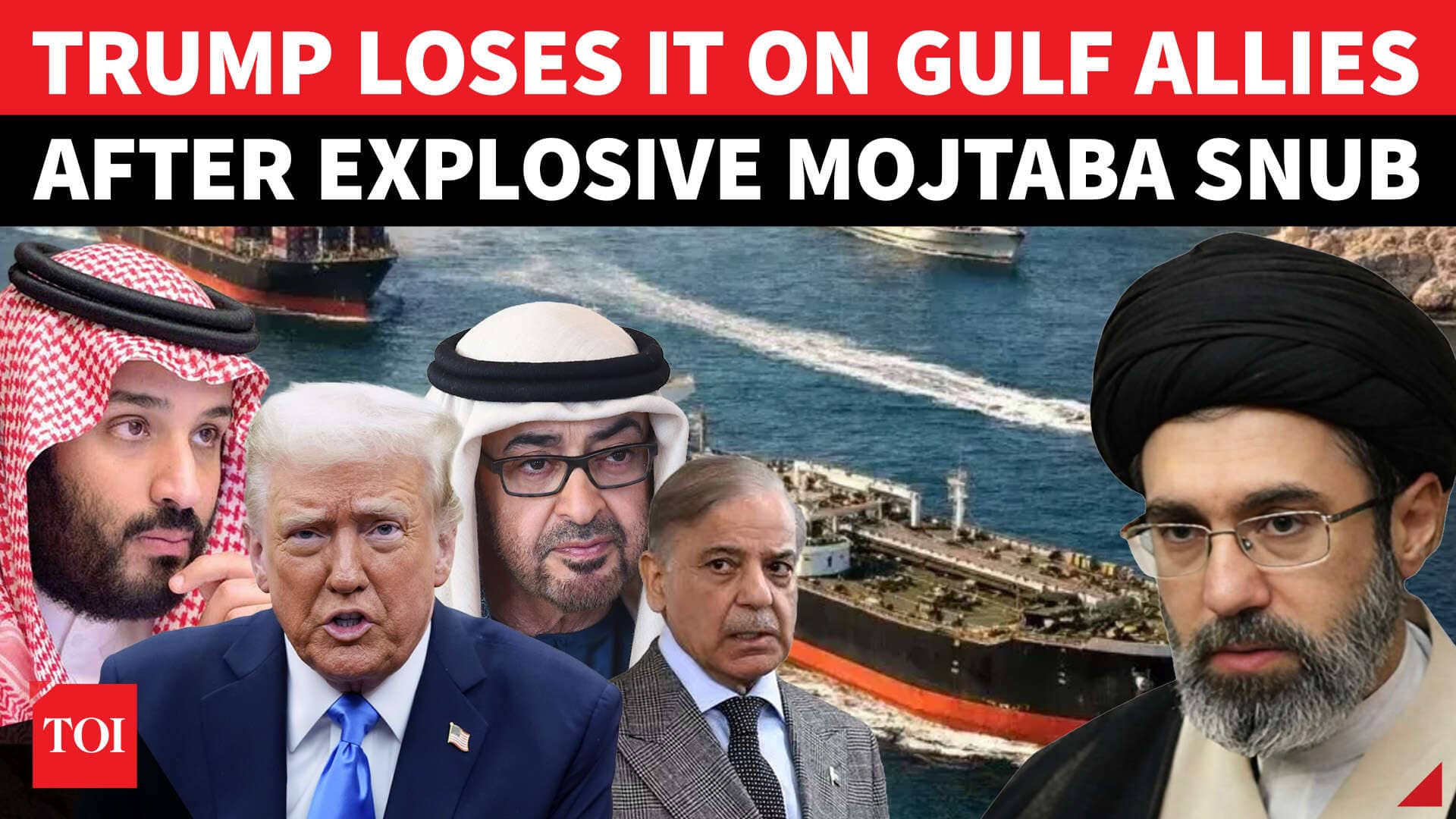

Former President Trump Calls for Abraham Accords Expansion
Former U.S. President Donald Trump has issued a public call for Saudi Arabia and Qatar to immediately join the Abraham Accords, a series of normalization agreements between Israel and several Arab nations. The appeal was made in a lengthy post on Truth Social, where Trump outlined his vision for an expanded regional peace framework. This push comes amidst ongoing global discussions regarding oil markets and geopolitical stability.
In his statement, Trump emphasized the urgency of the matter, urging both Gulf states to participate in what he described as a historic opportunity. The Abraham Accords, initiated during his presidency, have been a cornerstone of his Middle East foreign policy efforts, aiming to foster greater cooperation and stability in the region.
Understanding the Abraham Accords
The Abraham Accords represent a series of treaties and normalization agreements brokered by the United States, primarily between Israel and several Arab nations. The first agreements were signed in August and September 2020, marking a significant shift in Middle East diplomacy. Historically, most Arab nations had maintained a policy of non-recognition of Israel, conditioned on the resolution of the Israeli-Palestinian conflict.
The initial signatories to the Abraham Accords included the United Arab Emirates (UAE) and Bahrain, which signed peace treaties with Israel at the White House on September 15, 2020. Subsequently, Sudan and Morocco also normalized relations with Israel under the framework of the accords. These agreements established full diplomatic, economic, and cultural ties between the signatory nations and Israel, leading to increased trade, tourism, and security cooperation.
Proponents of the accords have highlighted their role in fostering regional stability and economic growth by circumventing traditional diplomatic stalemates. The agreements were presented as a new paradigm for peace, focusing on shared strategic interests, particularly in countering regional threats and promoting economic integration.
Trump's Broader Vision: Iran's Potential Role
Beyond the immediate call for Saudi Arabia and Qatar to join, former President Trump articulated an even broader vision for regional integration. He suggested that Iran itself could eventually become part of the accords, contingent upon a significant diplomatic breakthrough. Specifically, Trump stated that Iran's inclusion would be possible “if a broader deal is reached to end the war.” This condition implies a comprehensive resolution to existing conflicts and tensions that have long characterized relations between Iran and other regional powers, as well as the United States.
Trump characterized his proposal as a “historic opportunity” to forge a “United, Powerful, and Economically Strong” Middle East. He underscored the potential for unprecedented prosperity and stability that could arise from such widespread normalization and cooperation. In his Truth Social post, he also issued a stark warning to regional countries, cautioning them against staying outside what he termed the “most important Deal” they would ever sign. This statement reflects a belief that the accords offer unparalleled benefits and that non-participation would result in missed opportunities for economic advancement and security.
Geopolitical Landscape and Oil Market Dynamics
The former president's renewed push for the expansion of the Abraham Accords comes amid a complex global geopolitical landscape, particularly concerning the global oil crisis. International oil markets have experienced significant volatility in recent years, influenced by factors such as geopolitical conflicts, supply chain disruptions, and shifting global demand. Major oil-producing nations, including Saudi Arabia and Qatar, play pivotal roles in these markets, and their diplomatic alignments can have broader implications for global energy stability.
Pressure on leaders regarding the global oil crisis often relates to ensuring stable supply, managing price fluctuations, and navigating the economic impacts on domestic and international economies. Saudi Arabia, as the world's largest oil exporter and a key member of OPEC+, holds substantial influence over global crude oil prices and supply. Qatar is a major global supplier of liquefied natural gas (LNG). Therefore, any diplomatic initiative involving these nations is often viewed through the lens of its potential impact on energy security and economic cooperation.
The integration of Saudi Arabia and Qatar into a broader regional peace framework, as envisioned by Trump, could potentially reshape alliances and economic partnerships in the Middle East. Such a development could be seen as contributing to a more stable environment, which in turn might have indirect effects on global energy markets by fostering greater regional predictability and cooperation among key energy producers.