

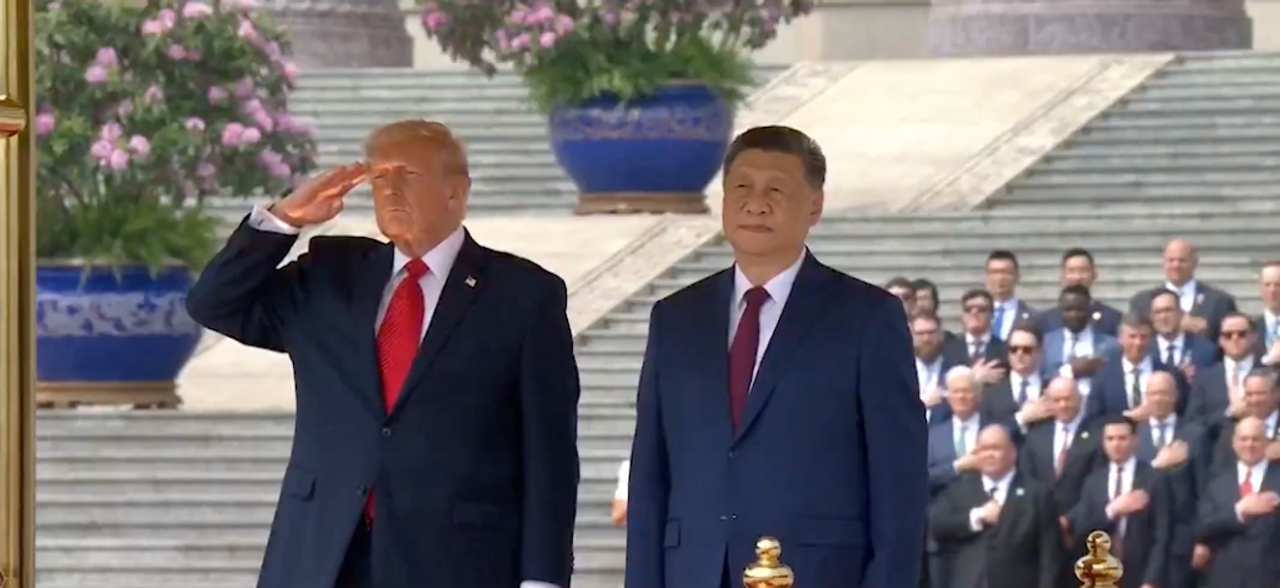

The Global Economic Weight of the US and China
The contemporary global economic order is deeply influenced by the relationship between the United States and China. Together, these two nations represent the largest economies in the world, accounting for nearly forty percent of global gross domestic product (GDP). Their combined economic weight positions them as dominant forces in international trade flows, technological innovation, financial markets, and geopolitical stability across multiple continents.
The trajectory of America-China relations has become one of the most consequential bilateral dynamics of the twenty-first century. Global economic outcomes, including whether the world experiences growth or recession and stability or disruption, are increasingly dependent on the status of this relationship. The interplay between these two powers dictates the pace and direction of international commerce, with their combined influence shaping markets and policies worldwide.
A Four-Decade Arc of Interdependence
Forging a Productive Partnership
A primary strength of the America-China relationship lies in its extraordinary economic interdependence, which has been built over the past four decades. This integration combined Chinese manufacturing capabilities with American capital, technology, and consumer markets to create what is described as one of the most productive economic partnerships in modern history. This profound economic integration has been a cornerstone of globalization.
During this period, China emerged as the world’s manufacturing hub, transforming its economy and becoming a central player in global supply chains. Simultaneously, the United States remained the center for global finance, innovation, and consumption, providing the capital, technological advancements, and market demand that fueled this partnership. This arrangement fostered globalization, significantly lowered production costs for goods worldwide, and contributed substantially to poverty reduction, particularly in Asia, by lifting hundreds of millions of people out of poverty through economic development and opportunity.
Widespread Economic Advantages
American companies benefited significantly from this arrangement through access to China’s vast and cost-effective labor force, which allowed for efficient production and competitive pricing. Furthermore, these companies gained access to China's rapidly expanding consumer market, presenting new avenues for growth and revenue. In return, the consistent flow of Chinese exports provided affordable goods to American consumers, enhancing purchasing power and contributing to a higher standard of living.
This flow of goods also played a crucial role in helping to maintain low inflation within the United States for an extended period. The economic structure allowed for efficient production in China while leveraging American financial and technological strengths, creating a mutually reinforcing cycle that supported global economic growth for many years. This deep integration underscored a period of unprecedented economic expansion and interconnectedness.
The Paradox of Partnership and Rivalry
Navigating Dual Identities
The nature of the US-China relationship is characterized by a distinct paradox. According to reporting, the United States and China are simultaneously economic partners, fierce competitors, and strategic rivals. This duality means that while the two nations are deeply economically interdependent, relying on each other for various aspects of their economies, they remain politically distrustful of one another, often pursuing divergent geopolitical agendas.
This complex dynamic creates a challenging environment for global commerce and international relations. On one hand, their cooperation is essential and currently sustains vast international trade networks, facilitating the movement of goods, services, and capital across borders. On the other hand, their ongoing rivalry poses a significant risk of fragmenting the international economic system, potentially leading to trade barriers, technological decoupling, and a less integrated global economy. Understanding both the strengths derived from their interdependence and the shortcomings stemming from their rivalry is considered essential to understanding the future trajectory of the global order itself.