

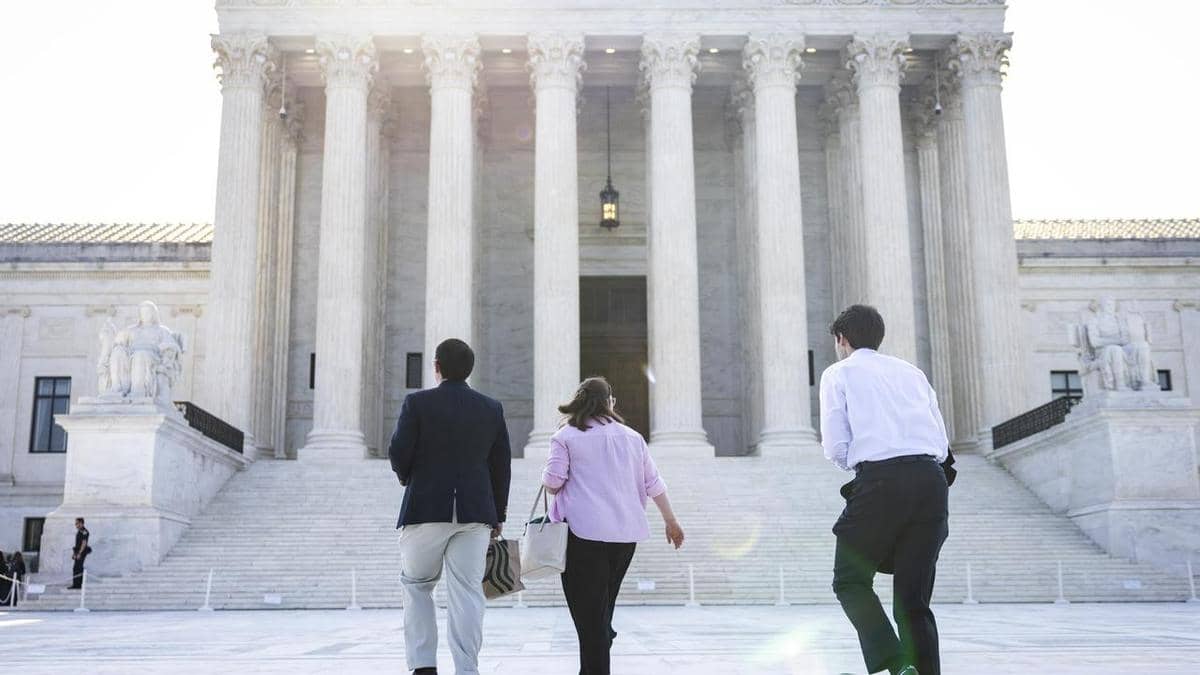

Supreme Court Strikes Down Executive Order on Birthright Citizenship
The US Supreme Court has rejected a legal challenge brought by President Donald Trump against birthright citizenship, effectively striking down an executive order that sought to deny citizenship to children born in the United States to undocumented immigrants. The decision, reported on June 30 (IST) with an update timestamp of Tuesday, June 30, 2026, serves as a significant legal setback for the Trump administration.
In its ruling, the Court reaffirmed that the Fourteenth Amendment to the United States Constitution guarantees citizenship by birth. This decision preserves over 150 years of constitutional precedent established since the Amendment was ratified in 1868. The ruling maintains the longstanding principle that all individuals born on US soil are citizens at birth.
Reports regarding the margin of the Court's decision present conflicting information. One source cited a 6-3 conservative majority for the rejection of the curbs on citizenship. However, another report from The Free Press Journal described the outcome as a closely divided 5-4 ruling that struck down the executive order.
Legal Precedent and Constitutional Protections
The Court's decision centers on the interpretation of the Fourteenth Amendment, which has served as the foundation for birthright citizenship since its ratification in 1868. By upholding this precedent, the justices rejected the administration's attempt to alter the legal status of children born to undocumented immigrants within the country.
The Free Press Journal reported that the ruling deals a "major legal setback" to the Trump administration. The outlet noted that the decision reinforces constitutional protections enshrined in the Fourteenth Amendment, ensuring that the executive branch cannot unilaterally override established constitutional guarantees regarding citizenship by birth.
Other outlets, including the Santa Fe New Mexican and The Sun Chronicle, also reported on the Supreme Court's action to uphold birthright citizenship and reject Trump's proposed limits. These reports align with the broader confirmation that the executive order was invalidated by the highest court in the land.
Conflicting Reports on Voting Margin
The exact vote count among the justices remains a point of variation in reporting. While one account suggests a 6-3 conservative majority, another specifies a 5-4 split. Despite the discrepancy in the reported margin, both sources agree that the executive order was struck down and birthright citizenship was upheld.
The decision underscores the limits of executive power when it conflicts with constitutional amendments. By citing the ratification of the Fourteenth Amendment in 1868, the Court anchored its ruling in historical legal continuity rather than political expediency.
Impact on Administration Policy
The rejection of the executive order marks a definitive end to the administration's attempt to redefine citizenship for a specific demographic group. The ruling ensures that children born in the United States to undocumented immigrants retain their status as citizens at birth, consistent with previous legal interpretations.
Observers note that this outcome prevents the Trump administration from implementing a policy that would have stripped citizenship from newborns based on the immigration status of their parents. The preservation of the 150-year precedent highlights the Court's role in maintaining established constitutional norms against executive challenges.
The ruling was reported as occurring on June 30, 2026, according to IST timing. The decision stands as a check on executive authority, affirming that birthright citizenship remains protected under federal law and cannot be altered by presidential decree.