

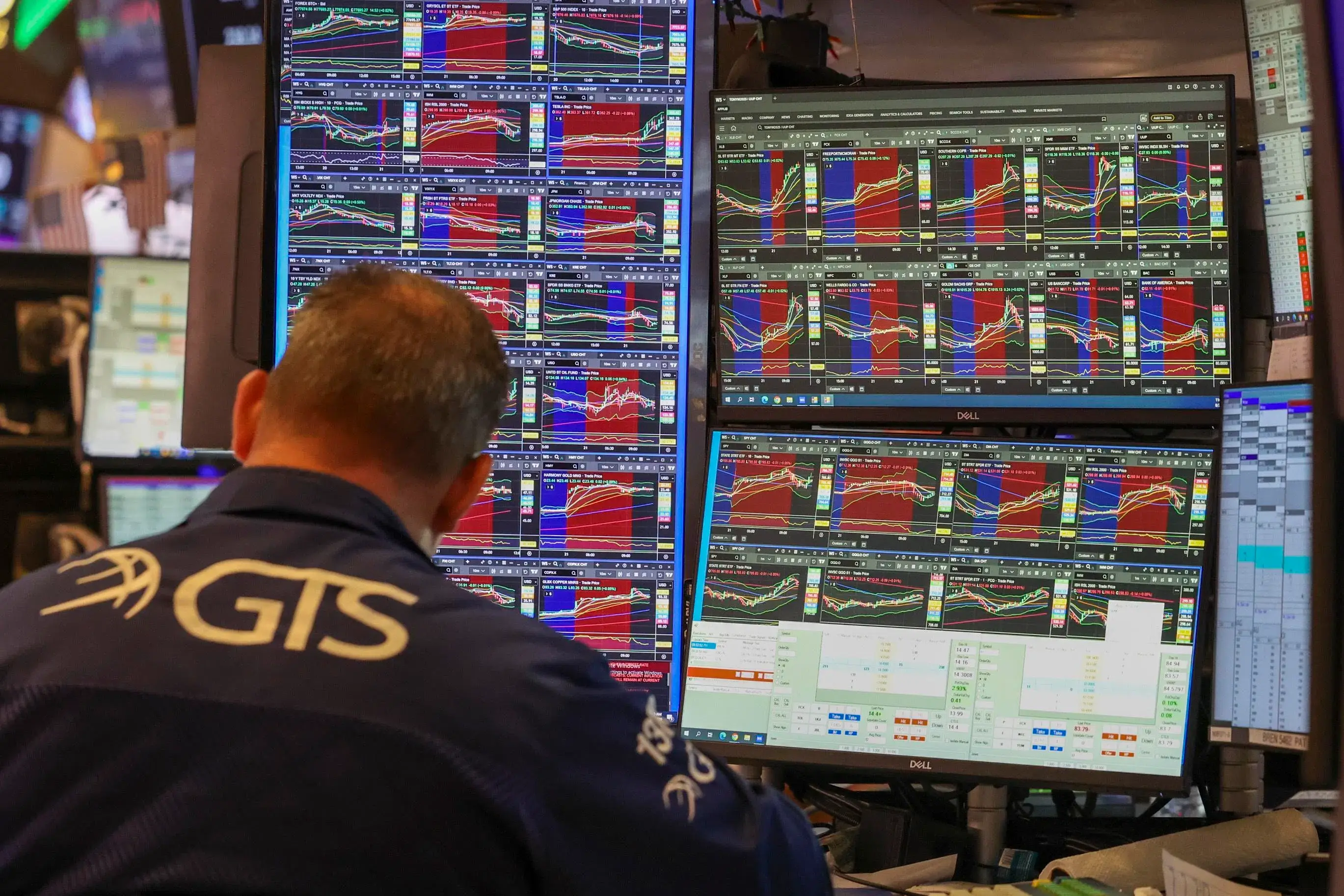

Tech Sector Rebound Fuels Broad Market Advance
Wall Street’s main indexes closed higher on Tuesday, August 25, as technology stocks recovered from a recent selloff, providing a significant boost to overall market sentiment. This rebound occurred ahead of the highly anticipated quarterly results for Nvidia, a company widely recognized as a central figure in the current artificial intelligence boom. All three major U.S. stock indices posted gains for the day, signaling a broader positive shift in investor confidence.
The Dow Jones Industrial Average notably rose by 160.24 points, or 0.30 percent, to close at 53,577.4. This upward movement in the Dow, alongside gains in other key indices, was largely attributed to the recovery in tech shares. Investors found relief from the pressures exerted by a recent rout in the bond market, which had previously driven up yields and consequently weighed heavily on equity prices across various sectors.
Further contributing to the market's positive performance, investors found additional support from declines in both oil prices and bond yields. Longer-dated Treasury yields fell on Tuesday, a development that directly contributed to the upward movement in equities by making stocks relatively more attractive. Concurrently, oil prices dropped to a one-week low during the trading session, easing concerns about inflationary pressures and energy costs that can impact corporate profitability and consumer spending.
Bond Market Shifts Ease Investor Concerns
Market participants continued to closely weigh the implications of Treasury Secretary Scott Bessent’s decision to expand Treasury buybacks. This policy move, aimed at improving liquidity and potentially managing the supply of outstanding government debt, was a significant factor influencing bond market dynamics. The combination of falling longer-dated Treasury yields and lower oil prices helped to ease a range of concerns that had been sparked by earlier volatility in fixed-income markets, which had seen yields rise sharply in prior sessions.
Treasury Buybacks and Yield Dynamics
The decline in longer-dated Treasury yields on Tuesday was a critical component of the day's market rally. When bond yields fall, the cost of borrowing for companies and consumers can decrease, potentially stimulating economic activity. Furthermore, lower bond yields can make the future earnings of growth-oriented companies, particularly in the technology sector, appear more valuable, thereby supporting their stock prices. The market's positive reaction indicated that investors were welcoming the reduced pressure from the bond market, which had been a source of anxiety for several weeks.
Economic Optimism Amidst Global Pressures
Joe Quinlan, head of market strategy for Merrill and Bank of America Private Bank, offered insights into the complex forces at play within financial markets. He highlighted the multifaceted nature of current market drivers, stating, "There’s a lot of push and pull — in the bond market, geopolitics, oil." This observation underscores the intricate web of factors, from domestic monetary policy to international events and commodity price fluctuations, that investors must navigate.
Despite these complexities, Quinlan conveyed a generally optimistic outlook regarding the broader economic landscape. He affirmed his institution's constructive view, noting, "But we’re pretty constructive on the outlook (for) the next 12, 18 months on the US economy; therefore, we are constructive on the markets as well." This perspective suggests that underlying economic fundamentals are perceived as strong enough to support continued market growth, even amidst ongoing volatility in specific sectors or asset classes.
Nvidia's Earnings: A Test for the AI Rally
Nvidia’s highly anticipated earnings report, scheduled for release on Wednesday, is being viewed by analysts and investors alike as a pivotal moment for the current earnings-driven rally in U.S. stocks. The company's performance is expected to provide critical insight into the sustainability of the rapid growth observed within the artificial intelligence sector, which has been a primary driver of market gains throughout the year.
Valuations and Growth Sustainability
Market observers have indicated that any signs of slowing growth in Nvidia’s results could reignite significant concerns regarding stretched valuations across the technology sector. Nvidia, as a leading supplier of chips essential for AI development, has seen its stock price surge, reflecting high expectations for future expansion. Should the company's report suggest a deceleration in its growth trajectory, it could prompt a broader re-evaluation of how long the AI boom can sustain current market levels, particularly if growth indicators weaken across the industry.
The outcome of Nvidia's report is thus seen as a potential pivot point for investor sentiment regarding tech-heavy portfolios. A strong report could reinforce confidence in the AI narrative and potentially extend the rally, while a weaker-than-expected performance could trigger profit-taking and a shift in investment strategies, especially concerning companies whose valuations are heavily reliant on projected AI-driven growth.
September's Historical Headwinds Loom
The market’s positive performance on Tuesday may play a crucial role in setting the tone for September, a month that has historically been weaker for stocks. Investors are closely monitoring current trends to gauge whether the recent gains, particularly in the technology sector, can persist or if seasonal headwinds will impact equity prices in the coming weeks, potentially leading to increased volatility.
While the immediate focus remains squarely on Nvidia’s earnings and the ongoing movements within the bond market, the broader context for investors includes a range of other significant factors. These encompass ongoing geopolitical developments, which can introduce uncertainty and affect global supply chains, as well as fluctuations in commodity prices, such as oil, which directly impact corporate costs and consumer purchasing power. Traders are actively assessing how these diverse elements interact with corporate earnings reports to determine the likely direction of the market in the near term, as they prepare for a month often characterized by increased caution.