

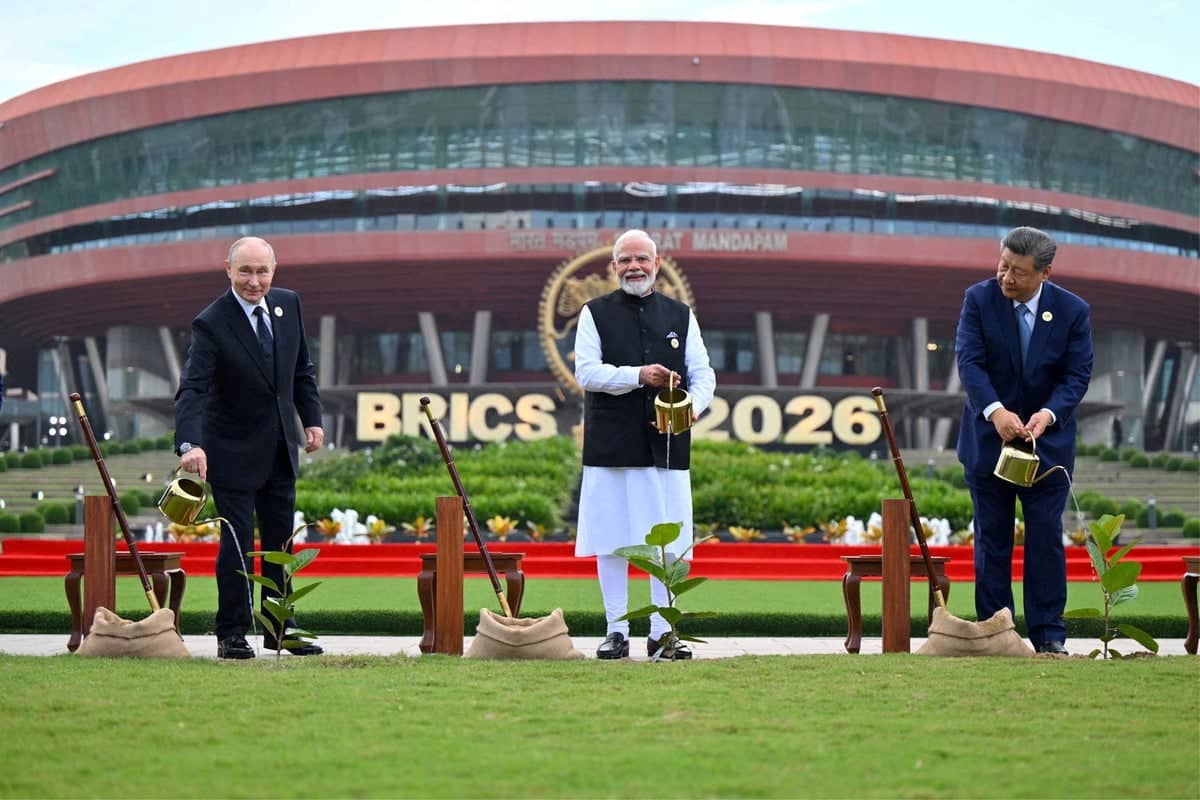

Xi Jinping Skips New Delhi Gala Dinner Amid Diplomatic Tensions
Chinese President Xi Jinping did not attend the gala dinner hosted by Indian Prime Minister Narendra Modi during the BRICS summit held in Delhi. The absence of the Chinese leader from the formal evening event coincided with broader difficulties among member states to reach a unified position on major international conflicts.
The summit, which brought together leaders from the developing world, concluded with the adoption of a joint statement that analysts described as watered-down and muted in its language. The subdued tone of the document reflected significant divisions within the expanding bloc regarding how to address ongoing geopolitical crises.
India’s Prime Minister Narendra Modi hosted the event at a time when the global political landscape was marked by sharp divisions. Two BRICS members, Iran and Russia, are currently involved in major wars. According to reports, several allies of these nations have experienced attacks, instability, and serious disruption as a direct result of these conflicts.
Struggles to Agree on Ukraine and Middle East Conflicts
The summit struggled to reach an agreement on the conflicts in Ukraine and the Middle East. The inability to produce a strong, unified declaration highlighted the contradictions at the heart of the BRICS organization as it seeks to present a cohesive front on the global stage.
Analysts suggest that the muted language in the joint statement reflects deep divisions within the expanding BRICS bloc. The divergent interests and geopolitical alignments of member states have made it difficult to formulate a consensus on issues where members have opposing stakes or relationships with the parties involved in the conflicts.
The presence of Iran and Russia, both of which are embroiled in major wars, has complicated diplomatic efforts within the group. The instability and disruption faced by their allies have further strained the ability of the bloc to present a unified narrative regarding these ongoing hostilities.
India’s Behind-the-Scenes Diplomatic Efforts
Amidst these public disagreements, India is reportedly engaged in behind-the-scenes diplomacy to address the divisions within the group. New Delhi has worked to manage the conflicting interests of member states to ensure the summit concludes with some form of agreement, even if that agreement is limited in scope.
The diplomatic efforts have focused on navigating the complex web of alliances and rivalries that define the current geopolitical environment. By working quietly behind the scenes, India aims to mitigate the visible fractures within the bloc and maintain the relevance of the BRICS platform despite internal disagreements.
Geopolitical Context of the Summit
The summit took place at a time of significant geopolitical division. The world is currently characterized by competing interests and active conflicts that have drawn in major powers and their respective allies. Within this context, BRICS members find themselves on different sides of numerous international disputes.
China aims to start a third 'golden decade' of BRICS cooperation, according to reports. However, the challenges faced during the Delhi summit, including Xi Jinping’s absence from the gala dinner and the watered-down joint statement, illustrate the difficulties inherent in aligning such a diverse group of nations.
The events in New Delhi laid bare the contradictions at the heart of BRICS. While the organization seeks to expand its influence and represent the developing world, the internal disagreements over how to respond to wars in Ukraine and the Middle East reveal the limits of its cohesion.
Implications for Future Cooperation
The muted outcome of the summit raises questions about the future ability of BRICS to act as a unified political force. The deep divisions highlighted by the joint statement suggest that member states may continue to pursue independent diplomatic tracks rather than coordinated bloc strategies.
As the bloc expands, managing these internal contradictions will become increasingly complex. India’s behind-the-scenes diplomacy represents one approach to maintaining unity, but the fundamental differences in national interests among members remain a persistent challenge for the organization’s collective goals.