


Introduction: China's Evolving Global Stature
\nIn recent years, the international community has observed a notable shift in global power dynamics, with the People's Republic of China, under the leadership of President Xi Jinping, demonstrating an increasingly assertive role on the world stage. This period has been characterized by China's expanding economic footprint, its growing diplomatic engagements, and a perceived consolidation of power domestically. Observers and analysts have frequently pointed to various events and trends as indicators of this evolving geopolitical landscape, suggesting a momentum that favors Beijing's global direction.
\n\nThe 2017 State Visit to Beijing
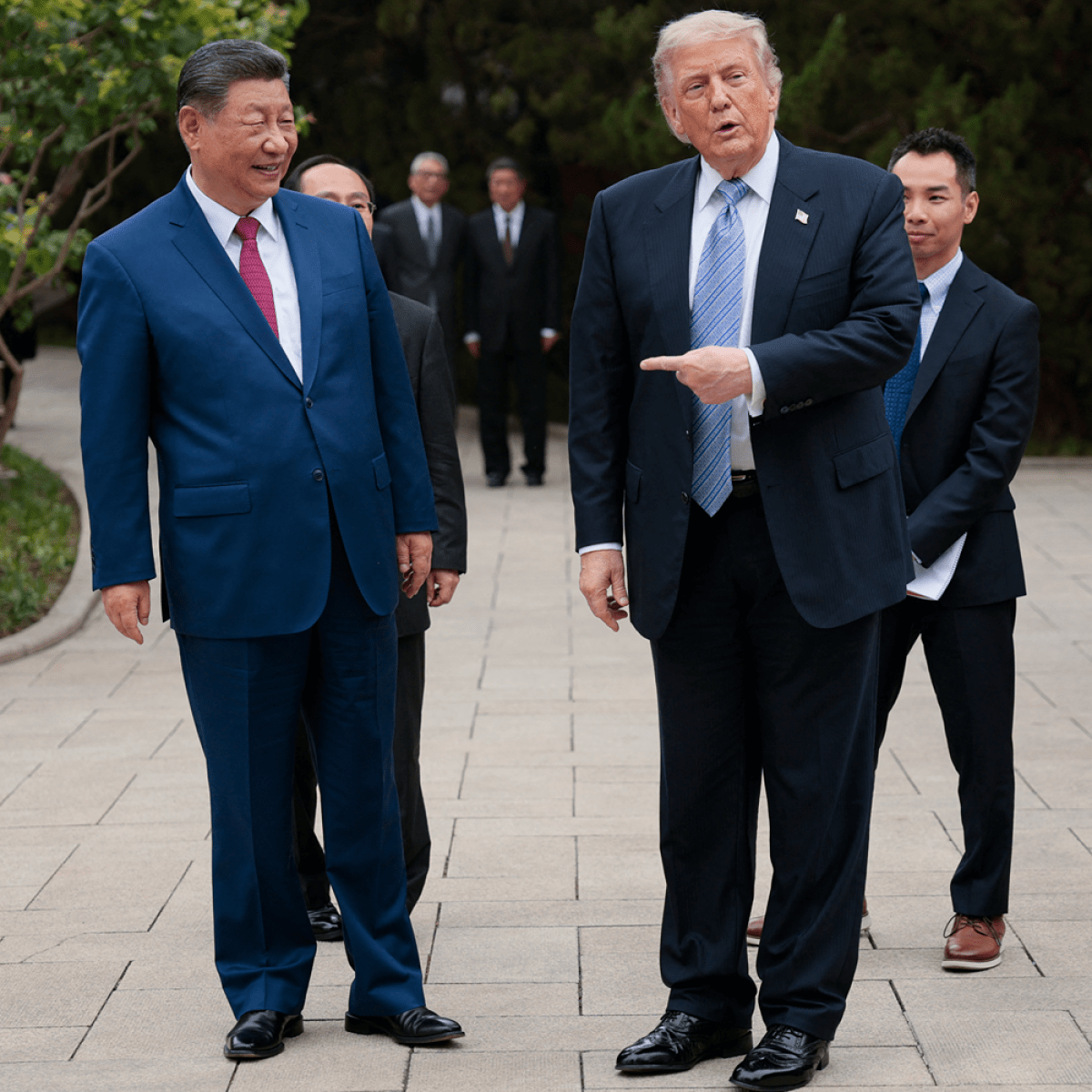
\nA significant event that drew international attention to these shifting dynamics was the state visit of then-President Donald Trump to Beijing in November 2017. The visit, part of a broader tour of Asia, was characterized by an unusually elaborate reception for a foreign head of state, which Chinese state media described as a "state-plus" visit. This included a welcome ceremony at the Great Hall of the People, a private tour of the Forbidden City, and a state dinner, among other high-profile engagements.
\nDuring the visit, President Trump and President Xi Jinping engaged in discussions covering trade, North Korea, and other bilateral and regional issues. The two nations announced a series of commercial deals totaling over $250 billion, spanning sectors such as energy, manufacturing, and technology. These agreements, while significant in their monetary value, were also viewed by some as symbolic of the deep economic ties and interdependence between the two largest economies in the world.
\n\nInterpretations of Geopolitical Shifts
\nThe optics and outcomes of the 2017 Beijing visit were widely interpreted by international observers as indicative of a changing geopolitical environment. Analysts suggested that the grand reception extended to President Trump underscored China's confidence and its desire to project an image of strength and stability on the global stage. The emphasis on bilateral economic cooperation, even amidst underlying trade tensions, was seen by some as a demonstration of China's economic leverage and its capacity to engage with major global powers on its own terms.
\nReports from various media outlets at the time highlighted the contrast between the reception in Beijing and previous presidential visits, suggesting that China was increasingly dictating the terms of engagement. This was perceived by some as a subtle but clear signal that the "wind was blowing in China's direction," indicating a growing influence in international affairs and a more prominent role in shaping global norms and institutions.
\n\nBroader Context of China's Rising Influence
\nThe observations surrounding the 2017 Trump visit were not isolated but rather fit into a broader narrative of China's expanding global influence. This narrative includes several key components:
\n- \n
- Economic Initiatives: China's Belt and Road Initiative (BRI), launched in 2013, continued to gain momentum, drawing numerous countries into infrastructure development projects and economic partnerships. This initiative has been viewed as a cornerstone of China's strategy to enhance its connectivity and influence across Asia, Africa, and parts of Europe. \n
- Diplomatic Engagement: Beijing has increased its participation and leadership roles in various international organizations, including the United Nations and the World Trade Organization. China has also established new multilateral institutions, such as the Asian Infrastructure Investment Bank (AIIB), which has attracted a wide range of member states. \n
- Technological Advancement: China's investments in research and development, particularly in areas like artificial intelligence, 5G technology, and renewable energy, have positioned it as a significant player in global technological innovation. \n
- Internal Political Consolidation: Domestically, President Xi Jinping had overseen a period of significant political consolidation. While the constitutional amendment removing presidential term limits occurred in March 2018, after the Trump visit, the trajectory of Xi's leadership was already widely recognized as strengthening, contributing to the perception of a unified and determined national direction. \n
These factors, combined with the specific dynamics observed during high-level diplomatic engagements like the 2017 state visit, contributed to a widespread perception among geopolitical analysts that China's global trajectory was gaining significant momentum. The visit served as a visible illustration of a shift in the international balance, where China's role and influence were increasingly central to global discussions and developments.