


The Transactional Trap and Eroded Leverage
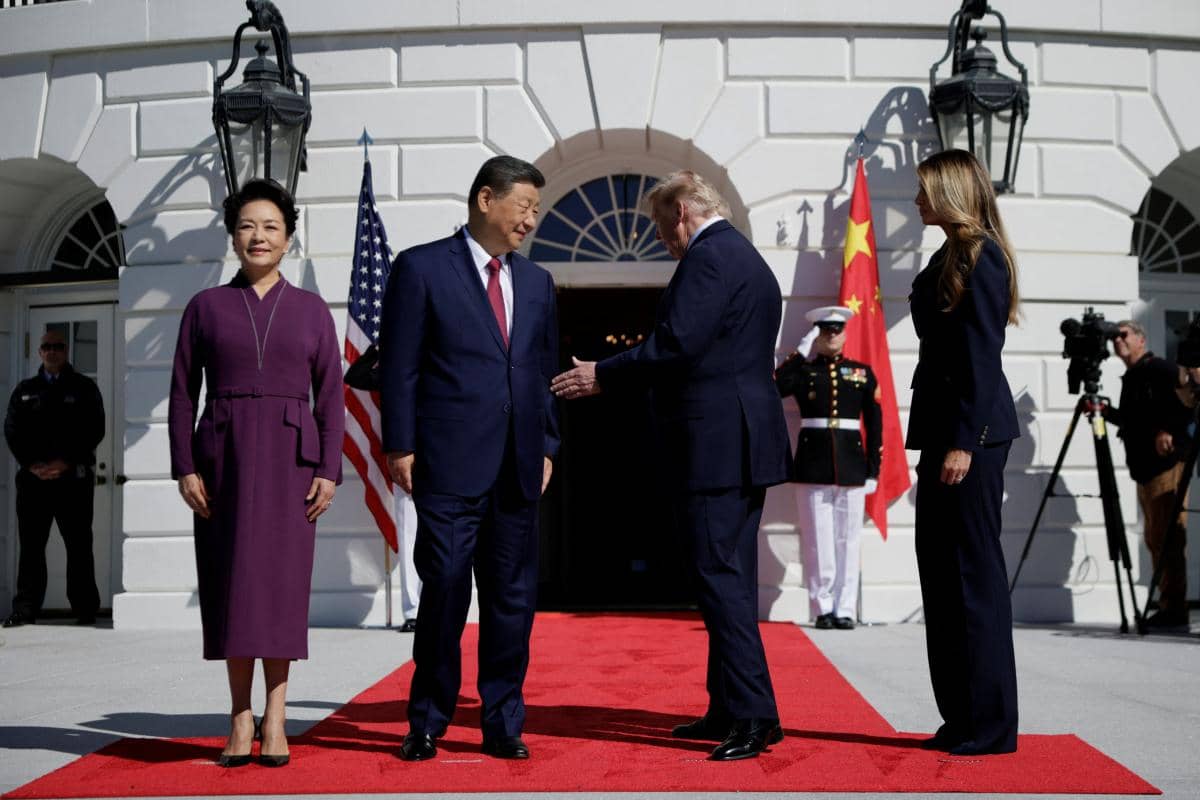
U.S. President Donald Trump has undermined the United States’ capacity to protect its interests related to China and its role as a provider of regional security in Asia during his second term, according to an analysis published in Foreign Affairs. The publication argues that Trump’s approach to Beijing has prioritized building warm personal ties with Chinese leader Xi Jinping while discounting or ignoring long-standing sources of tension.
This strategy has reduced Washington’s leverage in bilateral relations. Trump views Xi Jinping less as a determined geopolitical foe than as a transactional business rival with whom he can negotiate to stabilize bilateral ties. His views on China are described as iconoclastic in Washington and at odds with other members of his administration and party, who generally agree that China is the United States’ foremost strategic competitor.
Trump embraces a narrow conception of competition focused primarily on the size of China’s trade surplus and its export of chemicals used to make fentanyl. This perspective contrasts sharply with the broader strategic concerns held by other officials within his own government and political party, creating a disconnect between the president’s personal diplomacy and the structural realities of great-power rivalry.
Allied Hedging and the Perception Gap
The administration’s sustained attacks on allies and partners have driven them to hedge against the United States and strengthen their ties with China. Beijing has cast itself as a steady counterweight to an erratic Washington, according to the Foreign Affairs report.
Pew Research Center survey data from spring 2026 shows that in 25 of 36 countries surveyed—including Australia, Canada, France, Germany, and Mexico—more respondents had a favorable view of China than of the United States. This shift in global sentiment coincides with the administration’s diplomatic posture, suggesting that U.S. efforts to isolate Beijing may be backfiring among traditional partners.
Domestically, recent polling indicates that only a small share of Americans in seven battleground states view China as an enemy or consider it one of the top threats to U.S. security. Despite this limited public perception of threat, the authors argue that reversing course on China policy would be detrimental to long-term U.S. interests, particularly given the erosion of American influence abroad.
Historical Contradictions and Strategic Realism
The analysis highlights contradictions in Trump’s historical approach to Beijing. During the COVID-19 pandemic, Trump empowered senior advisers to implement a hard-line approach to China, including challenging the legitimacy of Chinese Communist Party rule and calling for political change, despite believing Xi had exported the virus.
During his first term, Trump’s core views did not dictate U.S. policy as greatly because he had less command over his administration and was less dominant over the Republican Party. The Foreign Affairs article suggests that Trump has been chastened into a more realistic appreciation of Beijing’s power, noting that China is the only country with the potential to challenge U.S. dominance in significant ways.
Political Ramifications for 2028
The authors note that many Democrats and moderate Republicans may attempt to strike more hawkish postures on China after midterm elections and during the 2028 presidential campaign. This potential political shift comes as the current administration’s strategy diverges from traditional bipartisan consensus on managing relations with Beijing.
As the 2028 election cycle approaches, the gap between Trump’s transactional diplomacy and the broader strategic consensus within his own party may force a reevaluation of U.S. policy. The current administration’s reliance on personal rapport with Xi Jinping stands in stark contrast to the institutional concerns about China’s rise that have historically united Washington’s foreign policy establishment.