


Technology as a Tool for Universal Welfare
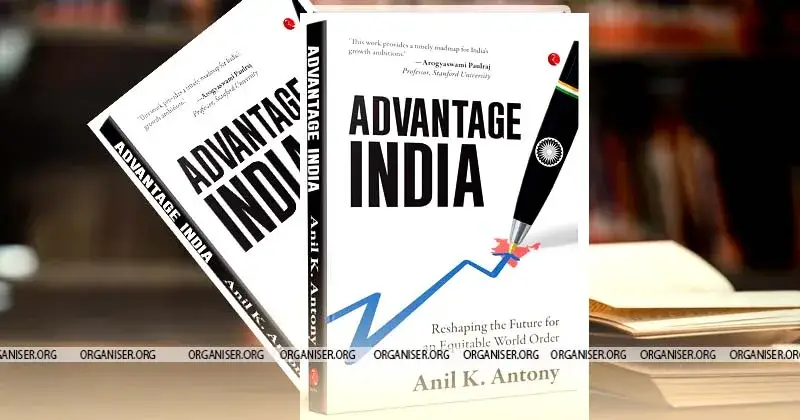
During an interview at the AI Impact Summit in 2026, Prime Minister Narendra Modi stated that the end goal of technology should be "Welfare for All, Happiness of All." He further articulated that technology exists to serve humanity rather than replace it. This sentiment forms the foundational premise of Anil K. Antony’s book, "Advantage India: Reshaping the Future for an Equitable World Order," published by Rupa Publications. The 320-page work, priced at Rs 630.00, explores how technological advancement can function as a mechanism for widespread citizen welfare.
Antony argues that technology is no longer confined to software companies or research laboratories. According to the author, it now shapes nearly every aspect of daily life, including banking, education, farming, healthcare, governance, and national security. The book posits that nations leading in technology will determine the future of the global order. Antony contends that India is not merely participating in this technological revolution but is actively leading it.
A Unique Model of Digital Development
One of the central arguments presented in the book is that India has established a distinct model of development. Antony contrasts this approach with systems found elsewhere. He notes that while many advanced technologies in Western nations remain expensive and accessible only to a select few, China follows a highly centralized, state-controlled model.
In contrast, Antony describes India’s path as one that builds digital public infrastructure designed to be open, affordable, and accessible to every citizen. The author characterizes this approach as reflecting the spirit of democracy and inclusion. This infrastructure serves as a critical component in the nation's broader transformation over the last decade.
Foundations of Transformation
The first part of the book chronicles India’s technological ascent. Antony highlights specific initiatives that have driven this change, including Aadhaar and the Unified Payments Interface (UPI). These systems are presented as examples of how digital infrastructure can be deployed at a national scale to facilitate economic and social participation.
Antony draws upon his educational background from Stanford University and his professional experiences in Silicon Valley to provide context for these developments. He presents a detailed account of India’s transformation, attributing the foundation of this change to the vision and policies of the Government of India under Prime Minister Narendra Modi. The book suggests that the leadership of the NDA government has laid the groundwork for what Antony describes as a game-changing transformation.
Demographic and Governance Advantages
The author identifies several key factors that contribute to India’s potential to become a leading world power. A primary focus is placed on the nation's demographic structure. The book emphasizes that Bharat’s biggest trump card is its youth. It is home to the world's largest young workforce, which Antony argues is a significant asset in the global technological landscape.
Alongside the youthful population, the author points to affordable digital infrastructure and stable governance as crucial attributes. These elements are described as necessary conditions for the nation to leverage its human capital effectively. The text asserts that Bharat possesses all the required attributes to achieve status as a leading world power, provided these factors continue to develop in tandem.
Structuring an Equitable World Order
The title of the book references the concept of reshaping the future for an equitable world order. Antony’s work suggests that India’s model offers an alternative to existing global power structures. By focusing on open and accessible technology, the author implies a shift toward greater equity in how technological benefits are distributed.
The review notes that the book serves as both a documentation of past achievements and an explanation of future potential. It links the current trajectory of the nation directly to the policies implemented over the last decade. The narrative remains focused on the intersection of technology, governance, and demographic strength as the drivers of India’s rising influence.
Publication Details
The book was reviewed in Organiser Weekly, with the review published on August 24, 2026. The article by Adarsh Kuniyillam highlights the cogent explanation provided by Antony regarding Bharat’s potential. The publication details confirm the author as Anil K. Antony and the publisher as Rupa Publications.