

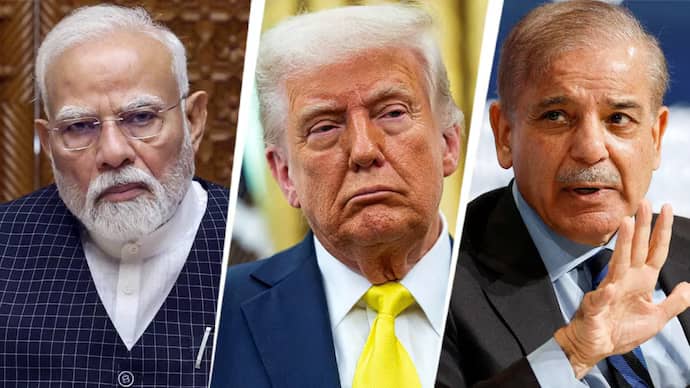

Reorientation of U.S. South Asia Policy Under Trump
The governing style employed by President Donald Trump has triggered a notable shift in how the United States approaches the geopolitical landscape of South Asia. According to analysis by Shahid Javed Burki, this reorientation specifically impacts the bilateral relationships Washington maintains with India and Pakistan, marking a significant departure from previous administrations' strategies in the region.
Burki notes that the current administration's methods of dealing with global affairs, often characterized by a more transactional and less traditionally multilateral approach, have altered the established dynamics of U.S. engagement in South Asia. This change is not merely theoretical but is reflected in concrete diplomatic maneuvers involving key regional actors, particularly regarding Iran and its neighbors, signifying a broader re-evaluation of American strategic priorities.
Shifting Diplomatic Priorities in the Region
President Trump's governance style has led to a significant reorientation of the United States' approach to South Asia. This has prompted a re-evaluation of long-standing alliances and rivalries, with Washington demonstrating a willingness to engage with nations in ways that challenge conventional diplomatic norms. Burki's analysis underscores that this shift has profound implications for the delicate balance of power and influence between India and Pakistan, as well as for the broader stability of the South Asian subcontinent.
Pakistan's Diplomatic Role and Improved Ties with Washington
A central element of this new diplomatic posture involves Pakistan's involvement in facilitating critical communications between the United States and Iran. Burki states that Pakistan played a crucial role in helping Washington reach an understanding with Tehran, marking a significant departure from previous regional alignments and highlighting Pakistan's renewed strategic importance in American foreign policy calculations.
Shuttle Diplomacy by Field Marshal Asim Munir
According to newspaper reports cited by Burki, Field Marshal Asim Munir played an active and instrumental role in these sensitive diplomatic efforts. The reports describe Munir as engaging in what is characterized as shuttle diplomacy, a specialized form of negotiation where a mediator travels back and forth between two parties in conflict, carrying messages and proposals to facilitate dialogue without direct face-to-face meetings.
Munir's intensive efforts involved traveling between Iran and the United States, acting as a crucial conduit for communication. In addition to physical travel, the reports indicate that Munir communicated directly with President Trump via telephone. These high-level communications were part of the broader, concerted effort to ease tensions and establish a working understanding between the United States and Iran, a diplomatic achievement with far-reaching implications for regional stability.
Impact on Islamabad-Washington Relations
The diplomatic activities led by Field Marshal Munir, particularly his successful facilitation of dialogue between Washington and Tehran, have resulted in a measurable improvement in relations between the United States and Pakistan. Burki highlights that this enhancement in bilateral ties is a direct outcome of Pakistan's pivotal facilitation efforts regarding the Iran situation, signaling a potential resurgence of Islamabad's strategic value to Washington.
This improved relationship suggests a renewed focus on Pakistan's role in regional security and diplomacy, potentially reversing a period where U.S. engagement with Pakistan might have been perceived as less prioritized. The success of Munir's shuttle diplomacy has thus not only served to ease tensions with Iran but has also strategically repositioned Pakistan in the eyes of the American administration.
Strain on Washington-New Delhi Relations
The improved relationship between the United States and Pakistan, a direct consequence of Islamabad's diplomatic outreach, has generated significant friction in U.S.-India relations. Burki asserts that the development of closer ties between Washington and Islamabad has not been welcomed by the leadership in New Delhi, which traditionally views a strong U.S.-Pakistan alliance with apprehension due to regional geopolitical dynamics.
U.S. Efforts to Ease Tensions with China
Beyond the Pakistan factor, the relationship between Washington and New Delhi is under additional pressure due to American foreign policy objectives regarding China. Burki explains that the American leadership is working hard to ease tensions with the ruling elite in China, a strategic move that has created unease in India.
These efforts to stabilize relations with Beijing are contributing to a strain in the alliance between the United States and India. New Delhi, which often positions itself as a strategic counterweight to China in the Indo-Pacific region, finds itself navigating its own strategic interests in the face of shifting American priorities that appear to prioritize de-escalation with its primary economic and geopolitical rival.
Concerns Over Treatment of Indians in the U.S.
Compounding the diplomatic tensions is a domestic policy concern within the United States that has resonated deeply with Indian leadership. Burki notes that Indian leadership is troubled by the way Americans are treating Indians residing in the United States. While specific incidents are not detailed, this concern adds another layer of complexity to the bilateral relationship.
This issue touches upon the welfare and rights of a significant diaspora community, injecting a social and cultural dimension into a relationship already strained by geopolitical realignments involving Pakistan and China. The confluence of these factors presents a multifaceted challenge to the traditionally strong partnership between the United States and India under the Trump administration.