


Protests Intensify Criticism of Government Order
Recent demonstrations across France have intensified scrutiny of the government's ability to maintain public order, with analysts suggesting the unrest could benefit far-right political forces ahead of the 2027 presidential election. The latest wave of protests, which included high school students demonstrating against poor school conditions and wider gatherings addressing economic pressures, has added to existing political uncertainty.
Organizers reported that approximately half a million people marched across France on a Saturday, pressing demands regarding the high cost of living and civil liberties. Authorities estimated the turnout at 320,000 participants. A separate march saw nearly 410,000 people, or 800,000 according to the CGT trade union, demonstrate peacefully before clashes broke out in Nantes, Rennes, and Marseille later in the day.
Violence accompanying these demonstrations has resulted in damaged or looted businesses, prompting criticism of President Emmanuel Macron’s administration. The French Senate approved legislation on October 28 that could hold individuals who knowingly participate in violent groups financially liable for damage caused during protests, with potential fines reaching €10,000.
Analysts Predict Shift Toward National Rally
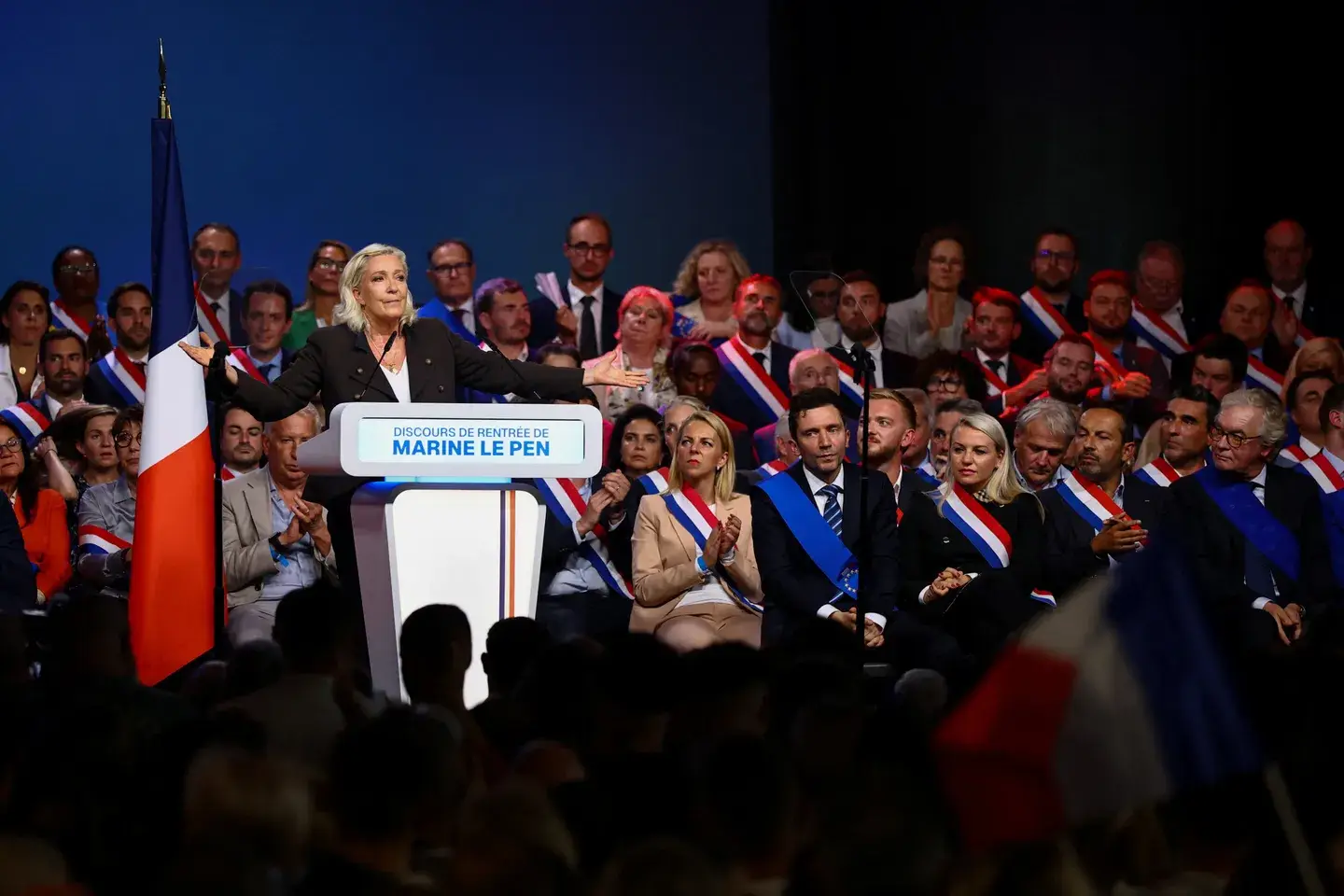
François Gemenne, a political scientist at Sciences Po and the University of Liege, told TRT World that the political impact of these protests, particularly when associated with violence, is likely to benefit Marine Le Pen. He stated that Le Pen "doesn't have much to do to gain in polls because every time the situation appears chaotic, people will turn to the political party that represents order," referring to the National Rally's emphasis on security and anti-immigration policies.
Gemenne added that moderate voters, particularly those from the center-right, are likely to vote for the extreme right due to a perception of desperation. He noted that "desperate situations call for desperate measures like a Le Pen presidency." Jean-Sylvestre Mongrenier, a French professor of history and geopolitics researcher at the Thomas More Institute, told TRT World that the far-right could be seen as a ‘Parti de l'Ordre’, evoking memories of 1848 after riots.
However, Mongrenier cautioned that Le Pen cannot capitalize on unrest alone. He believes that different factions of the right and far-right would need to unite or establish a common platform to convince voters they can govern effectively.
The Vacuum of Centrist Succession
The potential for far-right gains is compounded by the structural weaknesses within Macron’s centrist movement. Emmanuel Macron defeated Marine Le Pen in landslide victories in 2017 and 2022, but he is constitutionally barred from seeking a third consecutive term. This constitutional limit leaves his centrist movement without a clear successor for the 2027 election.
Analysts suggest that France's political turmoil and growing disillusionment with Macron’s center could strengthen the far-right ahead of the 2027 presidential election. As fears over law and order grow, they may boost the appeal of opposition forces who position themselves as the guarantors of stability.
Local Tensions and Legal Proceedings
Beyond national polling trends, local tensions have escalated significantly. Far-right identitarian and revolutionary nationalist activists responded to violence over the weekend of October 17 by calling for the defense of local shopkeepers while spreading racist rhetoric.
In Trappes, the mayor, Ali Rabeh, told Le Monde that far-right rhetoric has “ended up penetrating the collective unconscious” and described a “climate of simmering civil war.” He stated that the French president was not the protector he should have been. Meanwhile, in legal proceedings related to the unrest, national anti-terrorism prosecutor Olivier Christen stated that 39-year-old suspect Kevin T., accused of a racist killing in Trappes, does not dispute the material facts but contests the racist nature of his crimes.