

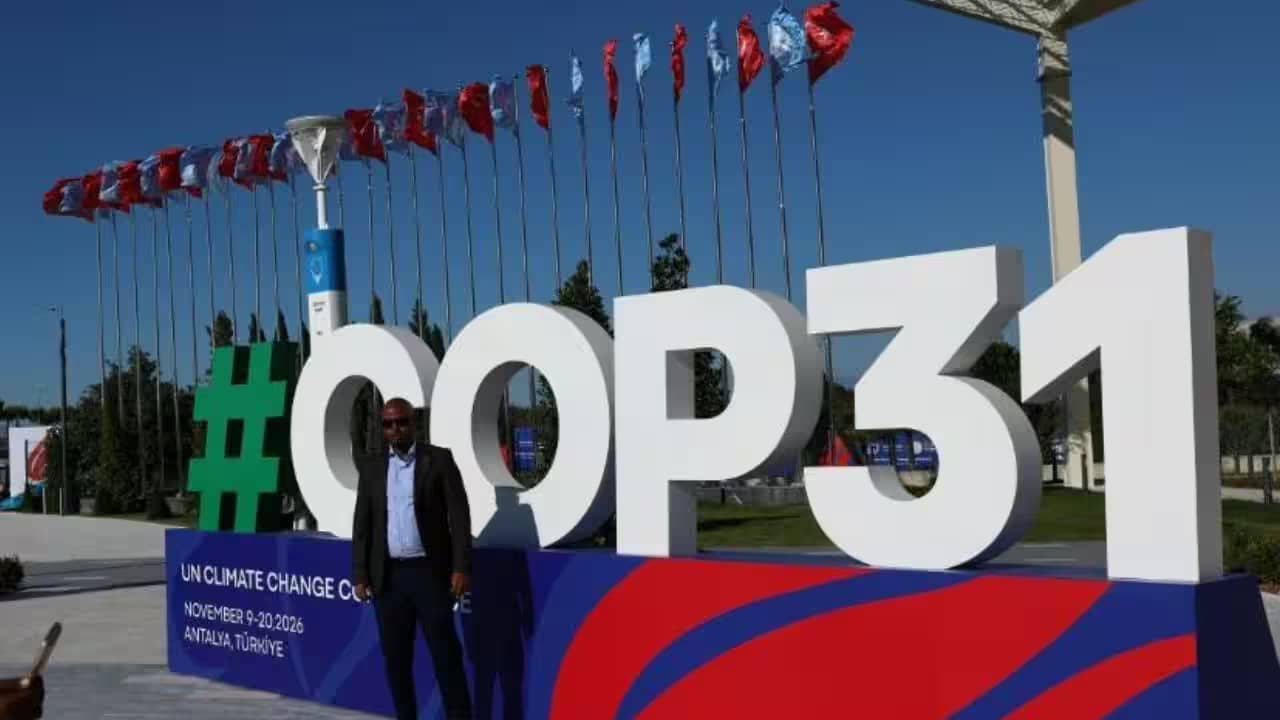

Antalya Hosts Global Climate Summit Amidst Leadership Compromise
The 31st United Nations Climate Change Conference, known as COP31, has officially opened in Antalya, Turkey, with world leaders and climate activists gathering for a critical two-week session running from November 9 to 20. The summit brings together officials from more than 190 countries to address escalating environmental challenges against a backdrop of complex geopolitical negotiations regarding the conference's leadership structure.
The presidency of this year’s conference was established through a significant compromise between Turkey and Australia, who had both vied for the role. Under the agreed arrangement, Turkey’s Murat Kurum has been nominated as the conference president, while Australia’s Chris Bowen will lead the formal negotiations. This division of labor aims to balance regional representation with diplomatic continuity in the high-stakes talks.
Strategic Targets and the Action Agenda
The COP31 presidency has outlined a specific set of targets for 2035, focusing on structural changes in energy and resource management. These goals include increasing electricity’s share of final energy demand to 35%, halving the growth in global waste, and cutting energy consumption intensity in buildings by at least 25%. The agenda also prioritizes reducing methane emissions, improving climate education, and mobilizing broader climate finance mechanisms.
Turkey will take charge of the "action agenda," a framework designed to facilitate voluntary agreements on several key fronts. This includes efforts to achieve a circular economy, cut methane emissions, improve food security, and accelerate the electrification of the global economy. These initiatives are intended to complement the formal negotiations led by Bowen.
The World Leaders' Summit is scheduled for November 11 and 12, providing a dedicated window for heads of government to engage in climate talks before the broader conference proceedings continue. This high-level engagement underscores the urgency with which participating nations view the current climatic conditions.
Finance Gaps and Adaptation Challenges
A central tension at COP31 revolves around the disparity between climate finance pledges and actual needs. According to UNEP’s Adaptation Gap Report, developing countries require approximately $305 billion annually by 2035 for climate adaptation, a figure that rises to roughly $420 billion when adjusted for inflation.
Despite previous commitments, the gap remains wide. Developed countries agreed at COP29 in Baku to mobilize at least $300 billion annually in climate finance for developing nations by 2035. Furthermore, at COP30 in Brazil, countries agreed to triple adaptation finance to $120 billion annually by 2035, up from a previous target of $40 billion.
However, current projections suggest these pledges may fall short. The collective pledge by developed countries to triple international public finance flows is expected to deliver only between $85 billion and $120 billion annually by 2035. In 2024, developed countries contributed between $28.2 billion and $31.7 billion in adaptation finance, highlighting the scale of the shortfall.
Inger Andersen, executive director of UNEP, has stated that the world is not ready to adapt to current climatic conditions. This assessment is echoed by developing nations, which are calling for more financial support to cope with severe climate-related disasters. Recent flash floods in Nepal have been cited as a stark example of these vulnerabilities.
Geopolitical Absences and Loss and Damage
The geopolitical landscape of the summit is marked by notable absences. The United States is not present at the summit, as President Donald Trump has withdrawn from the Paris Agreement. This absence removes a major emitter from direct negotiations, potentially impacting the dynamics of global climate policy.
Meanwhile, developing countries continue to push for greater recognition of climate impacts. Nepal has been granted access to the global fund for "loss and damage" following recent disasters, a move that reflects growing pressure on wealthy nations to compensate for climate-related losses. This development is part of the broader call for enhanced financial mechanisms to address the consequences of a warming world.
As the conference progresses, the interplay between Turkey’s action agenda, Australia’s negotiation leadership, and the urgent financial demands of developing nations will define the outcomes of COP31. The coming weeks in Antalya will determine whether the gap between climate finance pledges and adaptation needs can be bridged effectively.