FanzizFanziz
App
Geopolitics

Putin Links Moscow to 'Third Rome' in Documentary for Patriarch Kirill

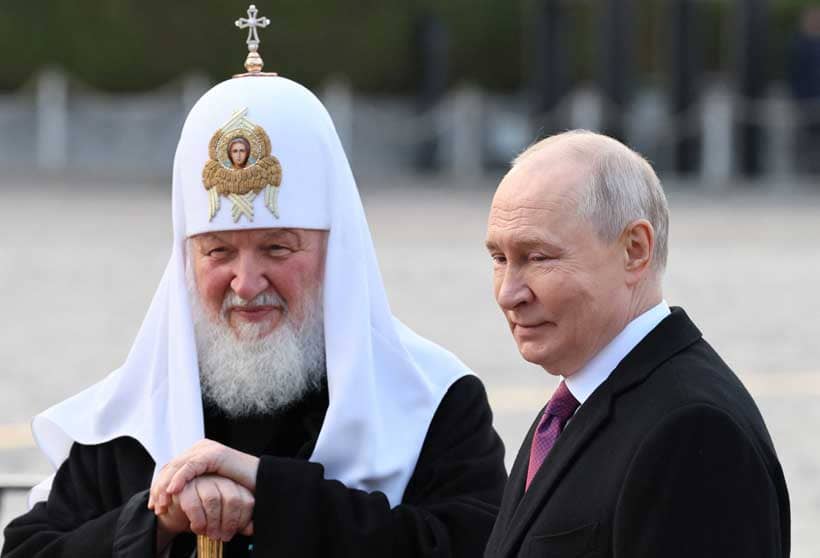
In an interview released November 20, 2026, Vladimir Putin stated that Moscow is the 'Third Rome,' connecting Russian statehood to a historical religious succession. The remarks were part of a documentary marking Patriarch Kirill’s 80th birthday.

By Rohan DesaiPublished 2 Min Read
Putin Links Moscow to 'Third Rome' in Documentary for Patriarch Kirill
Advertisement

Full story

Putin Defines Moscow as Spiritual Successor in Documentary

Russian President Vladimir Putin stated that Moscow is the "Third Rome" and that there will be no fourth successor to the historical Christian centers of Rome and Constantinople. The remarks were made during an interview with Serbian filmmaker Emir Kusturica, which was released on November 20, 2026. The interview was produced for a documentary dedicated to Patriarch Kirill of Moscow, marking the patriarch’s 80th birthday. In the discussion, Putin explained that Moscow inherited Christian traditions from Rome and Constantinople following the decline of those previous imperial centers. Putin’s interpretation positions Russia as the spiritual guardian of a Christian heritage that survived the collapse of earlier empires. This framing places Moscow within a historical succession that extends beyond contemporary national borders.

Historical Origins and Theological Context

The Third Rome theory is generally associated with monk Philotheus of Pskov in the early sixteenth century, following the fall of Constantinople in 1453. According to reports on the theory's origins, its original theological meaning did not confer universal ecclesiastical authority upon Moscow nor establish the Russian state as the legal successor to the Byzantine Empire. Putin’s contemporary interpretation presents Moscow as the inheritor of Byzantine Christianity. This view places Russian statehood within a historical continuum associated with defending religious tradition. The Christianization of Kyivan Rus in 988 preceded Moscow’s emergence as a major political and ecclesiastical center. The source material notes that this invoked historical heritage also belongs to the religious and cultural history of present-day Ukraine.

Political Implications and Civilizational Narrative

The interview did not constitute a formal announcement of a new foreign policy doctrine. Instead, it offered an explanation of the worldview connecting Russian history, religious identity, and international power. The political significance of this narrative links historical continuity to the present by using religious heritage as a source of political legitimacy. It presents the Russian state as a defender of civilizational tradition threatened by Western transformations. The Kremlin’s emphasis on shared religious origins supports a narrative of a common Russian and Ukrainian civilizational space. This narrative is contested by Ukraine’s political independence and ecclesiastical developments.