


Parliament Approves Anti-Entryism Strategy
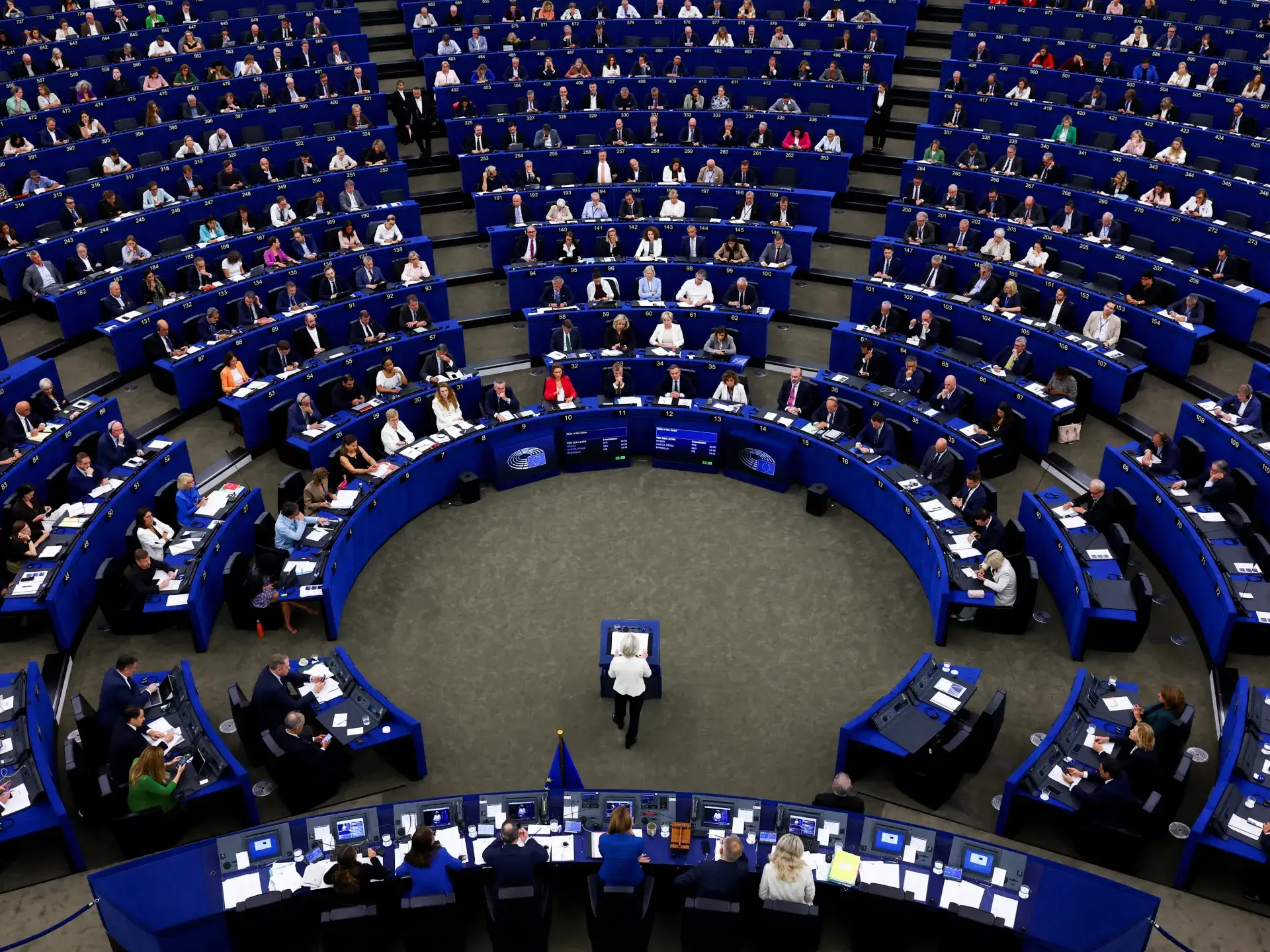
The European Parliament passed a resolution on Oct. 21, 2026, outlining a need for an EU strategy to counter "Islamist entryism" and the influence of the Muslim Brotherhood network. The measure was tabled by the centre-right European People’s Party (EPP), which holds the largest group in parliament.
The resolution passed with 381 votes in favor, 167 against, and 15 abstentions. Four other political groups backed the EPP almost unanimously: Patriots for Europe, Europe of Sovereign Nations, Renew Europe, and the European Conservatives and Reformists. The Social Democrats, the Left, and the Greens mostly voted against the resolution but could not stop its passage.
European Commission President Ursula von der Leyen hails from the EPP. The resolution draws on a report by the French government on "political Islamism" to define "Islamist entryism" as a political strategy involving influence, progressive structuring, institutional penetration, and ideological legitimization.
Definitions of Influence and Funding
The text claims that Islamist influence operates through a broad ecosystem of associations, foundations, and cultural, educational, religious, charitable, university, youth, anti-discrimination, or social action structures. It argues that diversity, equity, inclusion, and anti-discrimination frameworks may be diverted as vectors of institutional legitimization by integrating a politicized religious identity into causes for the protection of minorities.
The resolution suggests that networks like the Muslim Brotherhood "infiltrate" European societies through anti-Islamophobia initiatives. It presents the inclusion of Muslim civil society in public activity as a form of infiltration and puts under suspicion Muslim institutions operating independently of the state.
Additionally, the resolution problematizes "foreign funding" that allegedly supports "Islamist entryism" from Qatar or Turkey. The vague notion of a "Muslim Brotherhood network" allows for guilt by association, which has been weaponized by outside actors such as the United Arab Emirates.
Targeting Civil Society and International Influence
The resolution names the Brussels-based European Network Against Racism (ENAR) as espousing "Islamist" behavior and calls for blocking access to EU funding and restricting any EU-funded entity from working with them. It also calls for putting the Muslim Brotherhood and affiliated individuals and entities on a terror list, though this is unlikely to be implemented across Europe given the movement’s renunciation of violence as a political tool.
The resolution is not binding and EU member states do not have to implement it. However, its passage coincides with broader geopolitical efforts; a few months before the resolution was tabled, an Emirati ambassador participated in a conference titled "Muslim Brotherhood: A real threat to Europe" held at the European Parliament.
This legislative move occurs against a backdrop of heightened political rhetoric across the continent. Protests in France turned violent late last week, prompting the French far right to use racist language to blame Muslim youth for the violence. Similarly, when thousands of migrants attempted to enter the Spanish enclave of Ceuta from Morocco weeks earlier, the Spanish far right described it as an organized "invasion" by Moroccans.
Internationally, United States President Donald Trump claimed the situation is about "Islam wanting to take over," reflecting a global trend where political instability is increasingly framed through religious and ethnic scapegoating. The European Parliament's resolution, while non-binding, signals a significant shift in how institutional frameworks are being utilized to address these perceived threats.