

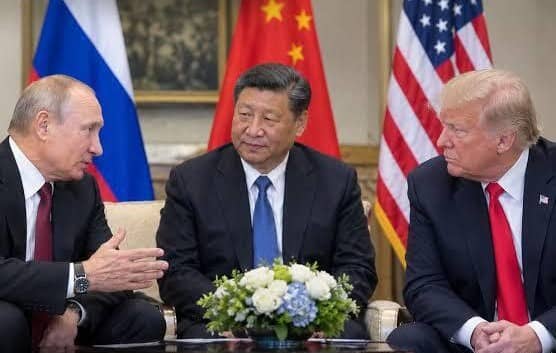

Putin Raises Summit Proposal During October Call
\nRussian President Vladimir Putin has proposed holding a three-way summit next month with U.S. President Donald Trump and Chinese leader Xi Jinping to negotiate an end to the war in Ukraine, according to people familiar with the discussions reported by The Wall Street Journal.
\nThe proposal was raised during a phone conversation between Putin and Trump on Oct. 9. Ukrainian President Volodymyr Zelensky would be excluded from the proposed talks, according to the report.
\nKremlin spokesman Dmitry Peskov stated that discussions about a potential meeting are underway but noted there is \"no clear understanding yet regarding the meeting itself or its potential agenda.\" A senior U.S. official said Trump has not agreed to participate in the summit but could be open to the idea as he seeks a negotiated resolution.
\nMoscow has proposed holding the talks on the sidelines of the Asia-Pacific Economic Cooperation (APEC) summit, which is scheduled for Nov. 18-19 in Shenzhen. Chinese officials indicated they would not object to Trump joining the APEC event, provided the gathering does not overshadow Beijing’s regional priorities.
\n\nEnergy Deal and Diesel Imports
\nThe Oct. 9 conversation between Putin and Trump also led to an agreement for the U.S. to purchase Russian diesel fuel and help sell it in global markets. The U.S. Treasury issued a temporary license authorizing Russian diesel imports through April 2027, lifting a ban that has been in place since 2022.
\nRussian officials indicated that initial shipments could begin within weeks of finalizing commercial contracts, with volumes potentially reaching hundreds of thousands of tons in the near term. Moscow described the proposed diesel volumes as manageable for its domestic market while allowing meaningful exports.
\nThe Wall Street Journal reported that U.S. oil companies raise domestic prices to match global benchmarks even when American production is abundant. The Trump administration’s move to secure Russian diesel aims to challenge corporate pricing decisions and curb the influence of large corporations over energy policy.
\n\nStrategic Implications
\nThe Wall Street Journal noted that energy cooperation with Russia is not a lasting strategic realignment, but rather a tactical step that may buy time or ease domestic fuel costs ahead of U.S. mid