

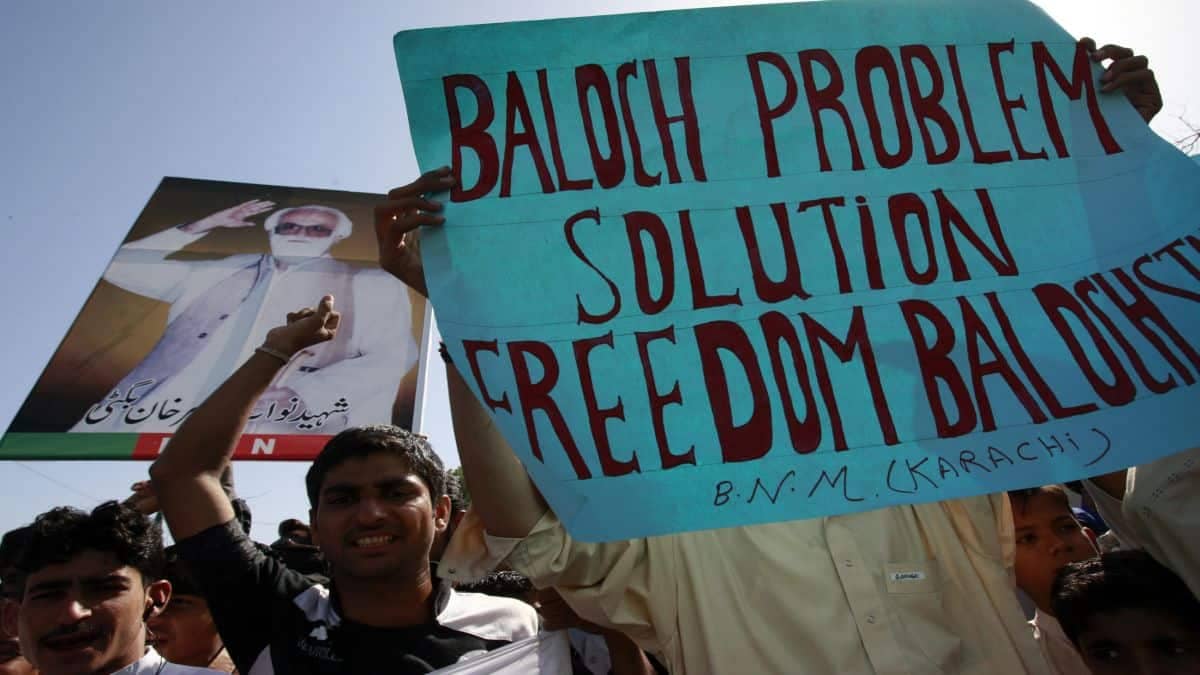

Deepening Internal Strife in Balochistan
The political landscape within Pakistan is currently characterized by growing unrest and internal conflict, particularly evident in Balochistan. Analysts describe the situation in this resource-rich province as a complex conflict theater where civil tensions are rising significantly, posing profound challenges to the nation's stability.
This internal struggle, marked by its persistent yet often understated nature, has been referred to by observers as a “silent civil war.” Reports indicate that this conflict is intensifying, with stakes mounting not only for Pakistan itself but also for various international actors deeply involved in regional geopolitics.
The “Silent Civil War” Characterization
The term “silent civil war” suggests an ongoing internal conflict that, while it may not always be visible on the surface with large-scale conventional battles, exerts profound and continuous pressure on state institutions and the social fabric. This characterization comes from sources analyzing the depth of dissent within Pakistani society, specifically highlighting the long-standing grievances and resistance movements in Balochistan. The ‘silent’ aspect refers to the often-underreported nature of the conflict, yet its impact on governance, security, and development is undeniable.
Geopolitical Implications of Local Dissent
The involvement of such a diverse array of foreign stakeholders—ranging from traditional rivals like India to strategic partners like China, as well as nations with different regional priorities like Iran, Afghanistan, the US, and Israel—highlights how local conflicts can quickly become internationalized. The internal dynamics of Balochistan are not isolated; they are intricately woven into the broader tapestry of regional power struggles and strategic interests. This makes the resolution of the conflict exponentially more challenging, as external interests often complicate internal efforts towards peace and stability.
International Interests Converge in a Complex Theater
Balochistan is projected to increasingly become a highly complex conflict theater, drawing the attention and involvement of numerous global and regional powers. The situation involves massive stakes for a diverse group of foreign stakeholders who maintain significant, often competing, interests in the region's stability, its vast natural resources, and its strategic geographical position.
Diverse Stakeholders and Their Regional Agendas
- Pakistan: As the sovereign state, Pakistan faces direct and existential challenges to its territorial integrity and national cohesion from within Balochistan. The ongoing unrest threatens its internal stability, resource exploitation capabilities, and its ability to project authority across its borders. Managing this internal conflict is paramount for Pakistan's long-term viability and security.
- India: India is identified as a key foreign stakeholder with substantial interests in the region's dynamics. These interests are often viewed through the lens of regional power balance, potential for strategic leverage, and monitoring of developments that could impact its own security and geopolitical standing in South Asia.
- China: China maintains significant stakes in the area, particularly regarding its extensive infrastructure investments and critical trade routes passing through or bordering Pakistan. The stability of Balochistan is crucial for the security of projects like the China-Pakistan Economic Corridor (CPEC), which forms a vital part of China's Belt and Road Initiative, linking its western regions to the Arabian Sea.
- Iran: Iran is listed among the nations with major interests that are directly impacted by developments within Balochistan. Sharing a long and porous border with the province, Iran has concerns related to border security, potential spillover of instability, and the activities of various non-state actors that could affect its own internal security and regional influence.
- Afghanistan: The Afghan government and various entities hold significant stakes in how the conflict evolves near their shared borders with Balochistan. Instability in the region can lead to cross-border movements of populations and militants, impacting Afghanistan's own fragile security situation and regional dynamics.
- The US: United States officials and analysts track the situation closely, viewing it through the lens of regional security architecture, counter-terrorism efforts, and broader geopolitical competition. The stability of Pakistan, and by extension Balochistan, is a factor in Washington's strategic calculations for South Asia and the wider Middle East.
- Israel: Israel is also cited as a foreign stakeholder with interests that extend into this complex geopolitical equation. While the specific nature of these interests is often subject to speculation, they are generally understood to relate to broader regional security dynamics, intelligence gathering, and the strategic positioning of various powers in the Middle East and South Asia.
Regional Stability Under Threat
The rising civil tensions and escalating internal conflict in Pakistan, particularly within Balochistan, are not viewed merely as an internal affair by international observers. Instead, they represent a significant shift that could fundamentally alter the balance of power across South Asia and potentially beyond. The profound complexity arises from the intricate web of overlapping, and often conflicting, interests that numerous regional and global nations hold within Balochistan.
Escalating Security Concerns
The description of the situation as a “complex conflict theater” implies a dynamic environment where various forms of engagement are occurring simultaneously. This includes overt and covert military operations, intensive intelligence gathering by multiple agencies, and nuanced diplomatic maneuvering by state actors. Each foreign stakeholder likely employs a distinct set of strategies—ranging from economic incentives to security assistance or political backing—to secure their perceived interests while navigating the turbulent waters of internal unrest and regional rivalries.
Challenges to Pakistan's Sovereignty
Pakistan faces the formidable challenge of managing these rising tensions and asserting its authority while trying to maintain sovereignty over all its territories. The persistent internal conflict in Balochistan, exacerbated by external involvement, complicates this task immensely. The presence and interests of external powers can potentially limit Pakistan's policy options, forcing it into difficult diplomatic positions or compelling it to forge alliances that may not always align with domestic public opinion or long-term national interests.
Observers Weigh Pakistan's Control
Regional and international observers note that a central question for understanding current events in Pakistan is whether the federal government has effectively lost control over Balochistan. This perspective suggests a deepening and widening divide between the provincial population, which has long expressed grievances, and the federal government in Islamabad, potentially indicating a crisis of governance and legitimacy in the region.
The Role of External Actors in Provincial Dynamics
External actors are unequivocally not passive bystanders in the unfolding situation in Balochistan. Their “massive stakes” in the region suggest a proactive engagement, implying that they have invested significant resources, political capital, or strategic planning into influencing outcomes within Balochistan. For instance, China's substantial economic investments, particularly in infrastructure projects, often intersect directly with security concerns in the region, requiring robust protection and stable operating environments. Similarly, other stakeholders may engage through various means to protect or advance their strategic objectives.