

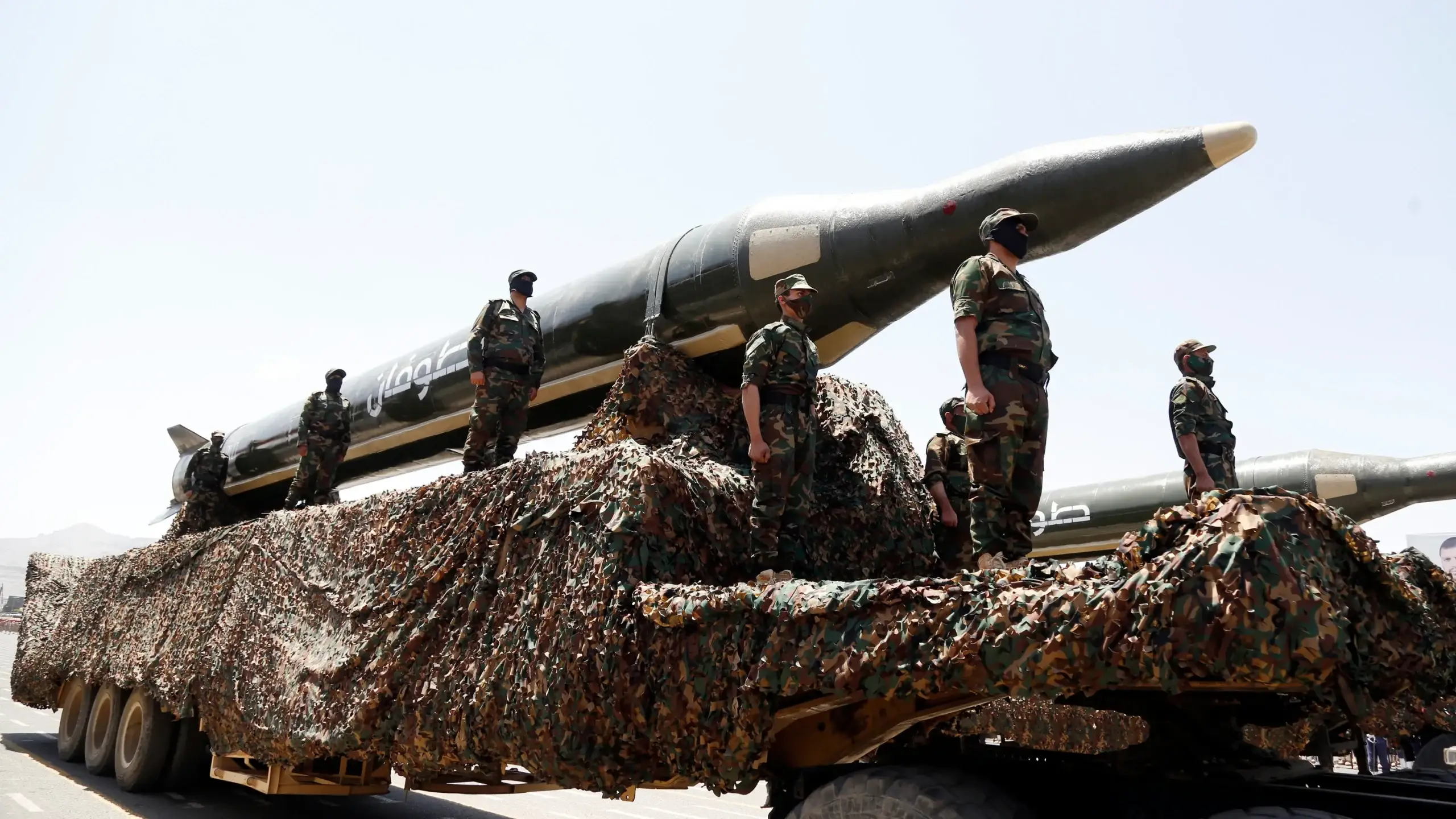

Interception of Specialized Missile Parts
Yemeni authorities intercepted two shipments containing components believed to originate from China, according to a report published Wednesday, October 14, by Conflict Armament Research (CAR). The cargo was destined for Hodeidah, a port city in Yemen currently under the control of Iran-backed Houthi rebels.
The intercepted materials included stabilizing fin cores, rocket motor closures with nozzle attachments, and rocket motor igniters. The shipments also contained phenolic resin, a material utilized in the creation of heat shields that protect missiles during atmospheric flight.
Fabian Hinz, a senior analyst at CAR, stated that the components are highly specialized and that constructing a missile from them would necessitate specific design information. Hinz noted that the items are not suitable for diverse civilian applications, underscoring the military intent behind their acquisition.
Implications for Regional Security
According to CAR researchers, the components could enable the Houthis to construct a missile akin to Iran’s Kheibar Shekan, a precision-guided ballistic missile with an estimated range of approximately 2,000 kilometers. The report suggests this initiative could enhance the group's capacity to target locations in Saudi Arabia and Israel.
Hinz stated that these findings indicate a more ambitious weapons program than previously recognized. The development suggests that the Houthis may be advancing their capabilities to manufacture advanced weaponry domestically, rather than solely depending on complete systems imported from abroad.
The report noted that the overall extent of the Houthis’ capability to produce the reported missile system remains uncertain. However, analysts stated that access to more sophisticated missile components could significantly improve the group’s ability to manufacture weapons and target distant locations, potentially affecting regional stability and security.
Supply Chain Diversification
Iran has historically been a significant supplier of weapons designs and components for the Houthis. Analysts reported that the group is increasingly diversifying its sources of supply through broader international networks to mitigate risks associated with blockades.
Behnam Ben Taleblu, senior director of the Iran Program at the Foundation for Defense of Democracies, stated that redundancy in supply chains is advantageous for military planning. He noted that with a blockade on Iran, the Houthis are seeking alternative sources for their weapons programs.
The Century Foundation reported that the Houthi weapons supply chain involves smugglers and businesses operating across multiple countries. Analysts suggested that this diversification strategy may enhance the group’s capacity to assemble advanced missiles, raising security concerns in the Gulf region.
Geopolitical Pressures on Beijing
The reported shipments may increase pressure on Beijing as tensions in the region escalate, particularly given China's status as Saudi Arabia’s largest trading partner. General context indicates that China maintains substantial economic relationships with both Saudi Arabia and Iran.
China played a role in facilitating a rapprochement between Saudi Arabia and Iran in 2023 and has condemned Houthi assaults on Saudi airports. Kristian Ulrichsen, Middle East fellow at the Baker Institute, stated that reported supply links could intensify pressure on China from Saudi Arabia.
Ulrichsen added that escalation of attacks on infrastructure and airports may lead to increased demands from the Saudis regarding the situation. The development potentially affects regional stability and security as major powers navigate their diplomatic and economic interests in Yemen.