


October 2026 March and Digital Response
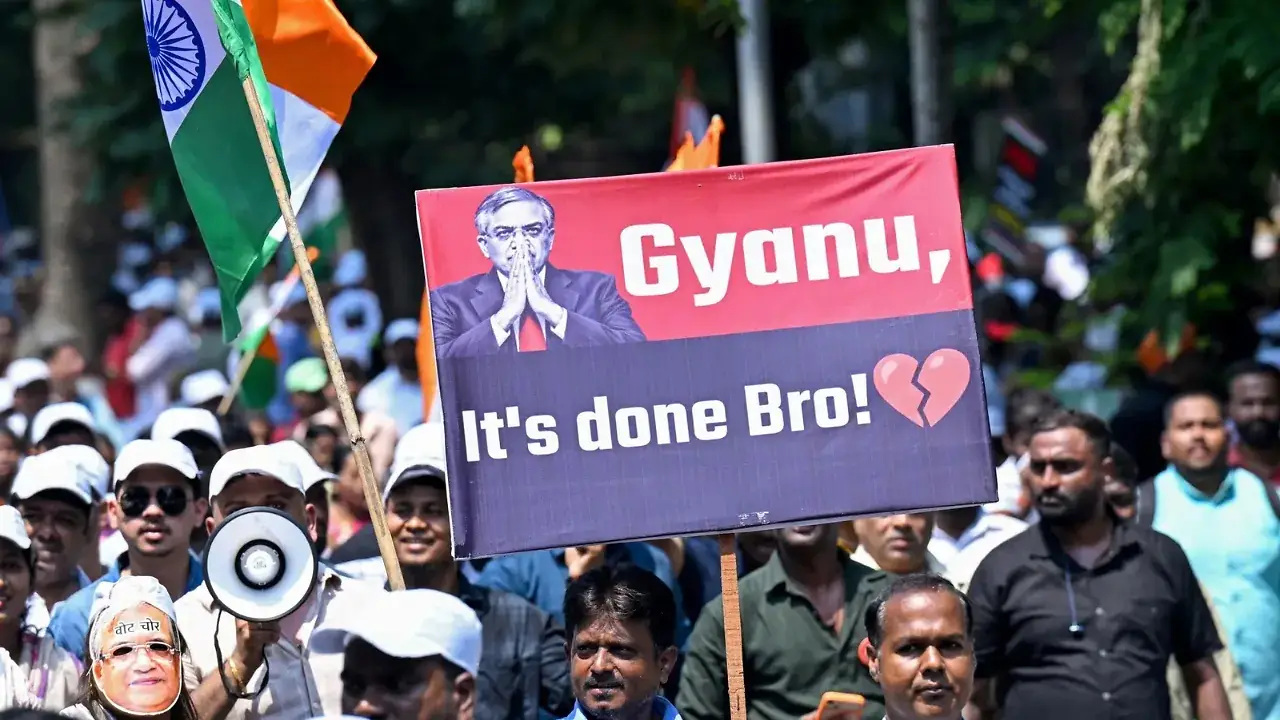
On Oct. 6, 2026, opposition members of Parliament marched from Parliament House toward the Election Commission but were stopped by police on Parliament Street. Participants in the march included Kharge, Rahul Gandhi, Priyanka Gandhi Vadra, Abhishek Banerjee, Derek O'Brien, and Akhilesh Yadav, who were part of an opposition campaign alleging electoral roll irregularities.
Following the intervention by law enforcement, Rahul Gandhi posted a message on X directed at Chief Election Commissioner Gyanesh Kumar. The post read: "Gyanesh, It's Done, Bro." This phrase was borrowed from an Instagram post by actor Salman Khan.
Khan had posted on Instagram in late July, addressing education activist Sonam Wangchuk and students involved in an agitation over an alleged examination paper leak. In that post, Khan told the students to go home and addressed Wangchuk with the words "it was done, bro." The phrase subsequently appeared on banners and chants outside the Election Commission during the October march.
Rejection of Allegations
The Election Commission rejected suggestions of a split within its ranks regarding allegations of irregularities in the Special Intensive Revision of electoral rolls. The rejection came as the opposition continued to highlight concerns about the integrity of the voter lists.
Sonam Wangchuk's Hunger Strike
The context for Khan's original phrase involved a separate protest movement. Sonam Wangchuk had been on a hunger strike since June 28 in solidarity with the student protest led by the Cockroach Janta Party. Wangchuk ended his fast after twenty-six days.
Historical Origins of Protest Slogans
The use of borrowed phrases in Indian protests reflects a long tradition of adapting cultural and literary works for political dissent. The phrase "Inquilab Zindabad," often associated with Bhagat Singh, was not invented by him but borrowed from Urdu ghazal writer Maulana Hasrat Mohani, who had used it years earlier. Singh and Batukeshwar Dutt shouted the phrase on 8 April 1929 after throwing leaflets in the Central Legislative Assembly.
Other significant slogans have also emerged from literary sources. "Vande Mataram" was originally a poem by Bankim Chandra Chattopadhyay written in the 1870s and placed in his novel 'Anandamath' in 1882. During the independence struggle, Subhas Chandra Bose supplied the cadence for the Indian National Army, while Mahatma Gandhi gave the Quit India movement the slogan "karo ya maro" in August 1942.
More recent history shows similar patterns of cultural adaptation. The Jayaprakash Narayan movement of 1974 marched behind a line from poet Ramdhari Singh Dinkar: "Singhasan Khali Karo Ki Janata Aati Hai." Ghazals by Dushyant Kumar from his 1975 publication 'Saaye Mein Dhoop' supplied grammar of dissent for a generation.
Transnational influences also play a role. Faiz Ahmed Faiz wrote "Hum Dekhenge" in 1979 against Zia-ul-Haq's Pakistan; forty years later, it was sung at Indian university gates during protests over the citizenship law. In December 2019, lyricist Varun Grover wrote "Hum Kaagaz Nahi Dikhayenge," which traveled across the country within days.