

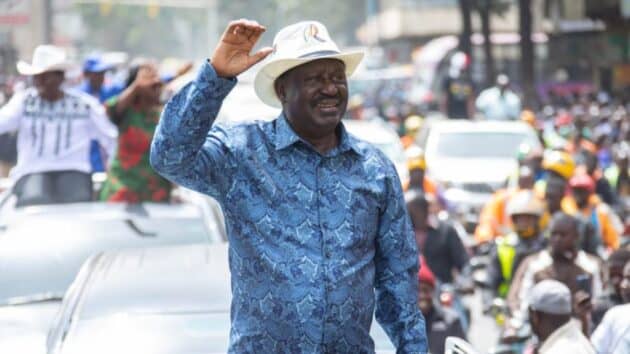

Commemorating a Decades-Long Political Evolution
Kenya marked the first anniversary of Raila Odinga’s death on October 15, initiating a national reflection on his democratic legacy and the institutional changes that have occurred since his early political career. The date serves as a focal point for examining how much of Odinga’s decades-long struggle has translated into lasting structural change within the country's governance framework.
Odinga’s political career spanned several critical periods in Kenyan history, including the fight against one-party rule, the 2007 post-election crisis, the 2010 constitutional settlement, and subsequent campaigns for electoral justice. His trajectory began with his detention without trial in 1982 and continued through his active campaigning for multiparty democracy. He remained a central figure in Kenya’s political evolution, notably challenging the results of the 2017 presidential election.
Reflecting on the significance of the anniversary, Odinga’s family stated that the occasion belongs to the people whose lives he touched, extending beyond traditional political loyalties. This sentiment underscores the broad impact of his career, which moved from opposition to high-level governance and back to critical advocacy for democratic standards.
Constitutional Transformations and Devolution Challenges
Since the early 1990s, Kenya has implemented significant structural reforms, most notably the adoption of a transformative Constitution. The 2010 Constitution expanded the Bill of Rights, established devolution, and strengthened independent oversight institutions designed to address historical governance failures.
A cornerstone of this constitutional shift was the devolution of power to 47 counties. This restructuring aimed to establish safeguards for civil liberties and executive accountability. However, the implementation of devolution has presented ongoing administrative challenges. The Controller of Budget’s reports have highlighted persistent questions regarding spending balances and the management of public resources at the county level.
Specific financial data illustrates these governance complexities. During the first nine months of the 2025/26 financial year, Nairobi County spent more than Sh1.57 billion on domestic and foreign travel. This expenditure has drawn scrutiny as part of the broader conversation about resource management under the devolved system.
Legal Precedents and Electoral Integrity Questions
The judicial landscape in Kenya was significantly altered by events during Odinga’s political tenure. In September 2017, the Supreme Court annulled a presidential election and ordered a fresh poll. This ruling established a precedent for judicial scrutiny of elections, marking a departure from previous norms where electoral outcomes were rarely overturned by the courts.
Despite this legal milestone, public concerns regarding electoral integrity have not been fully resolved. As Kenya approaches the 2027 general election, questions remain about the credibility of the electoral process. The 2017 ruling did not settle these concerns, leaving a complex environment for future political contests.
Legal challenges to constitutional amendments have also defined recent years. The Building Bridges Initiative (BBI), launched after Odinga’s 2018 rapprochement with former President Uhuru Kenyatta, was struck down by the courts. Litigation surrounding the BBI underscored that political agreements cannot override constitutional requirements regarding public participation and amendment processes.
Unfinished Reforms and Persistent Accountability Gaps
While the 2010 Constitution introduced robust frameworks for oversight, the practical application of these safeguards remains a subject of intense debate. Persistent questions continue to surround electoral credibility, police accountability, corruption, and the protection of fundamental rights across the nation.
The gap between constitutional intent and on-the-ground reality is evident in the ongoing scrutiny of public institutions. Although independent oversight bodies were established to strengthen executive accountability, their effectiveness is frequently tested by political pressures and administrative inefficiencies.
As the country looks toward the 2027 general election, the legacy of Odinga’s democratic vision is measured not just by the laws on the books, but by the continued struggle to ensure that these institutions function without bias or corruption. The anniversary serves as a reminder that while significant progress has been made, the work of consolidating democracy and ensuring equitable governance remains unfinished.