Full story
Leaders Meet at State Palace to Discuss Strategic Autonomy
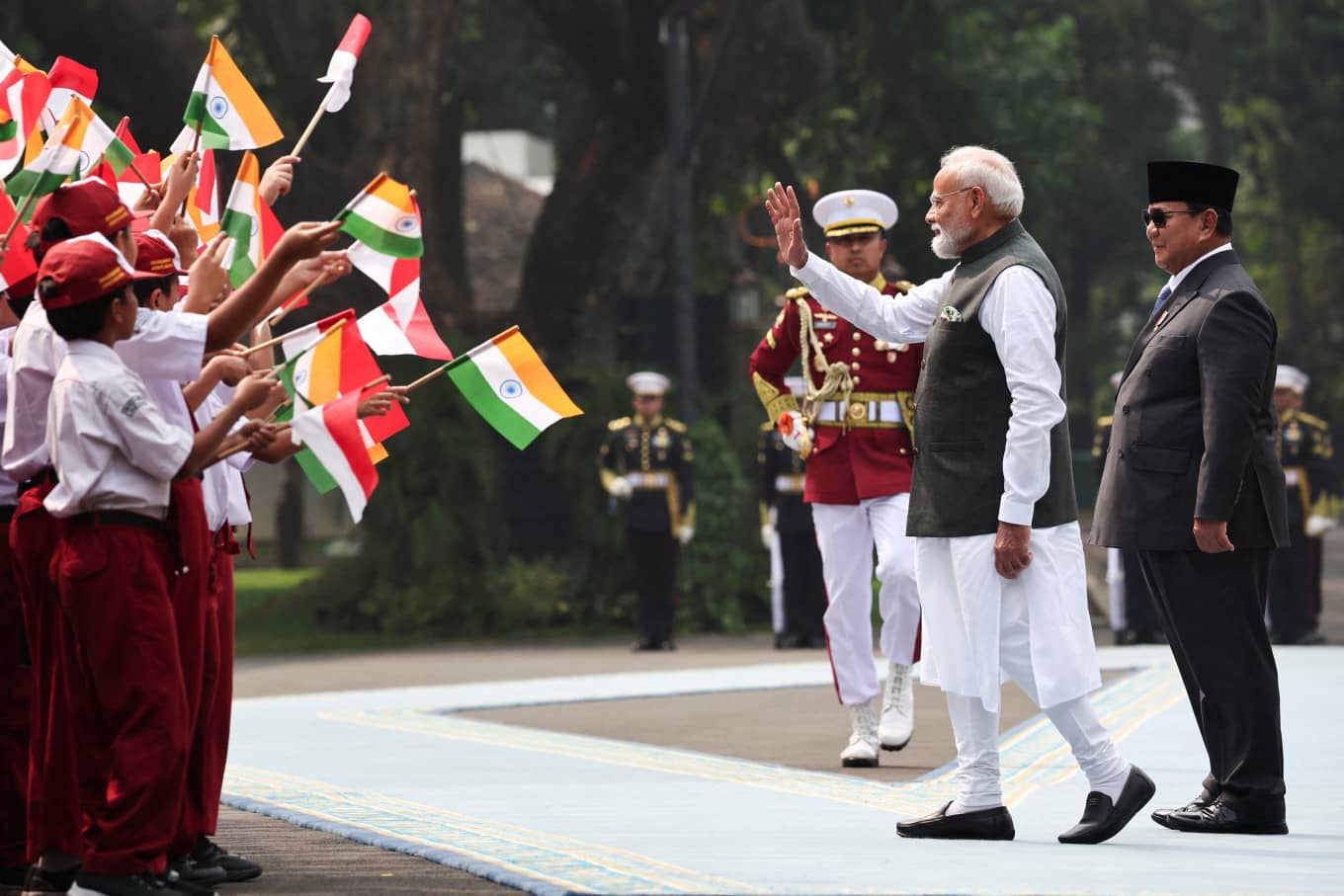
Indian Prime Minister Narendra Modi met Indonesian President Prabowo Subianto at the State Palace in Central Jakarta on July 7, 2026. The summit provided a platform for both nations to articulate a shared vision of a multipolar world, emphasizing strategic autonomy and the rejection of rigid geopolitical blocs.
Both leaders emphasized a rejection of binary or zero-sum Cold War mentalities. Instead, they advocated for engagement with all major global players, including the United States, Russia, China, Southeast Asia, and Europe. This approach aims to maximize national interests while preserving freedom of choice for developing nations, ensuring that countries are not forced to bow to single-power blocs.
Pushing for Institutional Reform and Global South Interests
Indian External Affairs Minister S. Jaishankar stated that the global order is rapidly transitioning toward multipolarity. He noted this shift is driven by emerging middle powers pursuing independent and transactional foreign policies rather than aligning with single-power blocs.
India positions itself as a champion for developing nations and the Global South. New Delhi has articulated specific concerns regarding food, fuel, fertilizer, and finance, referred to as the "4Fs." To address these issues, India is pushing for institutional reforms within global governance platforms.
A key component of this effort is the restructuring of the United Nations Security Council. India is demanding a permanent seat through the "G4" group, which includes Japan, Germany, and Brazil. The country participates in BRICS, the Shanghai Cooperation Organisation, and the Quad while advocating for a more pluralistic international architecture.
Building a Multipolar Asia Through ASEAN
India maintains that a global multipolar order must begin with a multipolar Asia. The nation rejects both US-dominated unipolar structures and China-centric "Asia for Asians" models. In this context, India considers ASEAN, particularly Indonesia, an important pole in its partnership relevance.
Both nations believe in multi-alignment rather than military alliances. Their cooperation focuses on issue-based engagement while avoiding bloc politics. India and Indonesia serve as core pillars for a multipolar Asia and a balanced Indo-Pacific, promoting strategic autonomy over great-power dominance.
The two countries coordinate within global governance platforms such as the G20, the Indian Ocean Rim Association (IORA), and the United Nations to champion Global South interests and institutional reforms.
Aligning Long-Term Development Goals
India and Indonesia share developmental goals to become digital economies and uplift their poor populations. Indonesia’s national programs mirror India’s initiatives in many ways, creating a basis for technical and economic cooperation.
The long-term growth trajectories of both nations align through their respective national visions. Indonesia has set the "Golden Indonesia 2045" vision as its target, while India aims for the "Viksit Bharat 2047" goal. These parallel timelines provide a framework for sustained bilateral engagement in the coming decades.