

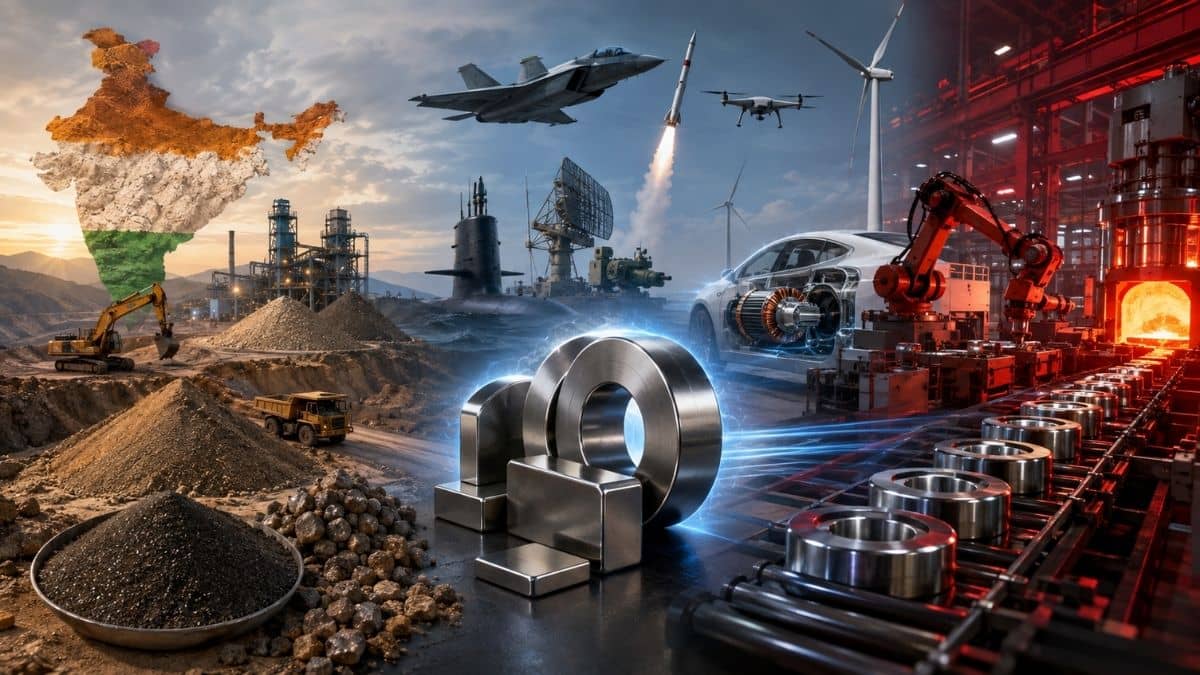

Resource Wealth Without Industrial Integration
India holds substantial reserves of rare-earth elements, a critical group of minerals essential for modern technology and national security. Despite this significant geological advantage, the nation currently lacks the integrated industrial capacity required to convert these raw resources into high-performance rare-earth magnets at scale. This gap in processing infrastructure means that localisation efforts remain incomplete, even as India expands its mining operations and develops advanced defense platforms.
The disparity between resource ownership and manufacturing capability presents a central challenge for New Delhi's ambitions for self-reliance. While the country may eventually mine more rare earths and build additional defense platforms, it cannot achieve full strategic independence without controlling the crucial industrial stages that connect raw material extraction to finished components. The absence of this integrated capacity severely limits India's ability to independently supply its own industries with critical magnetic materials, impacting both its defense self-reliance and its clean-energy sector ambitions.
Dependence on Chinese Manufacturing
The global processing and manufacturing of rare-earth magnets are overwhelmingly concentrated in China. This geographic concentration creates a significant vulnerability for various sectors worldwide, including those in India, that rely on these highly specialized components. India currently imports all the sintered neodymium-iron-boron permanent magnets required by its domestic industries. Consequently, everything from electric vehicles and wind turbines to sophisticated military hardware like aircraft, missiles, and drones depends on processing and manufacturing capacity located abroad, primarily in China.
This reliance is often overlooked because the magnets themselves are small compared with the larger platforms they enable. However, their function is absolutely critical. Neodymium-iron-boron, or NdFeB, magnets are highly valued for combining exceptional strength with a compact size, making them indispensable for high-efficiency motors, generators, and actuators in a wide array of applications. Similarly, samarium-cobalt magnets are noted for their superior ability to maintain performance in demanding environments, such as high temperatures or corrosive conditions, where other magnetic materials might fail.
Implications for Defense and Energy Sectors
The deficiency in domestic rare-earth magnet production directly impacts both India's defense self-reliance and its ambitious clean-energy sector goals. The inability to produce these magnets locally means that key strategic sectors remain exposed to external supply chain risks, which can be exacerbated by geopolitical tensions or trade disruptions. Bridging this critical gap is considered essential for achieving true independence in defense manufacturing and meeting national targets for renewable energy infrastructure development.
The vulnerability extends across multiple high-tech industries that are foundational to modern economies and national security. In the civilian sector, electric vehicles require powerful, compact motors for propulsion, which are heavily reliant on NdFeB magnets for their efficiency. Wind turbines depend on large generators that utilize these magnets to convert kinetic energy into electricity efficiently and reliably. In the defense sector, the precision and performance of modern weaponry are intrinsically linked to these materials; missiles and drones rely on rare-earth magnets for their precise guidance systems, sophisticated sensors, and compact actuators. Aircraft also utilize these components in various electrical and mechanical systems, from flight controls to onboard power generation, underscoring their pervasive importance.
Strategic Challenges in Localization
The current state of India's rare-earth industry highlights a complex strategic challenge: possessing the raw materials is insufficient without the corresponding industrial ecosystem to process them into high-value components. The overwhelming concentration of magnet manufacturing in China provides that nation with significant leverage over global supply chains for these critical components, creating potential points of pressure for importing countries like India.
For India to meaningfully reduce this dependency and secure its strategic interests, it must develop the comprehensive technical and industrial capabilities required to refine rare earths and manufacture sintered neodymium-iron-boron magnets domestically at scale. Until such capacity is firmly established, the country will continue to import these essential materials, leaving its vital defense and clean-energy sectors reliant on foreign manufacturing processes and potentially vulnerable to external pressures.
The strategic importance of this issue is further underscored by the widespread and irreplaceable use of these magnets in both civilian and military applications. The unique combination of compact size and exceptional strength offered by NdFeB magnets makes them exceedingly difficult to replace with alternative technologies without significant loss of performance, increase in weight, or compromise on efficiency. Similarly, the thermal stability and corrosion resistance of samarium-cobalt magnets ensure their necessity in harsh operational environments where reliability is paramount, particularly in aerospace and defense applications.
As India seeks to expand its mining output and develop more advanced defense platforms and clean energy solutions, the lack of domestic magnet production remains a critical bottleneck. The comprehensive integration of rare-earth mining with downstream processing and manufacturing capabilities is not merely an economic goal but a strategic imperative to secure resilient supply chains for electric vehicles, wind energy projects, and national defense systems. Without this crucial industrial integration, the full benefits of India's substantial rare-earth resources cannot be realized within the country, leaving key industries exposed to external vulnerabilities.