

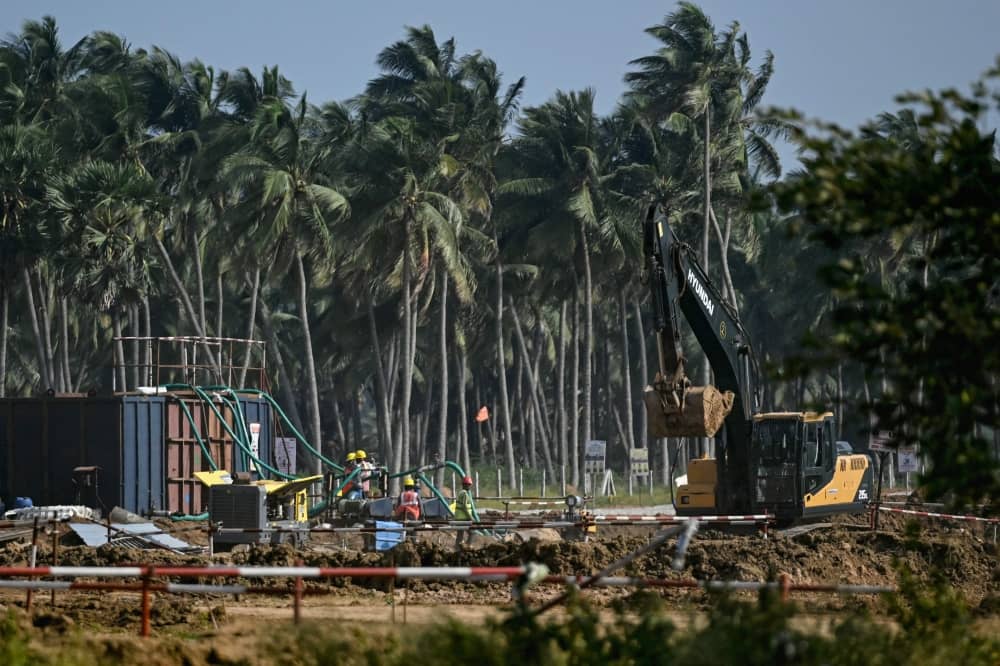

Modi Declares 'Techade' Amid Semiconductor Expansion
New Delhi, Oct 12 — Prime Minister Narendra Modi declared the current decade as India’s "Techade" during a groundbreaking ceremony for a chip assembly and testing facility in New Delhi. The declaration marks a strategic push by the Indian government to transform the nation into a global technology powerhouse through massive investments in semiconductors, electronics manufacturing, and artificial intelligence.
From 2017 to 2025, India imported approximately $150 billion worth of microchips. To address this reliance on foreign components, New Delhi has pledged more than $20 billion in government support aimed at reducing dependence on imported chips. The Indian government has called building up domestic semiconductor production an "urgent national priority."
Modi described India’s talent pool as a "goldmine" at a semiconductor conference in New Delhi in September, highlighting the human capital driving this industrial shift.
Manufacturing Plants and Market Projections
Five assembly, testing, and packaging plants are currently in commercial production. These facilities involve Micron, Kaynes, CDIL, Suchi Semicon, and CG Semi. Additionally, seven additional projects have been approved by the government.
A notable development includes a chip factory in Gujarat being built by Tata Electronics in partnership with Taiwan’s PSMC. The Indian government estimates the semiconductor market at about $50 billion in 2026, projecting it to reach $110 billion by 2030 and over $200 billion by 2035.
Broader electronics production has also seen significant growth. According to the government, India’s electronics production rose from about $31 billion in 2014-15 to $133 billion in 2024-25. Global manufacturers including Apple and Samsung have expanded production in India to diversify supply chains beyond China.
Workforce Development and Design Capabilities
India claims to have nearly 20 percent of the global chip-design workforce. Technology Minister Ashwini Vaishnaw stated that about 70,000 design engineers have been trained in the past four years, bolstering the country's technical infrastructure.
Data Center Investments and AI Ambitions
The Indian government states that projects worth nearly $70 billion are under construction for data centers, with a further $90 billion announced. Investors in these data center projects include Reliance, Adani, Amazon, Microsoft, and Meta.
Google is building a $15 billion AI hub in the southeastern port of Visakhapatnam. The Indian government expects AI-linked jobs to nearly double to 1.25 million by 2027, signaling a rapid expansion in the sector's labor market.
Challenges and Global Positioning
Nomura, a Japanese investment bank, calls India "ground zero" for AI-driven job disruption in Asia. Despite these projections, Arvind Gupta, head of the Digital India Foundation think tank, identified three key challenges for India: access to global capital, attracting and retaining top global talent, and sourcing hardware resources.