

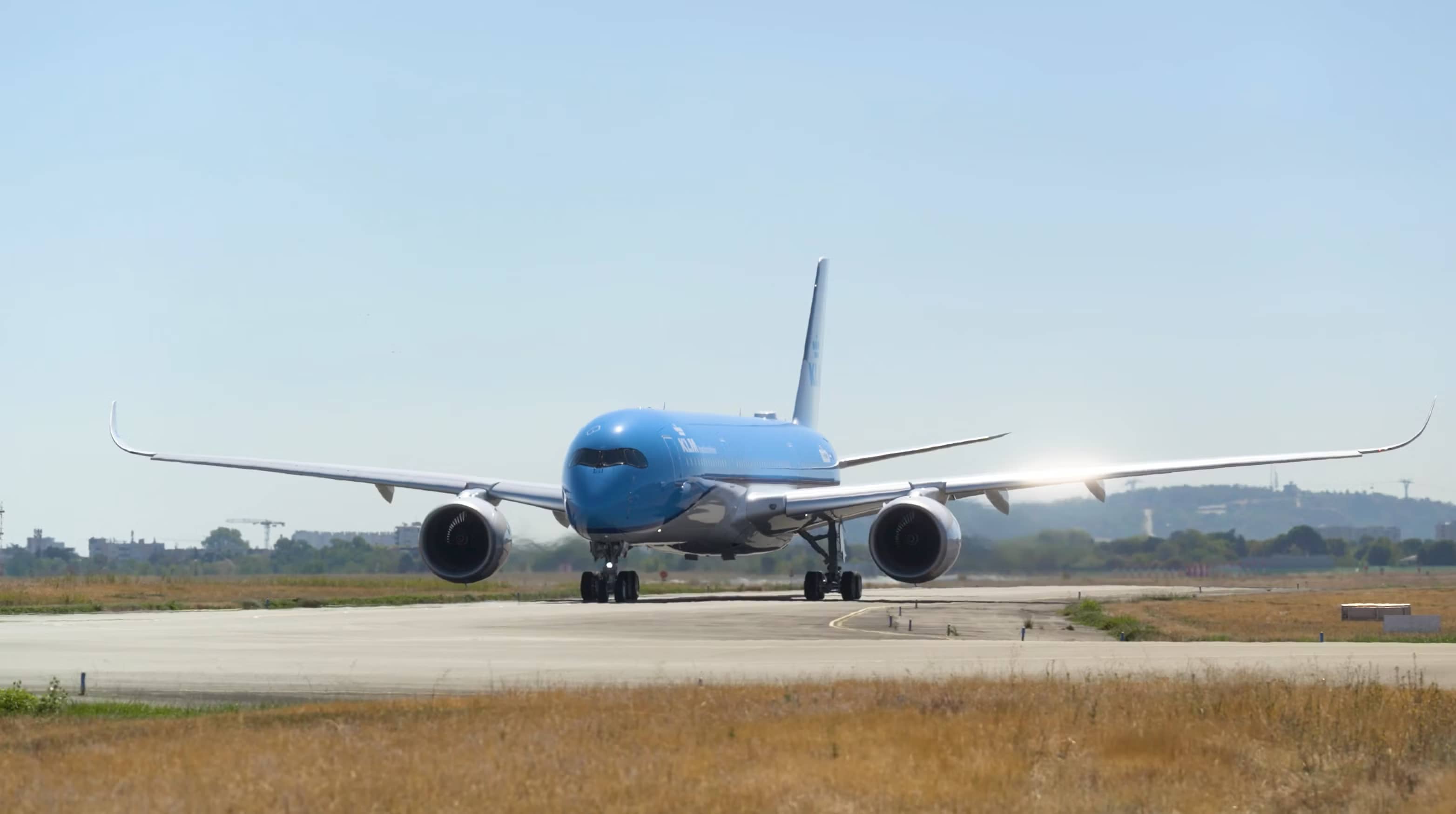

KLM Reintroduces Airbus A350 for Amsterdam-Toronto Route
KLM is preparing to operate its own fleet of Airbus A350-900 aircraft, marking a reversal of a strategic decision made seven years ago. The airline's first A350, registration PH-ZNA and named "The Night Watch," completed its maiden flight from Toulouse on September 4, 2026.
The aircraft is scheduled to enter commercial service on October 30, initiating flights between Amsterdam and Toronto. Following this initial deployment, the widebody jets will expand their reach to Montreal and destinations in East Africa.
This operational shift comes as KLM prepares to manage a growing fleet of 22 A350-900s. The introduction of these newer aircraft is part of a broader plan to progressively replace KLM's aging Airbus A330s and Boeing 777-200ERs over time.
Operational Pressures Drive Fleet Modernization
The decision to utilize the A350 is influenced by specific operational constraints at Amsterdam Schiphol Airport. Noise limits imposed by the airport, combined with rising fuel costs, are pushing KLM to swap older Boeing 777s for Airbus widebodies that offer lower noise profiles and higher per-flight yield.
These economic factors have been further complicated by geopolitical events. Russia's invasion of Ukraine in 2022 forced airlines to navigate around Russian airspace, resulting in longer flight times and increased fuel consumption. This shift in routing has altered operating economics for long-haul carriers, increasing the value of fuel-efficient aircraft like the A350.
Reversal of Previous Air France-KLM Strategy
The current fleet composition contrasts sharply with a strategy implemented seven years ago. At that time, Air France-KLM deliberately removed the Airbus A350 from KLM's future. The group reallocated seven A350-900s originally intended for the Dutch carrier to Air France, while moving six Boeing 787s to KLM.
The 2019 strategy aimed to concentrate the A350 fleet at Paris Charles de Gaulle and the 787 fleet at Amsterdam Schiphol. This move was designed to simplify long-haul fleets across the group. Benjamin Smith, then CEO of Air France-KLM, described the reallocation as the "first step towards harmonizing and simplifying" the airline's operations.
The strategic pivot back toward the A350 followed a 2023 order for 50 A350-900s and Airbus A350-1000s, along with 40 additional purchase rights. This order laid the groundwork for KLM to operate its own widebody fleet of the type it had previously divested.
Logistics of the 2023 Fleet Expansion
The foundation for KLM's return to the Airbus A350 was established through a significant procurement agreement finalized in 2023. The carrier secured an order for 50 aircraft comprising both A350-900 and A350-1000 variants, supplemented by 40 additional purchase rights. This substantial commitment provided the necessary inventory to support the airline's goal of operating 22 A350-900s specifically within its own fleet.
The acquisition of these aircraft represents a significant logistical undertaking for the carrier. By securing both immediate deliveries and future options, KLM positioned itself to gradually phase out older models while maintaining capacity on high-demand routes. The inclusion of the larger A350-1000 in the order suggests a strategy that accounts for varying passenger loads and route profitability across its network.
Historical Context of Fleet Harmonization
The current operational reality stands in direct opposition to the group's long-term harmonization goals set nearly a decade prior. In 2019, the leadership at Air France-KLM pursued a strategy designed to streamline operations by segregating aircraft types between its two primary hubs. The plan involved concentrating the entire A350 fleet at Paris Charles de Gaulle while assigning the Boeing 787 fleet exclusively to Amsterdam Schiphol.
This segregation was intended to simplify maintenance, training, and scheduling across the long-haul network. However, the subsequent geopolitical shifts and airport-specific noise restrictions in Amsterdam have rendered that specific harmonization model less viable for KLM's current operational needs. The airline is now prioritizing aircraft characteristics such as noise levels and fuel efficiency over the previous group-wide standardization of fleet types.