


Indo-Pacific's Growing Global Significance Highlighted by Jaishankar
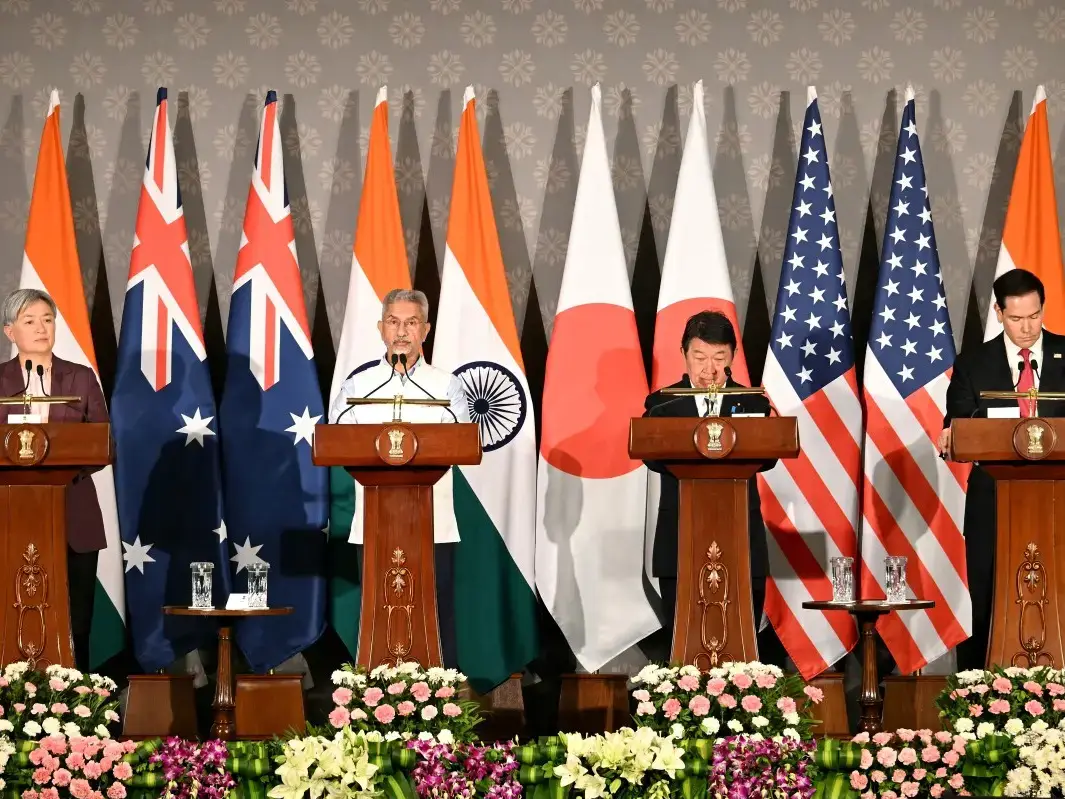
India's External Affairs Minister S. Jaishankar recently articulated that the Indo-Pacific region is poised to assume increasing global importance in the coming period. His remarks followed a meeting of the Quadrilateral Security Dialogue (Quad), which includes India, Australia, Japan, and the United States, where discussions focused on strategic approaches to the region.
During the Quad deliberations, Minister Jaishankar underscored several critical aspects pertinent to regional stability and international cooperation. He specifically emphasized the fundamental significance of maritime law, a cornerstone for maintaining order and facilitating commerce across the vast oceanic expanse of the Indo-Pacific. The region encompasses vital sea lanes that are crucial for global trade and energy supply, making adherence to international maritime norms a key concern for all stakeholders.
Furthermore, Jaishankar highlighted the imperative of self-defense against terrorism. This point reflects a broader concern among Quad members regarding the persistent threat of terrorism and its potential to destabilize regional security and economic development. Counter-terrorism cooperation and capacity building are recurring themes in discussions among countries committed to a secure and stable Indo-Pacific.
Australia's Perspective: Economic Stress and Freedom of Navigation
Australia's Foreign Minister Penny Wong also contributed to the discussions, offering insights into the current challenges facing the Indo-Pacific. Minister Wong specifically noted the presence of economic stress within the region. This observation aligns with global economic trends and regional specificities, which include factors such as supply chain disruptions, inflationary pressures, and the ongoing recovery from global health crises that have impacted various economies across the Indo-Pacific.
In her statements, Minister Wong expressed strong support for efforts aimed at promoting freedom of navigation. This principle is considered vital for ensuring the unhindered flow of international trade and upholding international law in maritime domains. Freedom of navigation is particularly relevant in the Indo-Pacific, given the presence of major shipping routes and areas where territorial claims intersect, making the consistent application of international law essential for regional peace and prosperity.
Quad's Strategic Focus on the Indo-Pacific
The Quad meeting served as a platform for the member nations to outline a coherent strategy for the Indo-Pacific. The dialogue among India, Australia, Japan, and the United States is generally understood to aim at fostering a free, open, inclusive, and resilient Indo-Pacific. This strategic objective involves cooperation across various sectors, including security, economic development, infrastructure, climate change, and humanitarian assistance and disaster relief.
The growing focus on the Indo-Pacific by major global powers stems from its increasing geopolitical and geoeconomic significance. The region is home to more than half of the world's population, a substantial portion of global GDP, and critical trade routes. Consequently, developments within the Indo-Pacific have far-reaching implications for global stability and economic well-being. The Quad's collaborative efforts are directed towards addressing these complexities and promoting a rules-based international order in the region.