

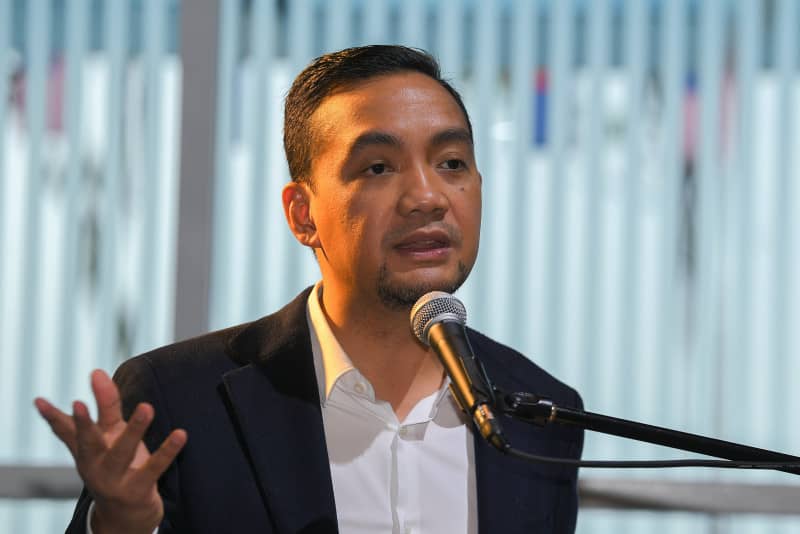

Johor Palace Advised Onn Hafiz on Reconciliation
Johor Menteri Besar Onn Hafiz Ghazi has publicly disclosed that advice from the Johor royal institution played a pivotal role in his decision to personally apologise to UMNO president Datuk Seri Dr Ahmad Zahid Hamidi. This reconciliation followed a period of public criticism from Onn Hafiz towards Zahid Hamidi in the aftermath of the 15th General Election (PRU15) in November 2022.
Calls for Leadership Change Following PRU15 Performance
Following the conclusion of the 15th General Election, Onn Hafiz Ghazi was among several prominent Barisan Nasional (BN) leaders who openly called for Datuk Seri Dr Ahmad Zahid Hamidi to step down from his position as UMNO president. These calls for Zahid's resignation emerged amidst significant dissatisfaction within the party and the broader BN coalition regarding their performance in the general election.
Barisan Nasional, a long-standing political coalition that had historically dominated Malaysian politics, secured only 30 parliamentary seats in PRU15. This outcome marked its worst electoral performance since the formation of Malaysia and led to widespread internal debate and criticism directed at the party's leadership. Many within UMNO and BN perceived Zahid Hamidi, as the coalition's chairman and party president, to be responsible for the coalition's poor showing.
Onn Hafiz Ghazi's public stance at the time reflected a segment of party sentiment that believed a change in leadership was necessary for UMNO and BN to regain public trust and political relevance. His statements were widely reported and contributed to the internal pressure on Zahid Hamidi, adding to the political instability within the party during a critical post-election period.
The 15th General Election and its Aftermath
The 15th General Election resulted in an unprecedented hung parliament, with no single coalition securing a simple majority to form a government. This outcome necessitated complex negotiations among various political blocs to establish a new administration. UMNO, despite its reduced parliamentary strength, became a crucial component in the formation of the unity government led by Prime Minister Datuk Seri Anwar Ibrahim.
During this period of political uncertainty, Datuk Seri Dr Ahmad Zahid Hamidi, as the president of UMNO, played a central role in the decision-making process regarding the party's alignment. Despite the internal calls for his resignation, he retained his position and ultimately led UMNO to join the unity government alongside Pakatan Harapan and other parties. This decision was met with mixed reactions within UMNO, further highlighting the internal divisions and leadership challenges the party faced.
Intervention by the Johor Royal Institution
According to Onn Hafiz Ghazi's own account, the advice to reconcile with Datuk Seri Dr Ahmad Zahid Hamidi originated from the Johor royal institution. While specific details of the advice were not publicly elaborated upon, Onn Hafiz stated that this counsel was a significant factor in his subsequent actions to mend ties.
The Johor royal institution, like other state monarchies in Malaysia, holds a respected and influential position within the state. Under Malaysia's constitutional monarchy system, state rulers serve as heads of state and are seen as guardians of state interests, unity, and stability. The Sultan of Johor, Sultan Ibrahim Sultan Iskandar, and the royal family are known for their active involvement in state affairs and their emphasis on promoting harmony and good governance within Johor.
As the Menteri Besar of Johor, Onn Hafiz Ghazi serves at the pleasure of the Sultan and maintains a close working relationship with the royal institution. His disclosure underscores the moral authority and influence that the state's royal household can exert in political matters, particularly those affecting leadership and stability within the state's political landscape and national party dynamics.
The Subsequent Apology and its Significance
Following the advice from the Johor royal institution, Onn Hafiz Ghazi proceeded to personally apologise to Datuk Seri Dr Ahmad Zahid Hamidi. This apology marked a significant shift from his earlier critical stance and was widely seen as an effort to mend internal party divisions and foster greater unity within UMNO.
The act of a personal apology is often viewed within Malaysian political culture as a crucial step towards reconciliation and the restoration of harmony, particularly among leaders within the same political party. Onn Hafiz's gesture was interpreted as an attempt to de-escalate tensions and contribute to party cohesion, which had been grappling with internal factions and leadership challenges post-PRU15.
Political Dynamics within UMNO
The period following PRU15 was characterized by significant internal power struggles and factionalism within UMNO. Despite the initial challenges and calls for his resignation, Datuk Seri Dr Ahmad Zahid Hamidi managed to consolidate his position as party president. His leadership was crucial in navigating UMNO through the post-election negotiations and securing its place in the unity government.
The reconciliation between Onn Hafiz Ghazi and Zahid Hamidi, facilitated by the Johor palace's advice, contributed to efforts to reduce internal dissent and strengthen leadership within UMNO. Such moves are often critical for maintaining party cohesion, especially when the party is part of a ruling coalition and faces ongoing political and electoral challenges. Onn Hafiz, as a prominent state leader and a descendant of UMNO's founder, Dato' Onn Jaafar, holds a significant position within the party, making his reconciliation particularly impactful.
Broader Implications for Party Unity and Royal Influence
This episode highlights the complex interplay between state-level political leadership, national party dynamics, and the role of royal institutions in Malaysia. The advice from the Johor palace to Onn Hafiz Ghazi to reconcile with the national party president underscores a potential role for royal institutions in promoting political stability and unity, particularly when internal party conflicts threaten broader governance or state interests.