

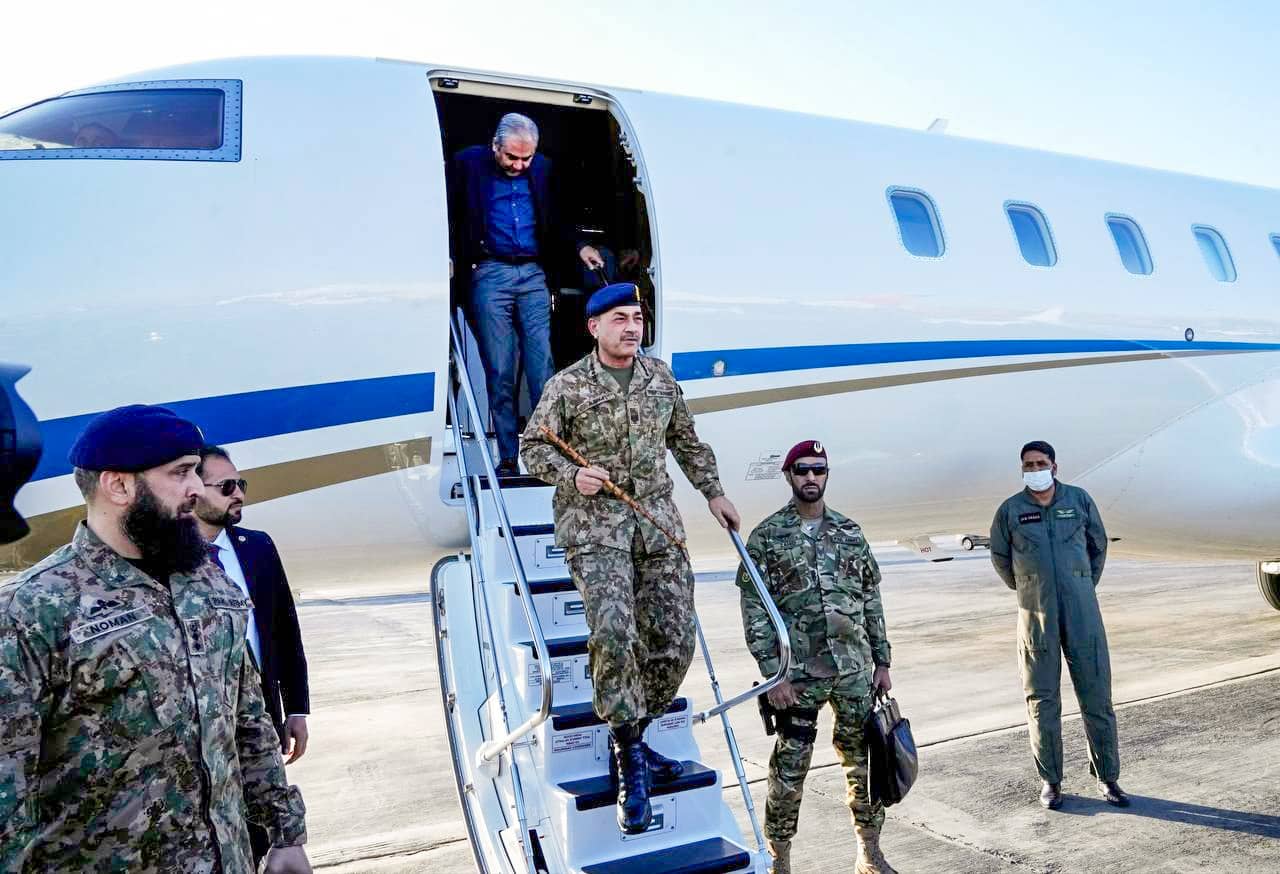

Munir's Kashmir rhetoric meant to divert attention from domestic failures
\nIslamabad faces a complex array of challenges as the nation grapples with widespread internal unrest. According to reports available on July 25 via IANS, Pakistan is currently reeling under significant pressure from multiple sources within its own borders.
\n\nDiplomatic Campaign Amidst Internal Unrest
\nDespite these domestic struggles, there are indications that the state leadership in Islamabad has decided to pursue a new strategic direction. A report stated that Pakistan is set to launch a diplomatic campaign designed to internationalize the Kashmir issue specifically within the United Kingdom and Europe.
\n\nThis announcement may have come as a surprise to observers who were not privy to these plans, Nilesh Kunwar noted in his analysis published by Eurasia Review. Kunwar, identified in the source material as a retired Indian Army Officer, expressed skepticism regarding the timing and intent of such moves given the current internal situation.
\n\nThe domestic landscape described includes severe security concerns in Khyber Pakhtunkhwa, where home-grown terrorism continues to impact stability. Simultaneously, an armed secessionist movement is reported to be active in Balochistan. Furthermore, unprecedented levels of public discontent have been observed within Pakistan-occupied Jammu and Kashmir (PoJK) as well as in Pakistan-occupied Gilgit-Baltistan (PoGB).
\n\nAgainst this backdrop of instability at home, one would expect the administration to prioritize internal consolidation rather than external diplomatic offensives. However, reports suggest that Islamabad is proceeding with plans to take these issues international.
\n\nCriticism Regarding Army Chief Munir's Rhetoric
\nNilesh Kunwar directed specific criticism toward Pakistan Army chief Asim Munir regarding the recent rhetoric emanating from his office. The retired officer suggested that a distinct lack of domestic criticism targeting the military establishment has emboldened Munir to engage in what he termed reckless rhetoric.
\n\nKunwar argued that because no one within Pakistan dares to question the country's Field Marshal, there is an assumption among some quarters that silence serves as an endorsement of his strategic thinking. This perceived immunity allows for a different type of discourse to emerge from senior military leadership.\n\n
\n\n\"Perhaps this is why he indulges in immature rhetoric so often and his irresponsible utterance that 'What India labels as terrorism is, in fact, a legitimate and lawful struggle for freedom, recognised by international law' exposes his skewed mindset,\" the Indian Army veteran said.
The specific quote attributed to Munir frames actions labeled as terrorism by New Delhi as a \"legitimate and lawful struggle for freedom\" under international law. Kunwar cited this statement explicitly as evidence of what he described as a skewed mindset within the military leadership.\n\n
Analysis of Diplomatic Expectations\n
Kunwar offered an assessment regarding the likely outcomes of Munir's proposed diplomatic outreach. He stated that it would be naive to believe that a cunning fox like Field Marshal Munir genuinely expects these efforts to yield positive results for Pakistan.
\n\nThe analysis suggests that Munir, despite his confidence in the rhetoric, is aware of historical precedents regarding such campaigns. Kunwar noted that Munir's talk of fighting 10 more wars for Kashmir unambiguously indicates a specific understanding on the part of the Field Marshal.\n\n
\n\n\"And his talk of fighting 10 more wars for Kashmir unambiguously indicates that just like all his predecessors, the Field Marshal knows very well that his much-touted diplomatic offensive on Kashmir will, like all the previous attempts, end with a whim,\" the report stated.
This perspective implies an acknowledgment by senior military leadership of past failures in similar diplomatic endeavors. The comparison to \"all his predecessors\" suggests a pattern where such initiatives have historically concluded without achieving their intended objectives.\n\n
Implications for Regional Stability
\nThe combination of internal unrest and external diplomatic maneuvering presents a complex scenario for the region. Reports indicate that Pakistan is attempting to overcome glaring shortcomings in its narrative regarding Kashmir through various methods.
\n\nKunwar's commentary highlights the tension between addressing immediate domestic crises, such as terrorism in Khyber Pakhtunkhwa and secessionist activities in Balochistan, versus pursuing long-term diplomatic goals. The source material emphasizes that these two tracks are currently operating simultaneously despite potential conflicts of interest.
\n\nThe public discontent reported in PoJK and PoGB adds another layer to the internal challenges facing the state. These issues coexist with the broader security concerns regarding terrorism and separatist movements elsewhere in the country.\n\n
According to Kunwar, the absence of a robust domestic check on military leadership allows for rhetoric that might not align with practical diplomatic realities or immediate public safety needs. The suggestion is that Munir's approach relies heavily on international platforms rather than addressing the root causes of internal instability.
\n\nThe Role of International Law in Rhetoric
\nMunir\u2019s specific framing of the Kashmir issue invokes references to international law. By characterizing certain actions as a \u201clegitimate and lawful struggle for freedom,\u201d he seeks to align Pakistan\u2019s position with broader legal frameworks recognized globally.\n\n
However, Kunwar points out that this framing does not necessarily translate into diplomatic success. The historical record of similar attempts by previous Pakistani leadership suggests a recurring pattern of unsuccessful outcomes.
\n\nThe article notes that Munir is aware that his \u201cmuch-touted diplomatic offensive on Kashmir will, like all the previous attempts, end with a whim.\u201d This observation underscores the disconnect between rhetorical ambition and historical precedent in international diplomacy regarding this specific region.
\n\nAs Pakistan continues to navigate these internal and external pressures, the focus remains divided. While diplomats prepare for engagements in Europe and the UK, security forces deal with ongoing unrest at home. The divergence between diplomatic aspirations and domestic realities defines the current strategic environment.\n"