


Kazakhstan's Unicameral Shift: A New Era for Governance and Investment
ASTANA – The recent parliamentary elections held on August 23 marked a significant turning point for Kazakhstan, with foreign observers closely scrutinizing the nation's transition to a unicameral legislature. This structural reform, embedded within the new constitutional framework adopted in 2026, has become a focal point for discussions concerning Kazakhstan's future trajectory in governance and its capacity to attract international investment.
The establishment of the Kurultai, the new unicameral parliament, is viewed by international monitors as more than a simple procedural adjustment. Reports from The Astana Times indicate that this fundamental alteration to the country's legislative architecture was a primary topic among foreign delegates present during the voting process. The move signifies a departure from previous bicameral arrangements, introducing a singular legislative body responsible for lawmaking.
International observers have articulated that the success of this new political system will be measured by its ability to enhance accountability, foster institutional stability, and cultivate a predictable environment. These elements are considered paramount for both the nation's citizens and its potential international investors. The emphasis is on the practical outcomes of the reform, rather than the structural change itself.
Institutional Stability and Predictability as Investment Catalysts
Beyond the architectural changes in its legislative branch, the potential for Kazakhstan to draw international capital has emerged as a central theme in dialogues among foreign observers. The stability that the new constitutional framework is intended to provide is seen as a critical determinant of the country's appeal to global financial markets. Observers suggest that a predictable governance structure is a key prerequisite for fostering investor confidence.
The assessment by these international delegates points towards institutional consistency, rather than legislative complexity, as the more significant driver for economic engagement. The August 23 vote provided a platform for these discussions, where the direct link between political structure and economic outcomes was explicitly highlighted. Foreign delegates emphasized that the new framework's capacity to cultivate a stable environment is intrinsically tied to its potential to attract foreign direct investment.
The move to a unicameral system is expected to streamline legislative processes, potentially leading to more decisive policy-making and a more predictable regulatory landscape. This predictability is a crucial factor for foreign investors who often seek stable and transparent operating conditions before committing capital. The expectation is that the Kurultai will be able to enact legislation efficiently, thereby contributing to a more dynamic economic climate.
Diplomatic Engagement and the Road Ahead
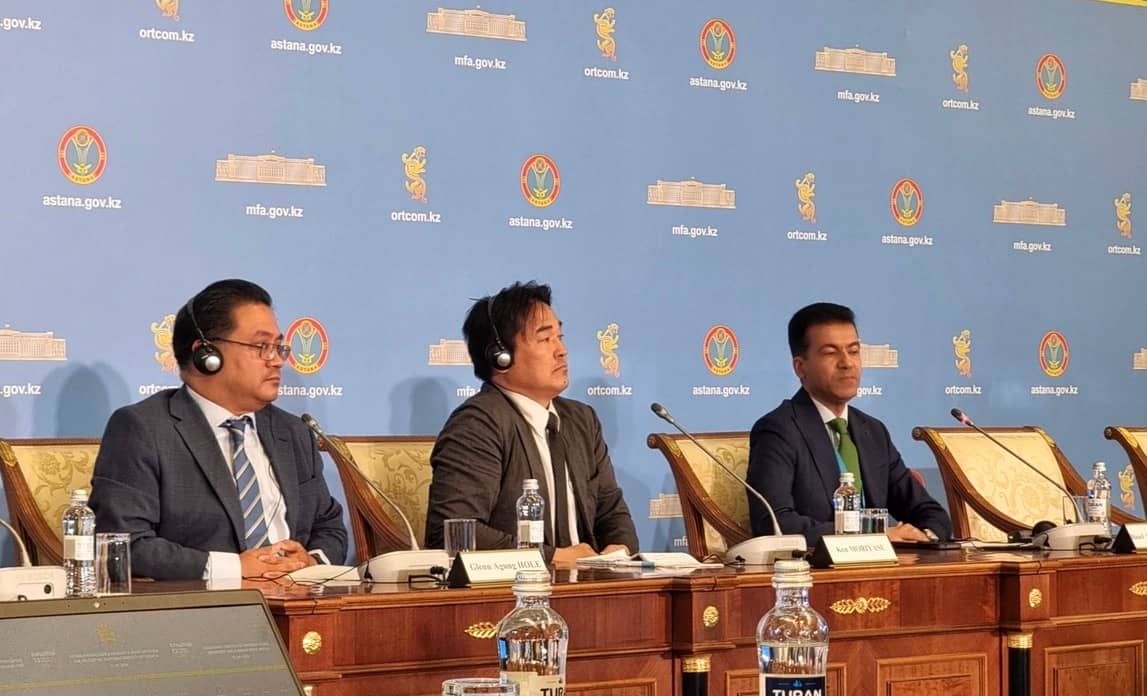
The international interest in Kazakhstan's political evolution was underscored by the presence and commentary of various diplomatic figures. Rachman Mohamad Fadjroel, the Indonesian ambassador to Kazakhstan, offered his insights on the developments surrounding the election and the broader implications of the constitutional reforms. His remarks were part of a wider exchange of views among international representatives gathered in Astana.
The participation of diplomats such as Glenn Agung Hole and Basel al-Haj Jasem, alongside Ambassador Fadjroel, contributed to a collective assessment of the electoral process and its potential impact on Kazakhstan's future. This diplomatic engagement reflects a global recognition of the importance of Kazakhstan's reforms and a keen interest in observing their practical implementation.
Evaluating the New Constitutional Framework in Practice
The 2026 Constitution serves as the bedrock for the newly established Kurultai. International observers are keenly focused on how the principles enshrined within this foundational document will translate into practical governance. The legitimacy and effectiveness of the Kurultai will ultimately be judged by its adherence to these constitutional mandates and its ability to deliver on the promises of enhanced accountability and stability.
The period following the August 23 vote is considered crucial for demonstrating the functionality and efficacy of the unicameral system. International monitors are tasked with observing whether the structural changes lead to the anticipated improvements in institutional stability and governance. A key area of focus is the development and implementation of robust accountability mechanisms within the new legislative body.
The expectation is that a unicameral system may simplify or alter the dynamics of legislative oversight and policy execution when compared to previous bicameral structures. Investors and diplomats alike are closely monitoring the situation, seeking tangible evidence that the predicted benefits of stability and predictability are materializing. The coming months are anticipated to provide further insights into the effectiveness of Kazakhstan's political reforms in meeting international standards for governance and fostering a conducive environment for economic growth.