

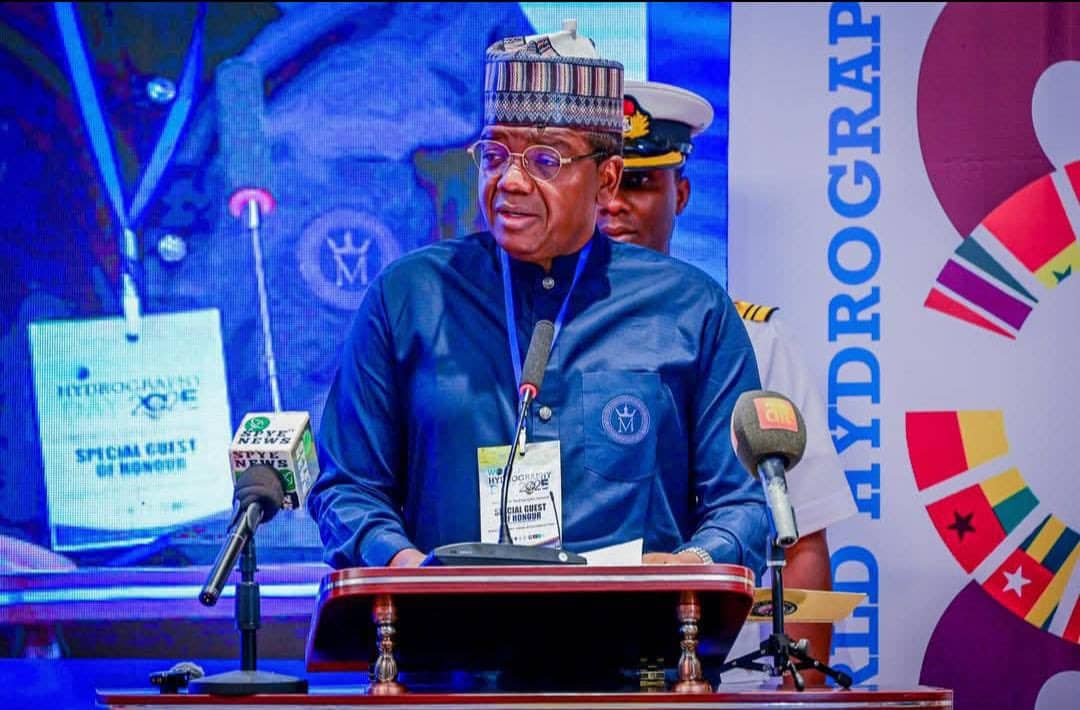

By IBRAHIM ABBA
\nThe July 24, 2026 article titled \"2027: 'Tinubu again' is Matawalle's ace\" was published on the National Accord Newspaper. The piece outlines a specific political strategy being employed by Bello Matawalle regarding the upcoming electoral cycle in Nigeria.
\nBello Matawalle, who currently serves as Minister of State for Defence, has positioned himself as a staunch supporter of President Bola Tinubu. According to the report, Matawalle is actively engaged in selling the president's candidacy to Nigerians across various linguistic groups and regions within the country.
\nA Philosophy Centered on Vision
\nThe core philosophy driving this campaign effort rests on a specific belief held by Matawalle. He operates under the premise that where there is vision, development follows as a direct consequence. This causal link between foresight and progress forms the foundation of his advocacy for President Tinubu.
\nTo Matawalle, President Bola Tinubu represents the embodiment of this philosophy. The minister views him not merely as an administrator but as a visionary leader who possesses specific character traits necessary to navigate complex national challenges. He describes these attributes as courage and a plucky spirit that allows one to dare in uncertain situations.
\nMatawalle has been described as being up and about, meaning he is actively traveling or engaging directly with the public to promote this narrative. His goal involves emphasizing Tinubu's perceived bravery in navigating uncharted courses of governance. The minister argues that standing victorious against odds requires a specific type of leadership spirit.
\nThe article suggests that Matawalle believes Nigeria currently needs a leader who is willing to make tough decisions for the nation's prosperity. He frames this necessity within the context of the current economic climate, which he describes as being in straits similar to historical depressions faced by other nations.
\nComparative Analysis with Historical Leaders
\nIn an effort to contextualize his argument about Tinubu's leadership style, Matawalle draws direct parallels between President Bola Tinubu and transformative leaders from other countries. The text explicitly mentions Franklin D. Roosevelt of the United States as a primary example.
\nMatawalle cites the era under Franklin D. Roosevelt specifically regarding how he pulled America out of the Great Depression. He notes that this economic downturn stretched across the US timeline from 1929 to 1941. The comparison serves to illustrate how intentional transformative leadership can resolve severe national crises.
\nAnother historical figure cited in the analysis is Lee Kuan Yew, who served as a leader for Singapore. Matawalle points out that Lee Kuan Yew rebuilt a dejected Singapore from the ruins of war. This example reinforces the narrative that visionary leaders are essential when nations suffer terrible economic downturns mixed with political turmoil.
\nThe article also lists Malaysia and Japan alongside America, Singapore, and others as examples where leadership brought countries back from difficult periods. According to the source text, these cases share a common thread: intentional transformative leadership philosophy.
\nDefining Political Leadership Against Populism
\nA significant portion of Matawalle's argument focuses on defining what political leadership entails versus populism. He asserts that true leadership is not about appealing to the masses in a superficial way but involves taking tough decisions and executing them.
\nThe minister argues these actions must be executed for the prosperity of the people, rather than solely for popularity points. This distinction appears central to his justification for supporting President Tinubu's re-election bid if it occurs in 2027.
\nMatawalle describes this approach as activism without losing its touch of humanism. He suggests that transformative leaders wear the garment of activism while maintaining a connection to human welfare, though he does not elaborate further on specific metrics for measuring this balance beyond his general assertions.
\nThe Current State of Nigeria's Economy
\nAccording to the article, Matawalle frames the current situation in Nigeria as being comparable to severe historical precedents. He states that Nigeria has been placed in a strait of economic depression similar to those faced by other nations mentioned earlier.
\nThe text notes that Vice President Kashim Shett is referenced alongside this discussion regarding leadership and national recovery, though specific quotes or detailed actions from the vice president are not provided within the excerpt. The mention serves primarily to situate the current political landscape within a broader context of executive roles during economic challenges.
\nThe 2027 Election Cycle Strategy
\nMatawalle's strategy for the 2027 election cycle is explicitly identified as making President Tinubu's return the key theme. The article title itself, \"Tinubu again,\" signals that re-election or continuation of leadership under the current administration is the primary focus.
\nThe publication date of July 24, 2026, places this advocacy in a specific timeframe leading up to the anticipated elections. At that time, Matawalle was already serving as Minister of State for Defence and using his platform to articulate these views publicly through media outlets like National Accord Newspaper.
\nThe author of the piece, Ibrahim Abba, presents these statements as factual reporting on what Matawalle is saying rather than endorsing them. The text attributes all claims regarding Tinubu's character and necessity directly to Bello Matawalle or his philosophy as described in interviews or articles by him.
\nThere are no opposing party responses included in the provided source context for this specific article. Consequently, the reporting focuses entirely on the perspective of Minister Matawalle without presenting counter-arguments from rival political factions at that moment in time.
\nThe article concludes its narrative arc with these assertions about leadership and development. It does not offer a summary or conclusion section but rather ends after detailing the minister's views on why President Tinubu is necessary for Nigeria to move forward economically and politically according to Matawalle's definition of success."