

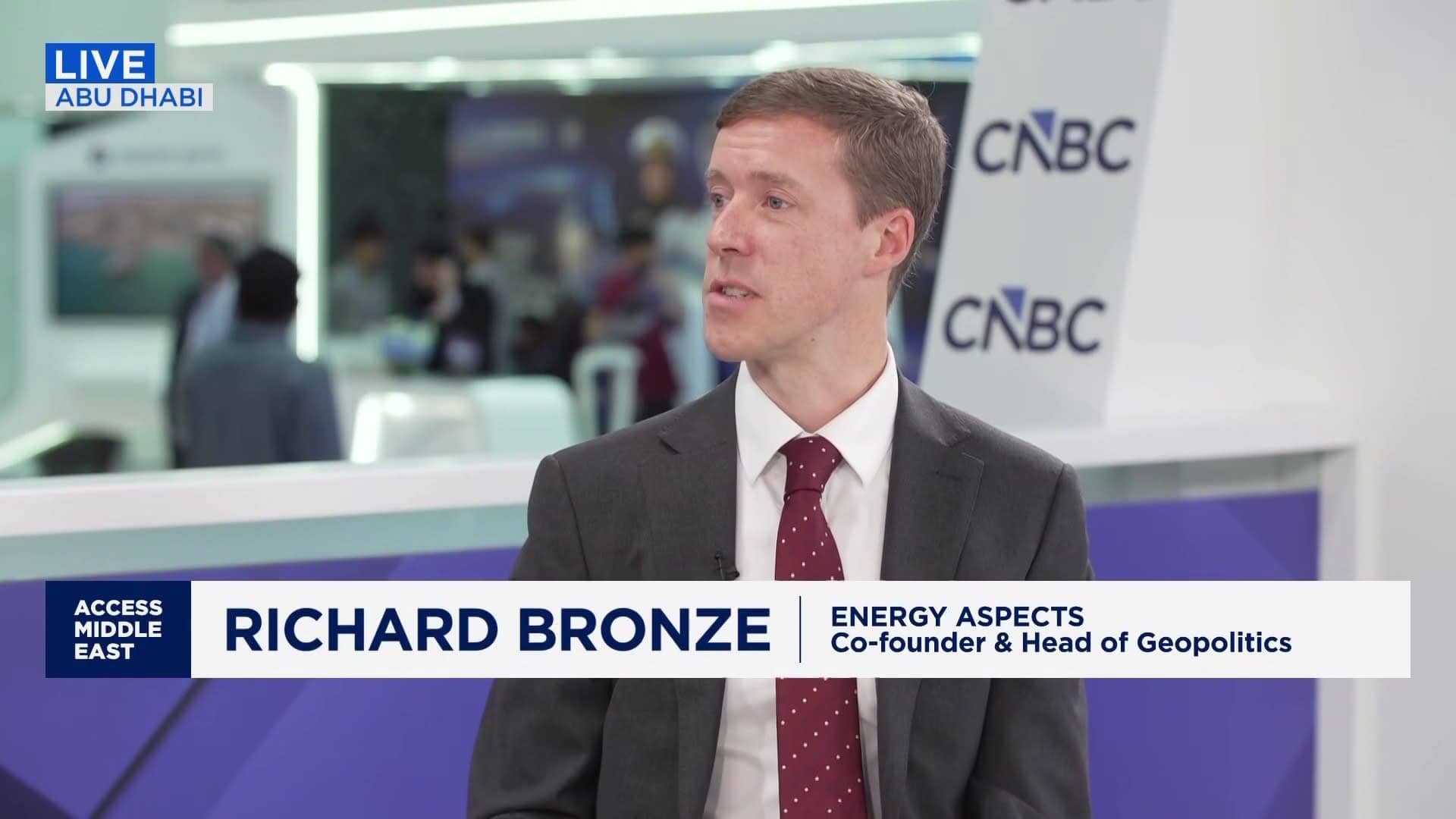

Energy Aspects Forecasts Price Correction
\nRichard Bronze, co-founder and head of geopolitics at Energy Aspects, stated that oil prices may experience a sharp unwinding if military escalation between the United States and Iran fails to materialize following the U.S. midterm elections.
\nBronze made these remarks during an interview with Dan Murphy at ADIPEC 2026 on November 2, 2026. The discussion focused on the potential trajectory of energy markets in the absence of further direct military conflict between the two nations.
\n\nCurrent Market Volatility and Pricing
\nGlobal energy markets are currently experiencing significant volatility driven by escalating geopolitical friction surrounding the ongoing U.S.-Iran conflict. This tension has pushed international benchmark prices to elevated levels, with Brent crude hovering around the $110 per barrel mark.
\nWest Texas Intermediate (WTI) is tracking close to $100 per barrel. Market trackers indicate that Brent crude recently tested multi-month highs past $110 per barrel, while WTI has maintained a stance around $100 per barrel.
\nThe surge in commodity pricing reflects anxieties regarding potential disruptions to critical global shipping lanes, particularly the Strait of Hormuz, through which a substantial share of the world’s petroleum flows. Financial institutions, major trading houses, and central banks are closely monitoring the situation as supply risk premiums become embedded into petroleum valuations.
\n\nDiplomatic Pushes and Production Stance
\nRecent sessions saw slight pullbacks in oil prices prompted by renewed diplomatic pushes involving intermediaries like Qatar. These efforts were accompanied by cautious signals from Washington regarding potential de-escalation windows.
\nMajor producer alliances, including OPEC+, have maintained a cautious stance. The group is keeping production targets steady rather than rushing to flood the market, even as policymakers