


President Trump's Belligerent Rhetoric in Middle East Conflict
An opinion piece published by Israel National News on August 2, 2026, offers a scathing critique of President Donald Trump's approach to the ongoing conflict with Iran. The author, Prof. (emer.) Louis René Beres, characterizes Trump's actions and pronouncements as a “gratuitous onslaught of demeaning behaviors” and belligerent rhetoric. This stance, Beres argues, reveals a fundamental disconnect in strategic understanding: while Iran is depicted as acting rationally in its current war situation, the United States under President Trump’s leadership is not.
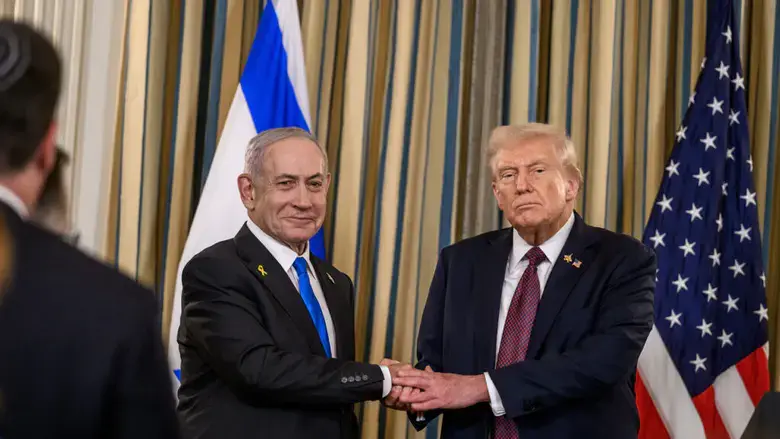
Professor Beres, whose op-ed was posted at 10:42 AM GMT+3 on that date, specifically focuses on the roles of President Trump and Prime Minister Benjamin Netanyahu in relation to events that transpired in 2025. The article asserts that for American leadership, achieving a successful outcome in any conflict with Iran demands far more than mere hyperbolic threats and aggressive pronouncements. It underscores that no matter how vigorously President Trump might declare, for instance, “We’re going to hit them very hard tonight,” Iran’s leadership will remain steadfastly focused on its deeply ingrained core military objectives, undeterred by such rhetoric.
A Critique of US Strategic Engagement
The core of Beres's critique lies in the perceived inadequacy of the American strategy, which he suggests relies heavily on bluster rather than a profound understanding of the adversary. The “demeaning behaviors” are not just matters of diplomatic etiquette but reflect a deeper failure to engage Iran on a strategically meaningful level. This approach, according to the article, risks miscalculating Iran's resolve and its capacity to pursue its objectives despite external pressure. The implication is that a strategy built on such a foundation is inherently less rational than Iran's own calculated moves, which are consistently aimed at achieving specific, “cost-effective” outcomes within its own strategic framework.
Tehran's Rational Calculus: Beyond Conventional Wisdom
The Imperative of Iranian Strategic Objectives
The opinion piece posits that regardless of the specific composition of leadership in Tehran, Iran's current strategic course is perceived as both rational and “cost-effective” from its own internal perspective. This understanding, according to Professor Beres, necessitates looking beyond what is typically considered “common-sense” analysis in Western strategic circles, which often fails to grasp the full scope of Iranian motivations and decision-making.
The research highlights that generally ignored factors play a profoundly significant role in Tehran's strategic calculations. Specifically, the article claims that Iran acts according to subjective interpretations of “Death and Time.” These are not merely abstract concepts but foundational elements that shape Iran's willingness to endure conflict, its perception of victory, and its long-term strategic patience. Unless authoritative US decision-makers make a concerted effort to decipher these dangerously overlooked considerations, any American plan for “winning” a war with Iran is, by definition, destined to fail.
Subjective Interpretations of Mortality and Chronology
The concept of “Death and Time” as subjective interpretations forms the bedrock of Iran's strategic calculus, representing a dimension often missed by conventional geopolitical assessments. This framework suggests that Iran's leaders may view the risks and rewards of conflict, as well as the duration and ultimate consequences of military engagements, through a lens distinctly different from that of the United States. For instance, a willingness to accept significant casualties or to pursue objectives over extended periods, driven by a particular interpretation of sacrifice or historical destiny, could fundamentally alter the perceived “cost-effectiveness” of a conflict for Iran. Ignoring these deeply embedded cultural, religious, and philosophical underpinnings means that American strategies, predicated on a different set of rational assumptions and a more immediate, tangible cost-benefit analysis, will inevitably misjudge Iranian resolve and its capacity to achieve its stated objectives.
Tangible Repercussions for Israel and US Policy
Washington's Decisions and Regional Stability
Professor Beres's op-ed strongly implies that President Trump’s “seat-of-the-pants war” approach critically overlooks various intricate aspects of Iran’s strategic calculus. This impulsive method, lacking a deep understanding of Tehran's motivations, leads to a dangerous miscalculation of the adversary's intent and capabilities. The text repeatedly issues urgent warnings about the severe consequences that will inevitably unfold if these specific, often-ignored considerations are not adequately addressed by Washington's policy-makers.
A central tenet of the article is the direct and undeniable link between Washington’s decisions and their tangible effects on Israel. This crucial assertion is found within the original source context from Arutz Sheva, specifically under the section titled War In The Middle East: God, Death And Time. The URL associated with this content is https://www.israelnationalnews.com/news/431105. The implication is that Israel, as a key regional ally, stands to bear the brunt of any missteps or strategic failures stemming from an incomplete understanding of Iran's war calculations.
The Peril of Misinterpreting Iranian Resolve
The article underscores that a failure by US decision-makers to decipher Iran's unique strategic considerations could directly lead to the collapse of any American plan aimed at achieving victory in a conflict with Iran. This failure would not merely be a diplomatic setback but would have profound and immediate tangible effects on Israel, resulting from Washington’s policy choices if they continue to disregard Tehran’s distinct perspective on conflict and its underlying motivations. The danger lies in the US pursuing a strategy based on its own rational framework, while Iran operates on a different, unacknowledged logic.
Professor Beres reiterates that for America’s president, a deeper understanding is imperative—one that transcends simple belligerent rhetoric and hyperbolic threats. The current approach, characterized by a reliance on such rhetoric rather than a nuanced grasp of Iran's strategic framework, consistently overlooks critical aspects of Iran’s decision-making process. The repeated omission of these factors, despite their foundational importance to Tehran's objectives and its willingness to engage in or endure conflict, is highlighted as a persistent and dangerous flaw in American planning, jeopardizing not only US objectives but also the security of its regional allies.