

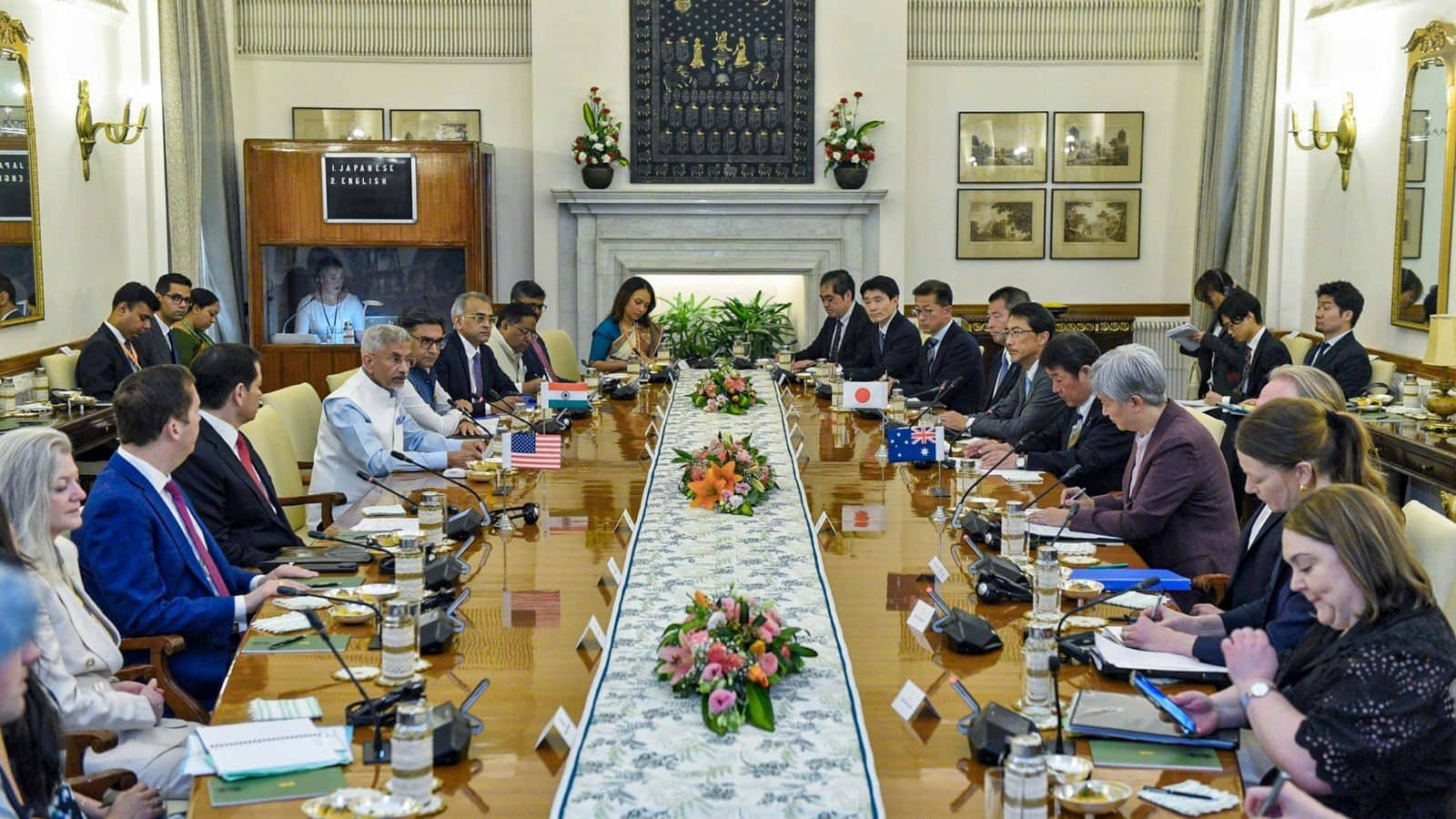

Quad Countries Launch Indo-Pacific Energy Security Initiative Amid Global Shipping Concerns
The Quadrilateral Security Dialogue (Quad) nations—Australia, India, Japan, and the United States—have announced a new Indo-Pacific energy security initiative. This development comes amidst increasing global concerns regarding the stability and security of shipping lanes, particularly those vital for energy transport across the Indo-Pacific region, a critical artery for global commerce.
In addition to the energy security focus, the grouping has significantly broadened its scope of cooperation, encompassing critical technological domains such as Artificial Intelligence (AI) and semiconductors, alongside enhanced efforts in maritime security. The Quad also issued a joint statement condemning the Pahalgam terror attack, reinforcing its stance against terrorism.
Indo-Pacific Energy Security Initiative
The newly launched Indo-Pacific energy security initiative underscores the Quad's commitment to fostering a stable and resilient energy landscape in a region crucial for global trade and energy flows. The Indo-Pacific is home to some of the world's busiest shipping routes, including vital chokepoints like the Malacca Strait, through which a substantial portion of global oil and liquefied natural gas (LNG) supplies are transported. Disruptions in these maritime arteries, whether due to geopolitical tensions, natural disasters, or other security threats, can have far-reaching economic and geopolitical consequences, impacting global energy markets and national economies.
The initiative aims to address vulnerabilities in energy supply chains, promote diversification of energy sources, and facilitate the transition to cleaner energy technologies. While specific details of the initiative's implementation are expected to unfold, the overarching goal is to enhance regional energy resilience and reduce dependence on single points of failure or volatile supply routes. This strategic move is seen as a comprehensive response to the complex challenges posed by fluctuating energy prices, climate change impacts on infrastructure, and the potential for disruptions to maritime commerce and energy infrastructure. By focusing on secure, affordable, and sustainable energy, the Quad seeks to bolster the economic stability and strategic autonomy of countries throughout the Indo-Pacific.
Global shipping has faced various pressures, including geopolitical flashpoints, piracy, and the increasing demand for secure and efficient transport of goods, including energy resources. The Quad's focus on energy security in this context highlights the interconnectedness of economic stability, national security, and environmental sustainability across the vast Indo-Pacific expanse. The initiative is expected to explore avenues for collaboration on renewable energy projects, smart grids, and resilient energy infrastructure, aiming to create a more robust and sustainable energy ecosystem for the region.
Expanded Cooperation in Key Technological and Security Domains
Beyond energy, the Quad has committed to deepening collaboration across several other strategic areas, reflecting a comprehensive approach to regional challenges and a shared vision for a free and open Indo-Pacific.
Artificial Intelligence (AI) and Semiconductors
The expansion of cooperation into Artificial Intelligence (AI) and semiconductors signals the Quad's recognition of these technologies as foundational for future economic growth, innovation, and national security. In the realm of AI, the Quad intends to promote responsible development and deployment, focusing on shared principles for ethical AI use, data privacy, and fostering innovation. This could involve collaborative research projects, talent exchange programs, and the establishment of common standards to ensure AI systems are developed and utilized in a manner that respects democratic values, human rights, and promotes secure digital infrastructure.
Regarding semiconductors, the initiative aims to enhance supply chain resilience and security. The global semiconductor industry has experienced significant disruptions in recent years, highlighting the strategic importance of these components for a vast array of modern technologies, from consumer electronics and telecommunications to advanced defense systems. Quad cooperation in this sector is expected to involve sharing information on supply chain vulnerabilities, exploring opportunities for diversification of manufacturing and sourcing, and potentially coordinating investments in research and development to foster innovation within the Quad countries and with trusted partners. The goal is to ensure a stable and secure supply of critical technologies essential for economic prosperity and national security.
Maritime Security
Maritime security remains a cornerstone of the Quad's agenda, with renewed emphasis on maintaining a free and open Indo-Pacific based on the rule of law. The expanded cooperation in this area includes efforts to enhance domain awareness, share information, and build capacity among regional partners to address common challenges. This involves activities such as joint maritime exercises, intelligence sharing on illegal, unreported, and unregulated (IUU) fishing, and collaboration on humanitarian assistance and disaster relief (HADR) operations. The objective is to ensure adherence to international law, particularly the United Nations Convention on the Law of the Sea (UNCLOS), and to deter actions that challenge the rules-based maritime order, thereby promoting stability and security across the region's vital sea lanes.
Condemnation of Pahalgam Terror Attack
In their joint statement, the Quad countries unequivocally condemned the Pahalgam terror attack. This condemnation reflects a shared commitment among the member nations to combat terrorism in all its forms and manifestations, recognizing it as a grave threat to international peace and security. Such statements in joint declarations from multilateral groupings typically underscore a unified stance against acts of terrorism and often signal a willingness to cooperate on counter-terrorism efforts, including information sharing and capacity building.
China's Reaction to Quad Activities
The activities and expanded cooperation of the Quad have drawn reactions from China. Beijing has consistently expressed its view that regional cooperation frameworks should be inclusive and should not be directed against any "third party." Chinese officials have stated that while they do not oppose regional cooperation, such cooperation should contribute to regional peace and stability rather than targeting specific nations or forming exclusive blocs. This stance reiterates China's long-held position regarding multilateral groupings in the Indo-Pacific region, often characterized by calls for open regionalism that avoids confrontational alliances.