


Gandhi Accuses Leadership of Ignoring Constitutional Violations
Leader of Opposition Rahul Gandhi on Saturday launched a direct and scathing criticism of Prime Minister Narendra Modi concerning an alleged incident of untouchability directed at Congress president Mallikarjun Kharge in Uttarakhand. Gandhi accused the Bharatiya Janata Party (BJP) and its ideological parent, the Rashtriya Swayamsevak Sangh (RSS), of actively perpetuating caste discrimination and fostering a social environment where individuals from Scheduled Castes (Dalits) face systemic humiliation and indignity.
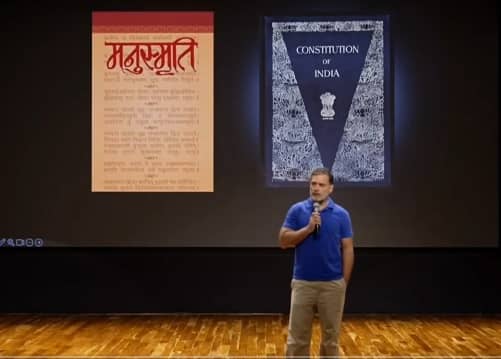
During a special press briefing, Gandhi stated that the situation represented far more than a mere political disagreement or policy debate. He characterized the controversy as a profound "ideological battle" between the foundational principles enshrined in the Constitution of India and the regressive mindset he attributed to the BJP-RSS combination. Gandhi unequivocally asserted that untouchability is not merely a social ill but a grave crime, fundamentally unconstitutional. He underscored the constitutional abolition of the practice, a cornerstone of India's democratic and egalitarian ethos, and highlighted the robust legal safeguards established specifically for members of Scheduled Castes to protect their rights and dignity.
Gandhi pointedly questioned the Prime Minister's conspicuous silence regarding the controversy. He asked why Modi, as the nation's leader, had not spoken out against what Gandhi described as a direct attack on the dignity of a prominent Dalit leader and, by extension, a blatant affront to the Constitution itself. The Leader of Opposition argued that the incident, and the lack of a strong condemnation from the top leadership, exposed the "real face" of the BJP and RSS. He accused both organizations of actively promoting and maintaining a mindset in which Dalits continue to face entrenched discrimination, despite constitutional guarantees.
Addressing the deeply rooted historical context of such discriminatory practices, Gandhi noted that discrimination against Dalits had tragically persisted for thousands of years in Indian society. He argued that even after the Constitution came into force, explicitly outlawing untouchability and providing for affirmative action, incidents of social exclusion, prejudice, and violence against members of Scheduled Castes remained a serious and ongoing concern across the nation. This historical burden, Gandhi suggested, made the alleged incident involving Kharge and the subsequent silence from the ruling party all the more egregious.
The Ideological Struggle for Constitutional Principles
Rahul Gandhi's impassioned remarks framed the alleged untouchability incident not as an isolated event, but as a symptom of a deeper, ongoing ideological struggle within India. He emphasized that the Indian Constitution, drafted under the visionary leadership of Dr. B.R. Ambedkar, explicitly abolished untouchability and sought to establish a society founded on principles of equality, justice, and fraternity for all citizens, irrespective of caste. Gandhi's contention was that the BJP and RSS, through their actions and alleged inaction, were undermining these very constitutional ideals.
The Leader of Opposition reiterated that untouchability, in any form, is a criminal offense under Indian law. The Constitution of India, in Article 17, unequivocally states: "'Untouchability' is abolished and its practice in any form is forbidden. The enforcement of any disability arising out of 'Untouchability' shall be an offence punishable in accordance with law." This constitutional mandate is further strengthened by specific legislation designed to prevent atrocities against Scheduled Castes and Scheduled Tribes, providing legal recourse and penalties for those who violate these fundamental rights. Gandhi's argument centered on the idea that the alleged incident and the Prime Minister's silence represented a direct challenge to these enshrined constitutional and legal protections.
Gandhi's critique extended beyond the immediate incident, touching upon what he perceives as a broader pattern of behavior from the BJP and RSS. He accused these organizations of fostering an environment where the dignity of Dalit leaders and the rights of the Dalit community are not adequately respected or protected. For Gandhi, the controversy highlighted a fundamental divergence in vision for India: one rooted in constitutional equality and social justice, and another, which he attributed to the BJP-RSS, that he believes perpetuates historical hierarchies and discrimination.
Call for Accountability: FIR Under Atrocities Act
In a significant escalation of his demands, Rahul Gandhi called for the immediate registration of an FIR (First Information Report) against Prime Minister Narendra Modi. This demand was made specifically under the provisions of the SC/ST (Prevention of Atrocities) Act, a stringent law designed to protect members of Scheduled Castes and Scheduled Tribes from caste-based discrimination, violence, and humiliation. The Act provides for severe penalties for offenses committed against these communities, recognizing the historical injustices they have faced.
Gandhi's demand for legal action against a sitting Prime Minister under such a serious Act underscores the gravity with which he views the alleged "untouchability" incident involving Mallikarjun Kharge in Uttarakhand. An FIR under the SC/ST Act would trigger a formal police investigation into the allegations, potentially leading to legal proceedings. This move signifies a shift from purely political condemnation to a call for criminal accountability, emphasizing the legal and constitutional ramifications of the alleged actions and subsequent silence.
Gandhi's comments were widely reported by various media outlets. The Indian Awaaz published an account on August 29, 2026, describing Gandhi's statements as a "blistering attack" on the Prime Minister and his government. Similarly, News 18 covered the event, with headlines referring to the remarks as a "big attack" on the BJP regarding Dalit rights and the persistent issue of untouchability in India. These reports highlighted the intensity of Gandhi's criticism and the political significance of his demand for legal action.
While Gandhi outlined his strong position on the constitutional, moral, and legal implications of the alleged incident, no immediate official response from the Prime Minister's Office or the BJP was included in the available reports following his press briefing. The controversy continues to center on the specific allegations made concerning Congress president Mallikarjun Kharge and the subsequent political and legal fallout initiated by the Leader of Opposition, Rahul Gandhi.