


India's Northeast: A Strategic Gateway to Southeast Asia
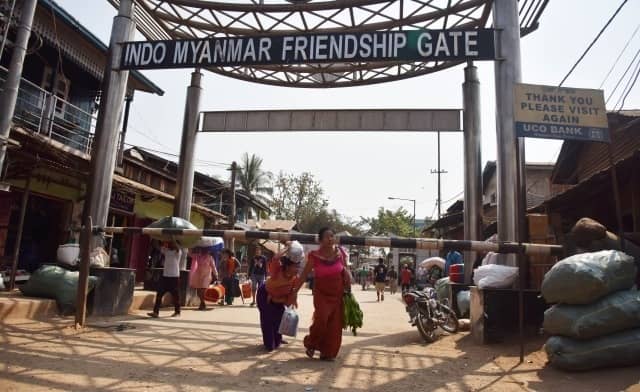
India's Northeast region possesses significant capacity to transform into a major economic powerhouse for the nation and serve as a primary gateway to Southeast Asia, according to a recent report. The analysis suggests that development across multiple sectors in the area could unlock vast economic opportunities, positioning the region as a critical link between South Asia and its eastern neighbors. This strategic vision aligns with India's broader 'Act East Policy,' which seeks to enhance economic cooperation and strategic partnerships with countries in the Indo-Pacific region, making the Northeast a crucial geographical and economic conduit for this engagement.
B L Vohra, a former Director General of Police and Home Secretary of Manipur, authored the perspective piece for ‘Saviours’ magazine. In his writing, Vohra emphasized the urgent need to strengthen security measures and promote prosperity in the region to realize this potential. He argued that addressing these foundational issues is essential for India to advance its broader geopolitical goals, including its aspiration to become a superpower. The stability and economic integration of the Northeast are not merely regional concerns but are intrinsically linked to India's national security and its projected role on the global stage.
External Pressures and Regional Destabilization
Vohra’s report identifies persistent unrest in Manipur over the last few years as a factor that has created significant vulnerabilities in the region. He stated that this instability has provided an opportune moment for "inimical international and national forces" in India and abroad to intensify efforts aimed at destabilizing the Northeast. According to Vohra, the broader objective of these forces is to weaken India and hinder its rise as a global power, effectively undermining its strategic initiatives like the 'Act East Policy' by creating a volatile borderland.
China's Historical Involvement with Insurgent Groups
The report highlights China’s longstanding support for insurgent groups operating in Northeastern India, a historical pattern that continues to cast a shadow over regional security. Vohra wrote that during the late 1970s and early 1980s, China provided physical training and weapons to Manipuri insurgent groups, including the People's Liberation Army (PLA) and PREPAK. This support was not limited to Manipur but was also extended to the National Socialist Council of Nagalim (NSCN) from Nagaland, indicating a broader strategy to foment unrest across the region.
Vohra cited specific evidence regarding this historical cooperation, stating that Biseswor Singh, then-leader of the PLA, personally informed him after traveling to China with a group for training and weapons. This account underscores the deep-rooted nature of the support provided to these groups during that period, reflecting a Cold War-era strategy by China to engage in proxy conflicts and exert influence along India's sensitive border regions, thereby complicating India's internal security landscape for decades.
Shifting Geopolitical Landscape and Beijing's Influence
Beyond historical ties, Vohra pointed to contemporary geopolitical developments as concerning indicators for India's security interests in the Northeast. He noted that China’s increasing economic cooperation with neighboring countries like Myanmar and, more recently, with Bangladesh, is "not a good sign for India in the northeast." This growing influence is viewed as a strategic move by China to expand its economic and political footprint in India's immediate neighborhood, potentially creating an alternative sphere of influence that could marginalize India's regional standing.
As evidence of this shifting dynamic, Vohra referenced the visit of the current Prime Minister of Bangladesh to China, noting that an agreement regarding the Teesta Project was finalized during this period. Such agreements, particularly on critical infrastructure and resource management, deepen the economic ties between these nations and China, potentially at India's expense. This development raises concerns in New Delhi about a possible strategic encirclement and the erosion of its traditional influence in South Asia, directly impacting the viability of the Northeast as a secure gateway to Southeast Asia.
Myanmar's Border Instability and Cross-Border Threats
The report identifies Myanmar as a significant source of instability for India, primarily due to the lack of effective control exercised by its military junta over vast border regions. Vohra wrote that this porous border and the junta's inability to govern effectively allow Indian insurgent groups to operate freely from bases located across the border, using Myanmar territory as a safe haven for planning and launching attacks into India.
Specific attention was given to the NSCN-K (Khaplang) group, which Vohra described as being essentially based in Myanmar. He noted that Khaplang, a key figure associated with the group, is a native of Myanmar, further entrenching the group's presence and operational capabilities within the neighboring country. This cross-border sanctuary enables these groups to evade Indian security forces, regroup, and rearm, posing a persistent threat to peace and stability in India's Northeast.
The report further explained that many tribes living in the Indian states of the Northeast share deep kinship ties with tribes across the Myanmar border. This shared ethnic and cultural heritage, while fostering community bonds, also complicates security dynamics by facilitating cross-border movement of individuals, including insurgents, and providing a ready network of support and intelligence. This intricate web of relationships makes it challenging for security forces to distinguish between local populations and militant elements, exacerbating the problem of insurgency.
Vohra's assessment underscores the necessity for India to step up efforts to counter these multifaceted threats. He argued that strengthening security infrastructure, enhancing intelligence sharing with Myanmar (despite its internal challenges), and fostering robust economic development within the Northeast are interdependent requirements. These measures are crucial not only for securing the region from external and internal destabilizing forces but also for fully realizing its immense potential as a vibrant economic gateway to Southeast Asia, thereby bolstering India's national aspirations.