


Official Report Identifies Growing Maritime Security Concerns
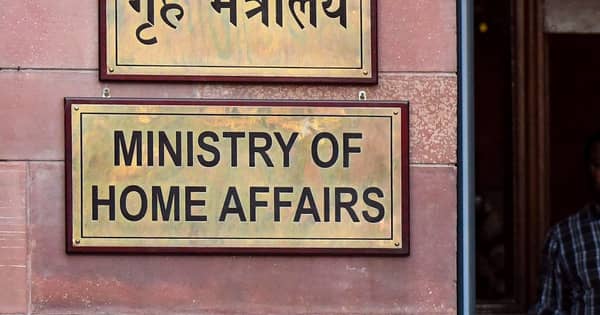
New Delhi, July 6 (ANI): An official assessment report submitted to the Ministry of Home Affairs highlights a significant and escalating concern for India's national security. The document states that the nation's western coastline, particularly the stretches along Gujarat and Maharashtra, has emerged as a critical and increasingly utilized maritime route for the smuggling of illegal arms into Indian territory from Pakistan.
This comprehensive report, collated based on detailed inputs provided by various security agencies operating across different domains, underscores a strategic shift in the operational methods of South Asian arms trafficking networks. It reveals that these sophisticated networks are now leveraging both traditional land routes and a burgeoning maritime frontier to infiltrate India. While one established branch of this illicit network continues to operate via the land borders in Punjab and Rajasthan, another distinct branch is actively exploiting the extensive maritime frontier along the Gujarat and Maharashtra coastlines, presenting a multifaceted challenge to security forces.
Traffickers Adapt Methods to Evade Maritime Surveillance
Officials involved in the assessment have detailed the cunning methods employed by these traffickers. A primary tactic involves the reliance on fishing vessels and various small coastal craft. These specific types of watercraft are reported to possess inherent characteristics that allow them to evade conventional maritime surveillance systems. Their operational profiles, including their size, speed, and typical movement patterns, often fall below the standard detection thresholds utilized by modern enforcement agencies, making them difficult to track and identify amidst legitimate maritime traffic.
Security agencies have consistently noted that these transnational traffickers exhibit a high degree of adaptability, frequently modifying their routes and operational methods. This constant evolution is specifically designed to circumvent and avoid enforcement actions. According to sources familiar with the intelligence, these illicit actors ingeniously use legitimate fishing activity and normal coastal movement as a sophisticated cover. This allows them to seamlessly conceal consignments of illegal arms within their seemingly innocuous operations along the coast, blending into the everyday maritime landscape.
Exploiting Legitimate Coastal Activity for Concealment
The report specifically highlights that the maritime route, due to these sophisticated evasion tactics, has become an an area demanding heightened vigilance from all security stakeholders. This increased focus is not merely a reactive measure but comes amid ongoing, proactive efforts by authorities. These efforts are geared towards significantly strengthening coastal security infrastructure and disrupting the complex transnational arms smuggling networks that have established a foothold in the region. The challenge lies in distinguishing illicit movements from the vast volume of legitimate maritime activity, a task made more arduous by the traffickers' calculated use of common coastal vessels and practices.
Strategic Implications of Dual-Route Trafficking
The assessment provides a stark overview: 'The South Asian arm flows through Pakistan into India via both the land frontier in Punjab and Rajasthan, and the maritime frontier along the Gujarat and Maharashtra coastlines,' according to statements attributed to officials reviewing the situation. The emergence and increasing prominence of the latter route, with its reliance on small, hard-to-detect fishing vessels, is described as a corridor of escalating concern. This dual-route strategy provides the networks with significant operational resilience, allowing them to diversify risk and maintain continuity even if one route faces intensified interdiction efforts.
Challenges in Detecting Small Coastal Craft
The assessment further details that the coastal craft employed in this illicit trade operate below established detection thresholds. This critical operational characteristic enables them to bypass standard maritime surveillance protocols, which are typically designed for larger vessels. The ability of these small boats to remain undetected contributes significantly to the difficulty security agencies face when attempting to intercept these specific shipments. The inherent challenges of monitoring thousands of small vessels across a vast and dynamic coastline mean that many illicit consignments can potentially reach Indian shores before detection.
Intensified Efforts to Strengthen Coastal Security
Amidst these reports of increased trafficking activity along this vulnerable corridor, Indian authorities are actively working on comprehensive strategies to strengthen coastal security. The primary objective for all agencies involved in monitoring these maritime frontiers remains the robust disruption of transnational arms smuggling networks. This involves not only enhanced surveillance but also improved intelligence gathering, inter-agency coordination, and the deployment of advanced technologies capable of detecting smaller, faster moving targets.
Addressing the Network's Diversified Approach
The existence of two distinct branches for arms entry into India—one via land borders and another via sea—underscores a highly diversified and adaptive approach employed by the trafficking groups. This strategic diversification is crucial for their operational continuity, as it allows networks to shift resources and methods if enforcement actions successfully target specific routes or tactics in different regions. Countering such a resilient and adaptable threat requires a multi-pronged security strategy that addresses vulnerabilities across both land and sea domains simultaneously, demanding integrated intelligence and operational responses from all relevant security apparatuses.
Gujarat and Maharashtra: Focal Points for Vigilance
The western coastline, specifically the extensive stretches along Gujarat and Maharashtra, is now unequivocally viewed as a critical area requiring intensified monitoring for illicit arms flow. The concentration of this increased trafficking activity in these regions has led to Gujarat and Maharashtra becoming focal points for the detailed security assessments that are regularly submitted directly to the Ministry of Home Affairs. This heightened focus reflects the strategic importance of these coastal states as potential entry points for illegal weaponry, posing a direct threat to internal security.
Integrated Response to Cross-Border Threats
The dual nature of the South Asian arms trafficking network, utilizing both land and sea routes, necessitates a deeply integrated response from India's security establishment. While distinct operational challenges exist for land-based and maritime interdiction, the overarching strategy must consider how these two branches of the network might be connected or used in conjunction by the same overarching criminal organizations. This integrated approach aims to dismantle the entire network, rather than simply displacing its operations from one frontier to another, ensuring a more comprehensive and effective counter-smuggling effort across India's borders.