

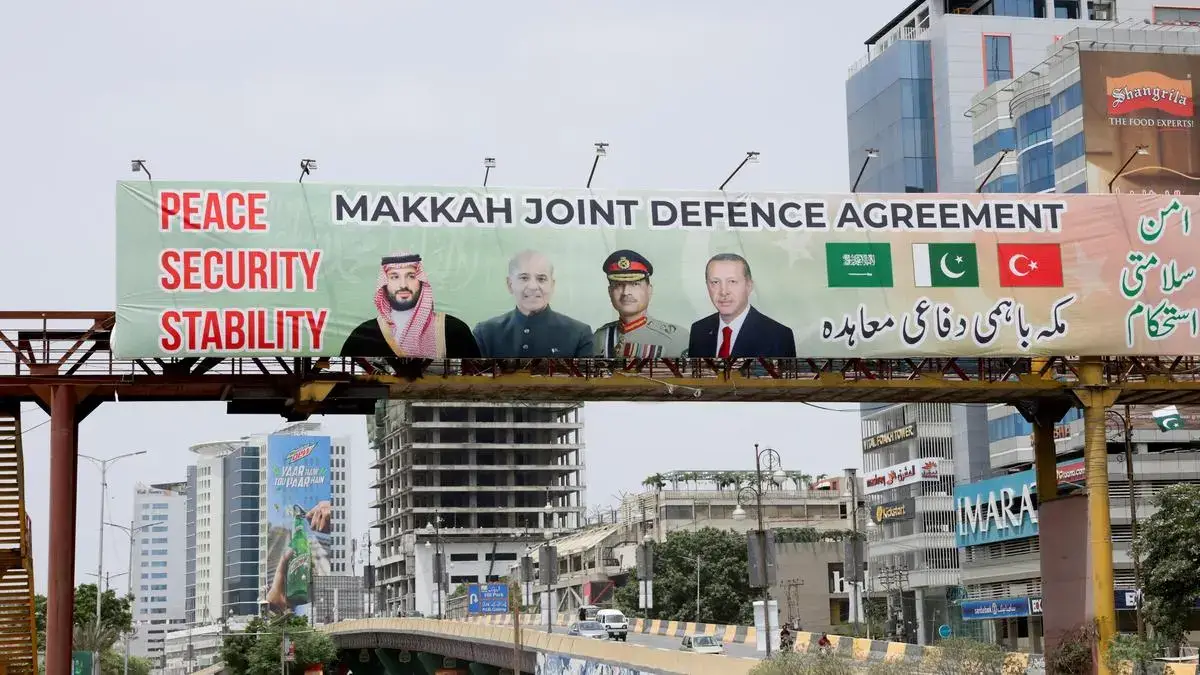

Signing of the Makkah Pact
Saudi Arabia, Türkiye, and Pakistan signed the "Makkah Joint Defence Agreement" on August 7. The agreement cites "enduring bonds of brotherhood and Islamic solidarity" as the foundation for its establishment, alongside shared strategic interests aimed at strengthening collective security and promoting regional peace.
The signing ceremony took place in Karachi, Pakistan. A billboard displayed portraits of Saudi Crown Prince and Prime Minister Mohammed bin Salman, Pakistan's Prime Minister Shehbaz Sharif, Pakistan's Chief of Defence Forces (CDF) and Chief of Army Staff Field Marshal Asim Munir, and Turkish President Recep Tayyip Erdogan following the event.
Pakistan’s Foreign Office affirmed that an attack on any member state would be regarded as an attack on all. The office stated the agreement is intended to strengthen collective deterrence and provides for collective self-defense as envisaged in the UN Charter.
Defensive Framework and Strategic Components
Leaders and spokespersons from the three nations affirmed that the pact is defensive. A senior Saudi official clarified that the agreement does not represent an intention to build a military axis or sectarian bloc, nor is it linked to nuclear ambitions or an arms race.
Turkish President Recep Tayyip Erdogan described the agreement as based on "collective deterrence." He assured the international community that Türkiye would continue resolving conflicts through dialogue and diplomacy.
The coalition combines Saudi energy and finances with Türkiye’s defense industry, particularly regarding drones and munitions, alongside NATO familiarity. It also incorporates Pakistan’s large military force and nuclear capability.
Al Jazeera reported that Pakistan has maintained close military ties with Saudi forces for decades. Türkiye and Pakistan have exchanged warships and training aircraft. In 2023, Saudi Arabia agreed to buy Turkish drones in what Türkiye called its largest defense export contract.
The agreement is expected to include training, personnel exchange, joint exercises, intelligence sharing, and mutual defense. It does not mandate automatic troop deployment but rather requires joint consultations for action.
Origins and Regional Security Concerns
A Turkish official stated the agreement had been under consideration for over two years and eight months. The official noted that conflicts in West Asia from late 2023 influenced the nations to explore new security arrangements.
Saudi security concerns stem from a perception that the United States can no longer be relied upon as a regional security guarantor. This perception cites the 2015 nuclear agreement with Iran, which was finalized without consulting regional states, and subsequent failures to protect Gulf Cooperation Council interests under the Obama administration.
A Jordanian commentator described the agreement as "a signal flare built into a joint security network." The pact signals a shift in West Asia that could expand Pakistan’s strategic role in the region and strengthen its military ties with Türkiye.