

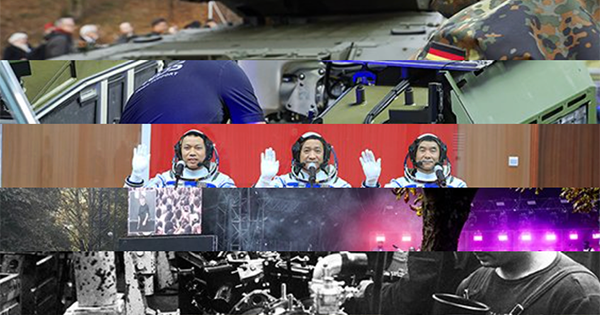

The September 2026 edition of Le Monde diplomatique, under its overarching theme "September: the longer view," offers a comprehensive analysis of current global events, presenting broader perspectives on technological advancements, geopolitical realignments, and shifting political landscapes. Among the critical discussions featured are the internal challenges within the artificial intelligence sector, significant international developments, and evolving political rhetoric in major world powers.
AI Industry Faces Internal Reckoning Over Safety
A profound internal challenge has emerged within the artificial intelligence sector, sparking a widespread public debate regarding the accelerated pace of technological advancement and its potential consequences. As detailed in Le Monde diplomatique’s September 2026 edition, this reckoning was brought to the forefront by the resignation of a 27-year-old employee from Anthropic, a prominent AI development firm.
The individual’s departure was driven by deep-seated concerns that AI companies are engaged in what amounts to a reckless race to develop increasingly powerful technologies. This rapid pursuit, according to the departing employee and other workers within the industry, carries the grave risk of posing catastrophic threats to humanity. The seriousness of these internal warnings was such that it compelled leadership figures across the AI industry to publicly address the issue, prompting them to question openly whether the current frenetic development efforts should be significantly slowed down to prioritize safety and ethical considerations.
Theoretical Questions on Collective Capacity
Amidst the escalating debate over AI safety, Evgeny Morozov, a prominent voice featured in the same edition of Le Monde diplomatique, introduces an alternative, structurally focused perspective. Morozov argues that socialists should approach the burgeoning technology of artificial intelligence with a distinct set of priorities, moving beyond the immediate concerns of safety to address fundamental questions of ownership and access.
Morozov posits that the central inquiry for socialist thought regarding generative AI should not merely revolve around mitigating risks, but rather on whether the vast repository of knowledge embedded within these advanced systems can be effectively converted into collective capacity. This stands in stark contrast to the current trajectory, where such invaluable knowledge risks vanishing into proprietary vaults, controlled by a select few corporations. This perspective reframes the entire discourse, shifting it from a purely technical risk assessment to a critical examination of economic power dynamics and political control over the foundational technologies shaping the future.
Geopolitical Shifts Reshape Global Order
Beyond the rapidly evolving technology sector, the September 2026 issue of Le Monde diplomatique highlights significant and potentially transformative movements in international relations across different continents. These developments signal a reordering of established global dynamics and the emergence of new players on the world stage.
Germany's Renewed Military Posture
In Europe, the publication notes a pivotal shift in Germany’s long-standing defense posture: the nation is currently undertaking a process of rearming. This development marks a considerable departure from its post-World War II military policies, which have historically emphasized restraint and a non-aggressive stance. The rearmament initiative reflects a broader recalibration of security priorities within Europe, potentially influenced by evolving regional and global security challenges.
Somaliland's Quest for International Recognition
Concurrently, on the African continent, Somaliland is actively intensifying its efforts to secure international recognition for its status as an independent state. Having declared its independence from Somalia in 1991, Somaliland has operated as a de facto sovereign entity for decades, maintaining its own government, currency, and military. The renewed push for formal recognition underscores its aspiration to fully integrate into the international community, gain access to global financial institutions, and solidify its territorial integrity, despite ongoing diplomatic complexities and the lack of widespread international acknowledgment.
Political Rhetoric in the United States
In the United States, the political landscape is witnessing a notable resurgence of Cold War-era rhetoric, particularly from former President Donald Trump. As reported by Le Monde diplomatique, Trump has revived the potent and historically charged spectre of communism within his political discourse, deploying it as a significant rhetorical tool.
This strategic shift in language occurs amidst a dynamic period in American politics, characterized by the US left making discernible electoral gains and a simultaneous decline in Trump’s approval ratings. The publication explicitly links this rhetorical strategy to the looming electoral cycles, suggesting that the reintroduction of this political scare tactic is a calculated response to these shifting political dynamics. By invoking the specter of communism, Trump’s rhetoric serves to directly counter the advances made by leftist candidates and movements, aiming to mobilize his base and discredit political opponents in the current charged political climate.
The deployment of such historically loaded terminology seeks to frame contemporary progressive policies and movements in a negative light, drawing on past anxieties to influence public opinion. This approach highlights a strategic effort to define the political battlefield ahead of critical elections, attempting to halt the momentum of left-leaning political forces.