


President Asserts Diplomatic Progress Amidst Reduced Military Activity
United States President Donald Trump announced that North Korean leader Kim Jong Un has responded positively to recent diplomatic overtures from Washington. The statement, made on a Tuesday, marked a notable shift in the public narrative surrounding US-DPRK relations, coming just one day after the United States reduced the scale of joint military drills with its ally, South Korea.
In his remarks, President Trump praised his personal relationship with Kim Jong Un, describing it as strong and constructive. The president did not provide specific details regarding the nature of Kim’s response or the exact content of their recent communications. However, the timing of the announcement has drawn immediate attention from geopolitical analysts and regional observers who monitor the delicate balance of power on the Korean Peninsula.
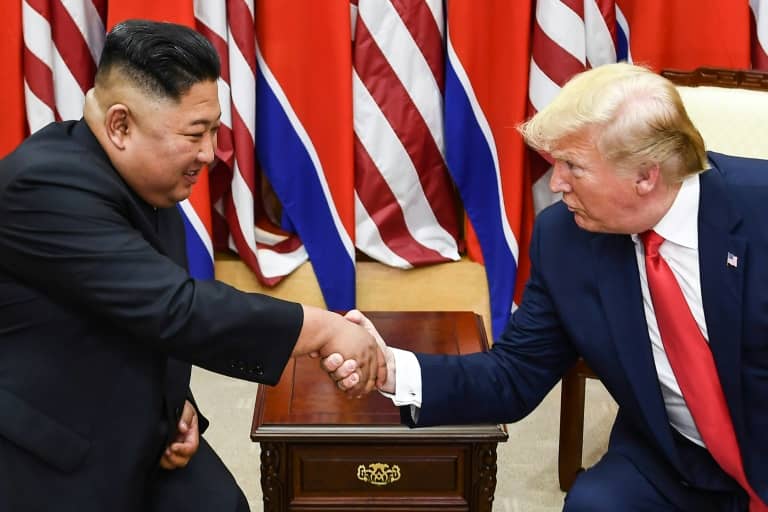
The White House confirmed that the president viewed the current diplomatic environment as favorable for further engagement. Trump emphasized that his relationship with the North Korean leader had evolved significantly since their previous meetings, including their historic summit in Panmunjom in June 2019, where they shook hands on the south side of the Military Demarcation Line that divides North and South Korea.
Timing of Drill Scaling Sparks Speculation
The announcement by President Trump follows a decision by the US military to scale back joint military drills with South Korea. This reduction in military activity was implemented on Monday, creating a brief window of de-escalation that coincides directly with the president’s claims of diplomatic progress.
While the US Department of Defense did not explicitly link the scaling back of drills to the diplomatic overtures in its initial briefing, the proximity of the two events has led to widespread interpretation that the military adjustment was a confidence-building measure intended to facilitate dialogue. The specific parameters of the scaled-back drills were not detailed in the president’s statement, nor were the exact dates on which the reduction took effect published in the immediate release.
Observers note that previous cycles of diplomatic engagement between Washington and Pyongyang have often been preceded by similar pauses in military exercises. However, unlike past instances where such pauses were met with skepticism from regional allies, this latest adjustment appears to have been framed by the Trump administration as a proactive step toward peace rather than a concession.
Historical Context of US-DPRK Engagement
The current diplomatic posture comes against a backdrop of intermittent engagement between the United States and North Korea over the past several years. The relationship between President Trump and Kim Jong Un has been characterized by high-profile summits and sharp fluctuations in rhetorical tone.
During their meeting at Panmunjom in June 2019, the two leaders met on the south side of the Military Demarcation Line, a symbolic gesture that highlighted the unique nature of their direct engagement. That meeting was part of a broader effort to denuclearize the Korean Peninsula, a goal that has remained elusive despite multiple rounds of negotiations.
Since that summit, relations have experienced periods of both warmth and tension. The recent claims by President Trump suggest a return to a more cooperative phase, akin to the early stages of their diplomatic relationship. However, no new agreements or frameworks have been announced alongside his praise of the relationship.
Regional Reactions and Strategic Implications
The scaling back of military drills has significant implications for South Korea, which hosts approximately 28,500 US troops. The reduction in exercises is intended to reduce tensions with North Korea, but it also raises questions about the readiness of allied forces.
South Korean officials have not yet issued a formal response to President Trump’s claims regarding Kim Jong Un’s response. However, defense analysts in Seoul are closely monitoring the situation to ensure that any diplomatic progress is matched by tangible actions from Pyongyang.
The lack of immediate comment from the South Korean government leaves a gap in the official record regarding the bilateral coordination behind these moves. It remains unclear whether the scaling back of drills was a unilateral decision by Washington or part of a coordinated strategy with Seoul.
Current Status of Diplomatic Channels
President Trump’s statement indicates that communication channels between the White House and the North Korean leadership remain open. The president described Kim Jong Un as having "responded" to overtures, implying an active dialogue rather than a passive reception of messages.
This assertion contradicts previous reports from intelligence agencies that suggested North Korea had become less responsive to US diplomatic initiatives in recent months. If verified, the claim would signal a potential thaw in relations that could impact regional security dynamics.
However, independent verification of Kim Jong Un’s response is difficult given the closed nature of the North Korean regime. The president’s claims stand as the primary source for the current state of affairs, with no corroborating evidence from international observers or neutral third parties provided in the available reports.
The US administration continues to monitor the situation closely, with future diplomatic moves likely to depend on the verifiability of Kim Jong Un’s engagement. For now, the focus remains on whether this period of reduced military activity will lead to sustained dialogue or revert to previous patterns of tension.