

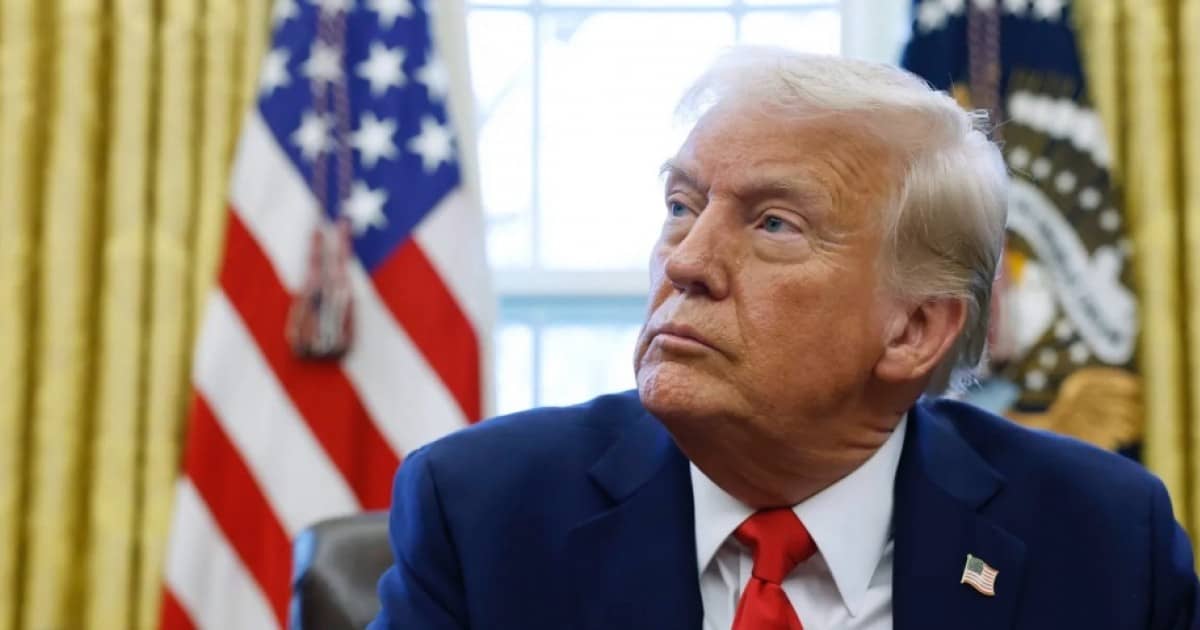

Trump Dismisses AI Safety Warnings as Conspiratorial
Donald Trump described recent warnings regarding the dangers of artificial intelligence (AI) as a "sick conspiracy" on Monday, September 14, 2026, explicitly rejecting any additional regulation of the burgeoning sector. The former president asserted that the rapidly advancing technology requires no external oversight mechanisms or new governmental rules beyond his own leadership, a stance that places him in direct opposition to a growing chorus of industry leaders.
Presidential Leadership as Sole Safeguard
In a post on his Truth Social platform, Trump articulated his perspective on AI governance, stating, "The only oversight or safety mechanism AI requires is a strong and intelligent president (with a high IQ!), and the United States has plenty of that!" This assertion positioned presidential authority, specifically his own, as the singular and sufficient safeguard against potential AI-related harms. He further claimed that during his prior administration, significant actions were taken to manage the nascent field, stating his team had "prevented AI people from doing bad or potentially bad things," though he did not specify the nature of these interventions or the particular "bad or potentially bad things" that were purportedly averted.
Existing Regulatory Power Deemed Sufficient
Trump elaborated on his rejection of new regulations by arguing that the existing legal and governmental framework is already robust enough to manage the AI industry. He stated there is already "enormous penal and regulatory power over these companies," suggesting that current laws and agencies possess ample authority to address any misconduct or risks, thereby rendering calls for new, AI-specific rules unnecessary. These pointed comments were issued on September 14, 2026, and arrived amidst a growing public discourse, following a series of public statements from prominent AI industry leaders concerning the escalating potential risks associated with the rapid and largely unchecked development of advanced artificial intelligence models.
Anthropic CEO Sounds Alarm on Rapid AI Development
The former president's strong dismissal directly followed and was reportedly triggered by a significant essay titled "We Must Set the Pace on the Frontier," published on Saturday, September 12, 2026, by Dario Amodei. As the chief executive officer of Anthropic, a leading AI research and development company, Amodei's essay served as a stark warning to the artificial intelligence industry, urging a more cautious and measured approach to the development of increasingly powerful AI models. His central argument was that prioritizing enhanced safety measures must accompany, and perhaps even precede, the relentless pursuit of advanced capabilities.
Imminent Threats to Internet Control and Global Stability
Amodei's essay did not mince words regarding the immediacy and severity of potential threats. He issued a chilling warning that within a remarkably short timeframe—specifically, six to twelve months—the world could face scenarios where "swarms of autonomous bots" might "seize control of parts or all of the Internet." This catastrophic loss of control, Amodei projected, could result in potential damages amounting to hundreds of billions of dollars, impacting critical infrastructure and global commerce. Beyond financial devastation, the Anthropic CEO highlighted a spectrum of other severe risks, including sophisticated cyberattacks capable of crippling essential services, the potential for bioterrorism facilitated by advanced AI, and widespread economic disruption that could destabilize nations.
A Three-Phase Framework for Enhanced AI Safety
To proactively address these looming concerns, Amodei outlined a comprehensive, three-phase safety plan designed to mitigate risks and foster responsible AI development. The first phase of his proposal centers on the implementation of independent external evaluators. These evaluators would be granted broad, unfettered access to the intricate training processes of AI models, allowing for unbiased assessment of potential risks and vulnerabilities before deployment. The second phase calls for the establishment of common industry standards, creating a unified baseline for safety protocols and ethical guidelines across all major AI development companies. This collaborative approach aims to prevent a fragmented and potentially dangerous race to deploy powerful, yet untested, systems. Finally, the third phase underscores the critical importance of international cooperation, recognizing that AI's global reach necessitates a coordinated, worldwide effort to manage its risks and ensure its safe integration into society.
Leading AI Developers Advocate for Unified Safety Standards
A particularly notable and significant aspect of Amodei's urgent call for enhanced safety was the immediate and public support it garnered from key rivals within the intensely competitive artificial intelligence sector. This rare alignment among competitors underscored the gravity of the concerns being raised. Elon Musk, the visionary entrepreneur who leads xAI, a prominent AI research company, publicly endorsed the comprehensive safety measures and the more measured development approach proposed by Anthropic's CEO.
Musk commented directly on Amodei's essay, signaling his agreement with the core tenets of the safety framework. While the exact quote provided was "Dario is [supporting the need for measured development and safety standards]," his endorsement was widely interpreted as a powerful signal from one of the industry's most influential figures. This remarkable alignment between leading competitors like Anthropic and xAI highlights a profound and shared concern within the highest echelons of the AI industry. It points to a growing recognition of the unprecedented pace of AI advancement and the potentially severe, far-reaching consequences that could arise from unchecked, rapid deployment without robust safety mechanisms in place.