


A D.C. Makeover and a Joke About Renaming the Reflecting Pool
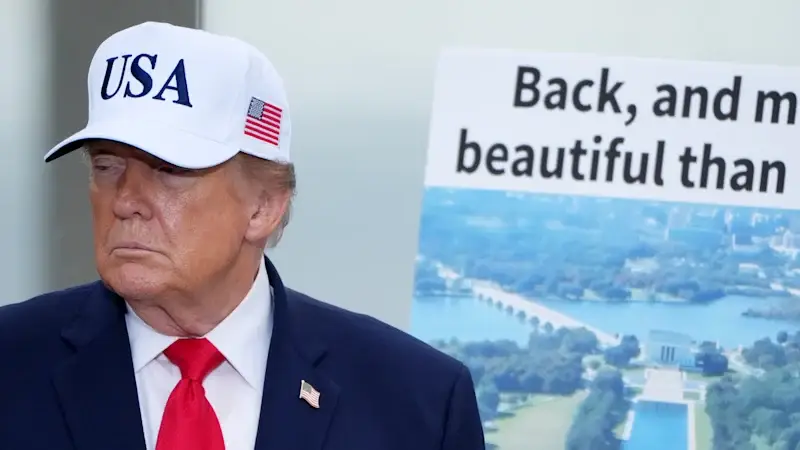
Donald Trump concluded his final campaign rally at the Reflecting Pool in Washington, D.C., with a presentation focused heavily on urban transformation rather than traditional policy appeals. The former president used the backdrop of the capital to tout a "DC makeover," displaying images of repairs to the pool itself and outlining ambitious redevelopment plans for the area.
Central to his pitch was a proposed "Triumphal Arch" and the redevelopment of a public golf course, which he presented as part of a broader vision for the nation's capital. During the speech, Trump joked about renaming the landmark to the "Trump Reflecting Pool," though he quickly clarified that he was kidding.
He framed these local improvements as a microcos of his national agenda, stating, "We have a lot of great things planned for Washington – and I could get into the nation, but for that, you don’t have enough time." The remarks were delivered in an environment where critics argued he was misreading the public mood, focusing on aesthetic changes while ignoring broader economic anxieties.
Geopolitical Tensions and Economic Realities
Amidst the campaign rhetoric, Trump addressed international developments, specifically noting that oil prices had tumbled. He attributed this drop to renewed talks of a deal to end the war in Iran, which he claimed was being mediated by Qatar.
The context for these remarks was heightened military activity in the region. The United States had recently executed strikes on Iran’s Qeshm Island. According to Iran’s state-run Islamic Republic News Agency, the strikes resulted in five explosions. U.S. officials characterized the operations as limited, but the incident underscored the volatile geopolitical landscape Trump sought to navigate.
Despite these global narratives, voter concerns at his final rallies were grounded in immediate economic pressures. On Sunday, Trump held final campaign stops in Iowa and Kansas, where he faced voters worried about affordability and rising diesel costs. These grassroots issues stood in contrast to the high-level diplomatic and urban planning topics dominating his closing address.
Political Fallout and Strategic Criticism
The closing strategy drew sharp criticism from political observers and strategists. Republican strategist Doug Heye condemned Trump’s message, describing it as telling voters, "I don’t know what’s important to you, here’s what’s important to me." Heye labeled this approach a dismal campaign strategy, suggesting it alienated the very base Trump needed to mobilize.
Robert Shapiro, a political scientist at Columbia University, echoed these sentiments, calling the end of the campaign a "bizarre way" to conclude. Shapiro cited the administration's poor performance as a key factor in why the closing narrative failed to resonate with voters.
This criticism came as final polls pointed toward significant gains for the opposition. Polls conducted by Siena College and The New York Times indicated a substantial "blue wave" for Democrats, showing leads for Democratic candidates in Senate contests across Michigan, Texas, Alaska, and Iowa.
Accepting Defeat and Future Veto Power
Faced with these projections, Trump acknowledged the possibility of Republican losses in the midterms. He dismissed the polling data, calling the polls "rigged," but did not dispute the potential outcome for his party.
In an interview with The New York Post’s Miranda Devine, Trump signaled a shift in strategy should Democrats take control of Congress. He suggested he might become "Mr Veto," implying that he would rely on executive authority to block Democratic legislation rather than working through legislative negotiation.
He further indicated that he would eventually make deals with a Democratic-controlled Congress, suggesting a pragmatic approach to governance despite the adversarial political climate. This stance highlights a potential pivot from campaign rhetoric to executive action, as Trump prepares for a post-election reality where his party may lose significant ground in Washington.