


Global Economic Ripples From Washington's Ballot Box
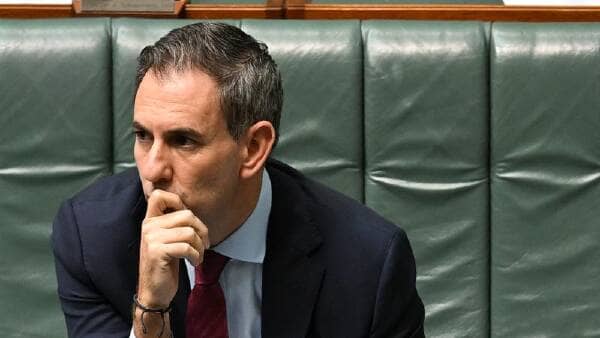
Australian Treasurer Jim Chalmers has issued a stark warning regarding the upcoming United States midterm elections, asserting that the outcome will carry profound economic consequences for nations far removed from the American political arena. Speaking to ABC Radio, Chalmers emphasized that the geopolitical decisions made in Washington D.C. and Tehran are not contained within US borders but actively shape the financial reality for citizens abroad.
Chalmers described Australians as "cost-of-living casualties of decisions taken in DC and Tehran," highlighting the asymmetry of influence in global conflicts. He noted that while American voters possess the democratic power to determine when a war ends, their Australian counterparts do not share that agency, leaving them vulnerable to the economic fallout of foreign policy choices.
The Treasurer’s comments come as the 2026 election season has been characterized by dropping presidential poll numbers, rising diesel prices, and concerns over data centers serving as a catch-all for worries about AI and Big Tech. These domestic US pressures are now intersecting with international instability, creating a complex web of economic risks that extend well beyond American soil.
The Iran Conflict and Australian Inflation
Central to Chalmers’ concerns is the ongoing war with Iran, which has directly contributed to surging fuel prices in Australia. This escalation in energy costs has pushed inflation above four percent, a figure that threatens to erode household purchasing power and complicate monetary policy decisions.
The rising inflation is likely to lead the Reserve Bank to increase interest rates for the fifth time in 2026, pushing the cash rate to an 18-year high. This aggressive tightening of monetary policy is a direct response to the cost pressures exacerbated by global geopolitical tensions, illustrating how distant conflicts can dictate local economic conditions.
Chalmers’ warning underscores the vulnerability of small open economies to major power dynamics. As fuel prices climb due to the conflict in the Middle East, Australian families face a dual burden: managing the immediate costs of living while navigating an interest rate environment that is becoming increasingly restrictive.
Shifting Political Tides in the United States
Within the United States, the political landscape is undergoing significant shifts. Opinion polls tip Democrats to end the Republican hold on both houses of Congress, a potential reversal that could alter the trajectory of US foreign and domestic policy.
Criticism of President Donald Trump’s actions in the war with Iran has given Democrats the lead in traditionally Republican-leading states such as Texas, Iowa, and Kansas. This erosion of support in key conservative strongholds suggests that the handling of international conflicts is becoming a decisive factor for voters who might otherwise lean right.
If Democrats control either chamber of Congress, it would limit Mr. Trump’s ability to pass legislation or block crucial appointments, and they could launch investigations into the Trump administration's actions. This potential check on executive power adds another layer of complexity to the ongoing geopolitical situation, as legislative oversight could constrain presidential options regarding the war.
Expert Analysis on Midterm Contours
The contours of these midterm elections have been a subject of intense debate among political analysts and former officials. Former Republican Rep. John Faso and former Democratic State Sen. David Carlucci joined Capital Tonight host Susan Arbetter to discuss the evolving dynamics of the race.
Their discussion highlights the high stakes involved, not just for domestic policy but for international relations. The interplay between public opinion on the war in Iran and traditional partisan loyalties is reshaping the electoral map, with implications that extend far beyond the United States.
As the election approaches, the convergence of economic anxiety, geopolitical conflict, and political realignment creates a volatile environment. For countries like Australia, the outcome in Washington will determine not only the direction of US foreign policy but also the stability of their own economic prospects.